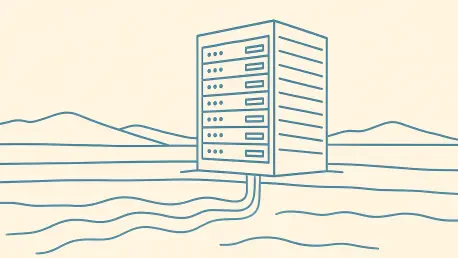

Deep beneath the sun-scorched plains of the Lone Star State, vast subterranean aquifers are being tapped at an unprecedented rate to cool the humming circuits of the global digital economy. As the year 2026 progresses, this invisible drain on the state’s most precious resource has moved from a technical concern to a central political flashpoint. Texas has long prided itself on being a business-friendly haven for the technology sector, but the sheer scale of the water required to sustain massive data warehouses is forcing a difficult reckoning. With nearly 60% of Texas voters now expressing opposition to new data center developments in their own communities, the state government finds itself caught between the promise of high-tech growth and the reality of a finite water supply. The friction is no longer just about land use; it is about the fundamental survival of local ecosystems and the reliability of the taps that serve millions of residents.
The current regulatory landscape presents a jarring contradiction where a facility worth several billion dollars can essentially ignore state transparency laws for a fee that amounts to pocket change. While the digital infrastructure fueling everything from artificial intelligence to global finance continues to expand, the mechanisms meant to monitor its environmental impact remain stuck in a previous century. State officials have recently promised a forceful crackdown on facilities that refuse to disclose their water consumption, yet the legal “teeth” behind these threats are currently more symbolic than substantive. This growing tension between rapid industrialization and environmental stewardship has reached a point where symbolic gestures are no longer enough to satisfy a public increasingly concerned about the long-term viability of the Texas water grid.
The $500 Loophole in a Billion-Dollar Industry
In the arid environment of Texas, where water has often been described as more valuable than oil, a curious regulatory paradox has allowed a multi-billion-dollar industry to bypass mandatory state water reporting for the price of a mid-range smartphone. Current statutes treat these massive digital warehouses with the same regulatory weight as small commercial users, resulting in a situation where non-compliance is simply viewed as a negligible cost of doing business. For a technology titan generating billions in annual revenue, a $500 fine for failing to report water usage is not a deterrent; it is an administrative footnote. This loophole has created a significant data gap, as operators realize that paying a minor penalty is far simpler than undergoing the rigorous process of documenting and publicizing their massive environmental footprint.
The public reaction to this disparity has been one of growing indignation, particularly as local communities are asked to conserve water during frequent drought cycles. Residents often find it difficult to reconcile their own mandatory water restrictions with the sight of massive data centers rising on the horizon, facilities that may be consuming millions of gallons a day without any public accounting. This friction has reached a breaking point, shifting the conversation from economic development to environmental justice. As more voters demand accountability, the state is forced to examine why such a vital industrial sector is permitted to operate in the shadows, shielded by a fine structure that has failed to keep pace with the exponential growth of the digital age.
Why the Data Center “Water Gap” Matters to Texans
The refusal of many data center operators to disclose their usage creates a massive “unknown” variable in the state’s survival strategy as officials work to finalize a 50-year water plan. Without accurate figures on how much water is being evaporated for cooling or processed through industrial chillers, state planners are essentially flying blind. This planning blind spot makes it nearly impossible to project whether the 2027 state water plan can actually sustain a growing population alongside a booming tech sector. The risk is not merely theoretical; if the consumption levels of these facilities are significantly higher than estimated, the state could face localized water shortages that were never accounted for in official growth models.
Public opposition to these digital warehouses has become a rare point of bipartisan agreement in a frequently divided state. Anxiety over water security bridges the political divide, as residents from all backgrounds fear that industrial cooling needs will eventually compete directly with household taps and agricultural necessities. This shared concern is compounded by the additional strain these facilities place on the ERCOT power grid, which has already faced significant challenges in recent years. The conversation has shifted toward a broader discussion of infrastructure: who pays for the upgrades required to keep these centers online, and what happens to the local water table when a dozen such facilities are clustered in a single county? The lack of transparency only serves to fuel these fears, turning a resource management issue into a high-stakes political battle.
Breaking Down the Regulatory Failure
The current crisis is rooted in antique laws that were designed decades ago for a completely different industrial landscape. The Texas Water Code, while robust in many areas, treats massive data centers with the same requirements as minor commercial water users, failing to account for the unique intensity of modern server cooling requirements. This legislative mismatch means that while the state can identify unique facilities, it lacks the modern tools to compel them to share their data. Since 2021, over 230 of the 334 identified facilities in Texas have never submitted a single water survey, leaving billions of gallons of estimated consumption entirely off the official books. This “pathetic” response rate, as described by some lawmakers, highlights a systemic failure of the current reporting framework.
Beyond the low fines, the state faces a significant permitting paradox that limits its ability to enforce compliance. While the Texas Water Development Board can theoretically threaten to withhold new permits, it lacks the clear statutory authority to revoke the operating permits of facilities that are already in place and actively consuming water. Furthermore, the state’s primary leverage—the withholding of water infrastructure grants—is largely ineffective in this sector. Private data center operators are self-funded or backed by massive corporate capital, meaning they rarely seek or qualify for the public state funding that the government uses as a carrot for other industries. Consequently, the state is left with few functional options to bring these digital giants into compliance without a major legislative overhaul.
Rhetoric vs. Reality: Expert and Industry Perspectives
Governor Greg Abbott and Attorney General Ken Paxton have signaled a zero-tolerance policy toward data centers that ignore reporting rules, but legal experts argue that these leaders are currently handcuffed by a fragmented enforcement structure. The primary challenge lies in the fact that the Texas Water Development Board can identify violators but lacks the power to prosecute them directly. Instead, the responsibility shifts to local district attorneys who are often overwhelmed with more pressing criminal cases and may lack the specific resources or interest to chase $500 misdemeanors against large local employers. This disconnect between the aggressive rhetoric coming from Austin and the actual legal reality on the ground creates an environment where companies feel safe ignoring state directives.
The industry itself, represented by groups like the Texas for the Data Center Coalition, often defends this lack of transparency as an administrative mishap rather than a deliberate strategy of evasion. They claim that many surveys are simply lost in the mail or sent to the wrong corporate offices, an explanation that skeptics find increasingly hard to believe given the sophistication of these technology companies. While corporate “good actors” like Meta highlight their water-efficient cooling and ambitious “restoration goals” for 2030, environmental watchdogs point out that these claims are currently impossible for the state to verify. Without mandatory, standardized reporting that is backed by real consequences, the public is forced to take the industry’s word on its environmental impact—a prospect that many find unacceptable given the high stakes of water management in a drought-prone state.
Strategies for a Sustainable Digital Frontier
Addressing the water consumption of data centers requires a shift toward a more integrated approach that combines resource management with infrastructure planning. Lawmakers are increasingly calling for a legislative overhaul to increase penalties, ensuring the cost of non-compliance far outweighs the administrative burden of reporting. This would move the penalty from a minor $500 fine to a tiered system that reflects the scale of the facility’s water use. Additionally, there is a push to close loopholes regarding cooling technologies by implementing mandatory reporting for specific water-intensive methods. This would allow state planners to verify industry claims of efficiency and better understand the true impact of various cooling strategies on local water supplies.
A more effective strategy involves creating a unified front between state agencies, coordinating the efforts of the TCEQ, ERCOT, and the PUC to ensure no facility is green-lit for power or environmental permits without first clearing water transparency hurdles. By linking energy access to water reporting, the state can leverage the data center industry’s need for massive amounts of electricity to ensure they comply with resource disclosure. Furthermore, preparing for the 2027 legislative session will be critical to granting state agencies the power to suspend or revoke operational permits for habitual offenders. These measures, combined with requirements for data centers to contribute to their own power generation and water-saving infrastructure, represent the most viable path toward a sustainable digital frontier in Texas.
The state recognized that the existing framework was insufficient for the scale of modern industrial growth and moved to align environmental oversight with the reality of the digital age. Lawmakers determined that the 2027 legislative cycle provided the necessary window to enact comprehensive reforms that prioritized long-term water security over short-term industrial expansion. The consensus among state planners shifted toward an integrated model where energy and water usage were reported in tandem, ensuring that no single resource was sacrificed for the benefit of another. This transition involved significant coordination between local prosecutors and state agencies to ensure that reporting requirements were met with actual accountability rather than symbolic fines.
By the time the new regulations were finalized, the state had established a precedent for balancing the needs of the technology sector with the vital necessity of resource conservation. The path forward required companies to not only disclose their impact but to actively participate in the replenishment of the aquifers they utilized. State leaders emphasized that the future of the Texas economy depended on transparency, making it clear that the era of operating in the shadows had come to an end. This proactive stance aimed to protect the interests of both urban and rural communities, ensuring that the digital infrastructure of tomorrow would not come at the expense of the state’s fundamental natural heritage. Through these actions, Texas sought to create a more resilient and accountable industrial environment for the years to come.