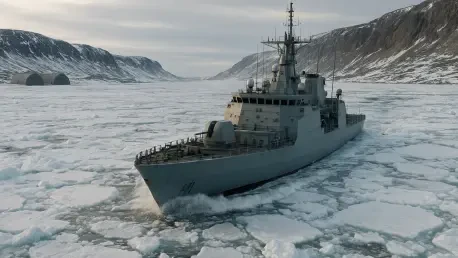

A new legal provision mandates that any future independent Greenlandic state must inherit current defense obligations and maintain membership within the NATO alliance. This landmark requirement is part of a sweeping 2026 security agreement signed by the United States, the Kingdom of Denmark, and the government of Greenland to solidify the Arctic’s defense architecture. The pact represents a major escalation in strategic cooperation, moving beyond Cold War-era arrangements to address modern security challenges. As global powers look toward the thawing northern routes, Washington is securing its position as the dominant guardian of the High North. This trilateral agreement is not merely a military contract but a foundational document that integrates Greenland’s future political trajectory directly into the Western security umbrella. By codifying these obligations, the three nations are ensuring that the tactical value of the world’s largest island remains a constant in a shifting landscape.
Modernizing the High Atlantic: Strengthening the Pituffik Core
The central pillar of this expanded footprint involves the comprehensive modernization of Pituffik Space Base, which remains the northernmost outpost of the American military. Formerly known as Thule Air Base, this facility is undergoing a significant transformation to address the sophisticated threats posed by hypersonic missiles and advanced satellite weaponry. Upgrades to the existing solid-state phased-array radar systems are designed to provide a higher degree of precision in ballistic missile warning and tracking. This enhancement is vital for North American Aerospace Defense Command (NORAD) operations, providing early detection capabilities that are crucial for national survival. The facility also serves as a critical node for the Space Force, managing satellite communications that facilitate global connectivity for American and allied forces. These technical improvements ensure that Pituffik remains an indispensable asset for monitoring orbital traffic and protecting assets from interference.
Beyond radar capabilities, the modernization efforts at Pituffik focus on creating a resilient infrastructure capable of sustaining long-term operations in extreme polar conditions. This includes the installation of hardened communication lines and redundant energy systems that are less susceptible to both natural disruptions and potential cyberattacks. As the base’s role expands, it is becoming a central hub for coordinating multi-domain operations across the Arctic circle. The current 2026 upgrades are part of a broader strategy to integrate artificial intelligence into surveillance workflows, allowing for faster processing of sensor data and more accurate threat assessment. By enhancing the base’s technical capacity, the United States is effectively reinforcing its first line of defense against northern incursions. This effort also involves closer collaboration with Danish and Greenlandic personnel, fostering a unified operational culture that is essential for maintaining the security of the broader region.
Strategic Reach: Establishing New Defense Hubs and Mobility
The 2026 agreement extends far beyond the perimeter of established bases, identifying specific new defense areas to broaden the scope of regional surveillance. Narsarsuaq, located in the southern reaches of the island, has been designated as a key logistical point to support North Atlantic maritime operations. Its historical background as a major airfield is being revitalized with modern equipment to facilitate rapid deployment and refueling. Meanwhile, on the isolated eastern coast, the outpost of Mestersvig is being reimagined as a vital surveillance node. Currently used by the Danish Sirius Dog Sled Patrol, this location offers a unique vantage point over the Greenland Sea and the strategic waters leading toward the Barents region. Establishing a permanent American technological presence here allows for the monitoring of undersea and surface traffic in a sector that has seen a sharp increase in foreign naval activity. These sites provide the necessary geographical spread to monitor the island’s vast perimeter.
To complement these physical sites, the pact grants American military assets unprecedented mobility across the entirety of Greenland’s landmass and territorial waters. This “total access” model permits U.S. aircraft to fly over and land at various locations without the bureaucratic delays that characterized previous eras. Similarly, public vessels now have enhanced rights to operate in undersea corridors, which is critical for maintaining the integrity of submerged infrastructure. A major long-term goal mentioned in the current defense planning is the realization of the “Golden Dome” missile defense system. This conceptual framework aims to create a multi-layered shield over the region, utilizing a combination of ground-based interceptors and sea-based sensors to neutralize aerial threats before they reach the mainland. While technical specifics are still being negotiated, the ambition reflects a desire to turn Greenland into an impenetrable barrier, cementing its status as a primary shield in the Western defense architecture.
Economic Stewardship: Navigating Sovereignty and Long-Term Stability
To ensure the American presence remained sustainable, the agreement incorporated specific safeguards to respect Greenlandic sovereignty and promote economic self-sufficiency. These provisions mandated that military activities respect indigenous hunting and fishing rights, while the Pentagon committed to prioritizing local firms for construction and maintenance contracts. This strategy was designed to turn the military expansion into a direct engine for regional development, providing high-skilled jobs for local communities. Additionally, the pact established a consultative framework for managing Greenland’s vast mineral wealth and preventing adversarial investment. Rather than seeking ownership of these resources, the United States utilized Greenland’s investment screening laws to monitor foreign involvement, particularly from hostile nations. This mechanism allowed the U.S. to safeguard strategic sectors like rare earth mining without infringing on the island’s economic autonomy or its right to manage its natural resources for the benefit of its own citizens.
The signing of the 2026 agreement marked a definitive turning point in how the United States managed its northern defenses and Arctic partnerships. To ensure the success of this expansion, policymakers moved quickly to secure multi-year funding for the infrastructure projects and the proposed “Golden Dome” missile shield. The establishment of a dedicated trilateral liaison office in Nuuk served as an actionable step to facilitate daily communication between military commanders and local leaders, resolving land-use conflicts before they escalated. Furthermore, the focus on training local personnel ensured that Greenlandic citizens were active participants in the security of their own territory. These efforts collectively ensured that Greenland was not just a base of operations, but a cornerstone of a resilient and technologically advanced Arctic frontier. By addressing these practical concerns early, the administration laid the groundwork for a stable, long-term partnership that enhanced security across the entire North Atlantic region.