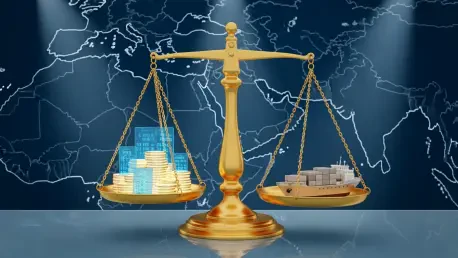

The current paralysis of the Strait of Hormuz represents an unprecedented intersection of geopolitical friction and global economic vulnerability that has effectively severed one of the most critical arteries of the international energy market. While the waterway typically facilitates the passage of nearly twenty percent of the world’s petroleum and liquefied natural gas, the channel remains a desolate zone of naval posturing rather than a functioning trade route. The standoff has evolved from a kinetic exchange of fire into a sophisticated financial siege, where astronomical reparation claims serve as the primary obstacles to regional de-escalation. Since the collapse of the interim peace agreement in June, the international community has watched as the United States and Iran replaced ballistic threats with multi-billion dollar invoices. This shift has created a unique form of maritime gridlock that defies traditional diplomatic resolution, leaving global markets in a state of perpetual anxiety. This impasse has shifted from military engagement to a diplomatic tug-of-war, with President Donald Trump demanding half a century’s worth of reparations while Tehran insists on compensation for the recent war and the total removal of economic sanctions.
The Strategic Implementation of Astronomical Indemnity Demands
The Trump administration has fundamentally altered the nature of regional negotiations by demanding compensation for half a century of Iranian activities, effectively treating the current maritime crisis as a settlement period for historical grievances. This strategy involves a comprehensive ledger that includes costs associated with the deaths of American service members and civilian protesters, reaching as far back as the turn of the millennium. By explicitly linking the reopening of the Strait of Hormuz to the payment for incidents like the attack on the USS Cole and various regional proxy conflicts in Lebanon and Yemen, the White House has constructed a high-stakes financial barrier. This approach serves a dual purpose: it provides a domestic political victory by appearing to force accountability while simultaneously justifying a sustained and heavily armed naval presence in the Persian Gulf to oversee what officials describe as a necessary enforcement of international law.
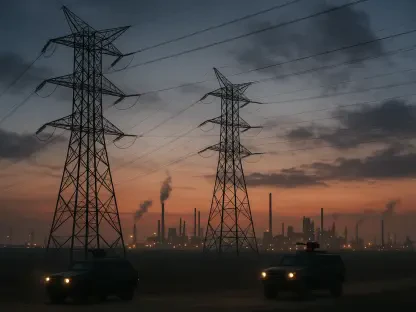
In direct response to these American demands, the government in Tehran has countered with its own set of exhaustive financial requirements, effectively holding the global oil supply hostage to its internal economic recovery. Iranian officials insist that no commercial vessel will safely traverse the waterway until the United States pays for the infrastructure damage incurred during the most recent hostilities and formally ends the blockade on Kharg Island. This “tit-for-tat” economic warfare has placed immense pressure on both nations, albeit for different reasons. While the Iranian economy suffers under a total cessation of crude exports, the American administration faces mounting domestic scrutiny over soaring gasoline prices and persistent energy-driven inflation. Consequently, the reparation claims are no longer merely symbolic; they have become the literal price tag for resuming global trade. The desperation on both sides is palpable, yet neither leader seems willing to be the first to blink in this multi-billion dollar staring contest.
Navigating the Divide Between Official Claims and Maritime Operations
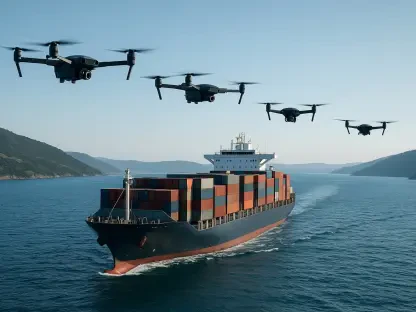
A profound disconnect has emerged between the optimistic declarations of a “safe and open” sea lane and the grim reality observed by international maritime tracking agencies and shipping firms. The American narrative frequently depicts the naval presence as a “steel wall” that has successfully neutralized regional threats and cleared the water of mines, yet insurance underwriters remain unconvinced. Commercial operators continue to avoid the passage, citing a lack of verifiable security guarantees and the persistent threat of vessel seizure by Iranian revolutionary forces. This divergence highlights a form of modern information warfare where military assertions of dominance are regularly contradicted by the pragmatic refusal of the global shipping industry to put assets at risk. Without a consensus on the actual safety of the route, the Strait remains a ghost lane, where the only movement consists of heavily armed patrol boats and surveillance drones monitoring a stagnant horizon of idle tankers waiting for orders.
Despite the aggressive public rhetoric and the public refusal to compromise on reparation figures, clandestine back-channel negotiations are currently unfolding under the mediation of Omani diplomats. These discussions have moved beyond the immediate political theater to focus on granular technical issues, such as the establishment of new shipping lanes and the implementation of shared environmental protection protocols. Some maritime analysts suggest that the extreme financial claims made by both capitals may be a form of political theater designed to appease domestic hardliners rather than realistic legal objectives. However, the path to a functional agreement is further obscured by conflicting reports regarding the human cost of the recent conflict. Both governments have utilized vastly different casualty figures to support their moral positions, ensuring that any resolution must address the emotional and political weight of these losses before a single barrel of oil can safely pass through the Strait once again.
Establishing a Framework for Future Regional Stability
The path forward required a fundamental shift in how both nations addressed the intersection of historical debt and current maritime security protocols. Stakeholders in the international energy sector advocated for a third-party managed trust fund that could decouple the immediate resumption of shipping from the long-term settlement of financial claims. This proposed mechanism would have allowed for the immediate de-escalation of naval tensions while providing a legal venue for addressing reparations without paralyzing the global economy. By focusing on the shared necessity of oil revenue and maritime safety, negotiators aimed to create a technical “safe zone” governed by international observers rather than bilateral hostility. This approach recognized that the Strait of Hormuz is too vital to be used as a bargaining chip for decades-old grievances. Ultimately, the resolution of the crisis depended on the willingness of both administrations to prioritize global market stability over the pursuit of absolute political vindication.
Beyond the immediate financial demands, the long-term viability of the region necessitated a commitment to multilateral maritime monitoring that exceeded the scope of traditional naval blockades. Analysts suggested that the implementation of automated transponder systems and independent drone surveillance could provide the transparency needed to restore commercial confidence in the passage. Such a system would have minimized the risk of miscalculation between opposing naval forces while ensuring that civilian traffic remained unhindered by political disputes. Moving forward, the international community looked toward a model where regional security was not dictated by the highest bidder but by a collective agreement on the freedom of navigation. While the reparation claims created a temporary wall of debt, the eventual reopening of the Strait relied on a strategic pivot toward collaborative oversight. This shift was essential for preventing future standoffs from escalating into the kind of economic and diplomatic paralysis that characterized the recent conflict.