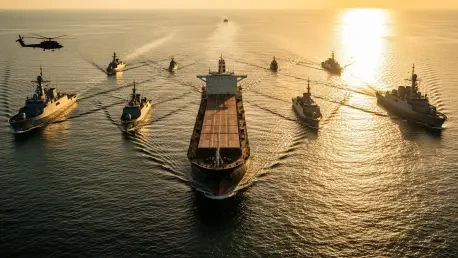

The strategic landscape of global energy security underwent a fundamental transformation as the United States military initiated a high-stakes maritime operation to reclaim the Strait of Hormuz from a suffocating blockade. This narrow waterway, which serves as the primary artery for the worlds petroleum supply, has transitioned from a point of diplomatic tension into an active combat zone. Following a blockade initiated in February 2026, the international community witnessed a direct challenge to the freedom of navigation, prompting an immediate and robust response from Washington to prevent a complete collapse of global energy markets.
The objective of this analysis is to answer critical questions regarding the newly launched mission, its military components, and the broader diplomatic ramifications of the standoff. This exploration covers the shift in American strategic priorities, the specific naval tactics being utilized, and the multi-layered approach to de-escalating a situation that has already left thousands of mariners stranded and energy prices soaring. Readers can expect a comprehensive overview of how this mission intends to stabilize the region while addressing the immediate threats posed by unconventional naval warfare and illegal maritime tolls.
Key Questions
What Is the Primary Objective of Project Freedom?
The sudden closure of the Strait of Hormuz by Iranian forces created an unprecedented bottleneck, trapping nearly 20,000 mariners and causing an immediate spike in global oil prices. This blockade was a retaliatory measure following a joint military campaign by the United States and Israel, moving the focus of the regional conflict away from nuclear development and toward the physical control of international shipping lanes. The disruption threatened to destabilize not just regional security but the economic foundations of nations dependent on Middle Eastern crude.
Project Freedom, led by U.S. Central Command, seeks to restore the safe and unimpeded passage of commercial vessels through this vital corridor. While the White House has framed the initiative as a humanitarian effort to provide security and “goodwill” assistance to merchant fleets, it is backed by the clear intent to use decisive force. The mission functions as a defensive shield for shipping companies that have been forced to halt operations due to the presence of naval mines and aggressive patrol boats, signaling that the U.S. considers the freedom of these waters to be a non-negotiable global right.
How Has the Military Conflict Evolved on the Water?
The tactical environment in the strait has become increasingly volatile, characterized by skirmishes between high-tech American assets and nimble Iranian fast boats. Unlike traditional naval warfare involving large-scale fleet engagements, this conflict focuses on surveillance and the neutralization of small, mobile threats that utilize the geography of the strait to launch hit-and-run attacks. The presence of sophisticated naval mines has further complicated movement, requiring a more cautious and specialized approach to escorting tankers.
Recent engagements have already resulted in direct kinetic action, with the U.S. military confirming the destruction of several Iranian fast boats using Army Apache and Navy Seahawk helicopters. These aerial assets provide a critical advantage in identifying and engaging small targets before they can reach commercial lanes. Despite claims from Iranian state media regarding successful strikes against American warships, U.S. officials have maintained that their assets remain fully operational and unimpeded, demonstrating a commitment to maintaining absolute control through superior air defense and maritime surveillance.
What Diplomatic and Economic Strategies Are Being Employed?
Beyond the immediate military engagement, the United States has moved toward a policy of absolute economic and diplomatic isolation of the forces responsible for the blockade. By enforcing a counter-blockade on regional ports, the administration has mirrored the pressure applied to international shipping, effectively cutting off the ability of the opposition to profit from their own maritime exports. This strategy aims to create a symmetrical economic burden that makes the continuation of the blockade unsustainable for the Iranian government.
In the halls of international governance, the U.S. is pushing for resolutions that formally condemn the use of naval mines and the imposition of illegal tolls on merchant vessels. U.N. Ambassador Mike Waltz has been vocal about delegitimizing these tactics, framing them as violations of long-standing international maritime law. This diplomatic offensive is designed to strip away any veneer of legality the blockade might claim, ensuring that the international community views the American military response not as an act of aggression, but as a necessary restoration of order and law.
How Is the International Community Involved in This Operation?
The scale of the threat to global commerce has prompted a call for a unified international front, as the United States seeks to distribute the operational and financial burden of the mission. Recognizing that the energy security of Asian and European nations is at stake, American leadership has explicitly requested military and logistical support from key allies. This includes asking nations like South Korea to contribute naval assets to help secure the periphery of the combat zone and protect the various commercial interests currently at risk.
By internationalizing Project Freedom, the U.S. intends to transform a bilateral confrontation into a collective security effort. This move serves to validate the mission on a global stage while providing the necessary resources to sustain a long-term presence if the standoff persists. The involvement of multiple nations also complicates the strategic calculus for those maintaining the blockade, as any further escalation would be an affront to a broad coalition of the worlds most powerful economies rather than just a single adversary.
Summary
The initiation of Project Freedom represents a definitive shift in maritime policy, emphasizing the use of integrated air and sea power to break a strategic blockade. The mission combined humanitarian rhetoric with lethal efficiency, deploying two aircraft carrier strike groups to provide a protective umbrella over commercial shipping. Key takeaways include the successful neutralization of fast-boat threats and the implementation of a mirroring blockade to exert economic pressure. These actions reinforced the principle that international waterways must remain open, regardless of regional political disputes.
Conclusion
The resolution of this crisis required a sophisticated balance of military dominance and diplomatic coalition-building that redefined regional security parameters. This operation demonstrated that the protection of global trade routes was no longer a secondary concern but a primary driver of modern naval doctrine. Moving forward, the international community had to consider the long-term implications of maritime vulnerability and the necessity of investing in more agile, mine-resistant technologies. The standoff in the Strait of Hormuz ultimately served as a catalyst for a more robust, multilateral approach to defending the vital arteries of the global economy.