
The paradoxical reality of modern Canadian urban development lies in the fact that while engineers possess the most sophisticated tunnel-boring technology in history, the ability to deliver essential transit projects on budget has seemingly vanished. Despite the integration of advanced artificial intelligence in logistics and precision engineering tools, modern infrastructure projects are taking significantly longer to complete while requiring massive financial injections that dwarf previous estimates. This fiscal crisis has prompted a nationwide alarm regarding the long-term sustainability of urban transit expansion, as the price of building even basic rail networks reaches unprecedented heights that threaten municipal budgets. Experts noted that while the tools are better, the output remains constrained by a web of institutional and economic factors. The contrast between the rapid expansion of the mid-twentieth century and the stagnant, expensive progress of the current decade has never been more evident or more concerning for policymakers and the tax-paying public alike.
Historical Benchmarks: The Legacy of Efficiency
Historical data from the 1960s provides a sobering benchmark for the efficiency with which Canada once constructed its most vital transportation systems. The original Montreal métro, a comprehensive 26-kilometer network featuring 26 distinct stations, was designed and completed in under six years, a feat that seems nearly impossible by modern standards of execution. When these historical costs were adjusted for inflation to align with current valuations, researchers found that the landmark project cost approximately $80 million per kilometer. This figure stands in stark contrast to the financial demands of current expansions, illustrating a massive divergence in how public funds are utilized for subterranean infrastructure. This legacy of efficiency has been largely replaced by a trend of escalating expenditures that jeopardize the ability of Canada’s largest cities to keep pace with population growth. The transition from rapid, cost-effective builds to multi-decade financial commitments has fundamentally altered the landscape of urban planning.
Today, high-profile projects like Montreal’s Blue Line extension and Toronto’s Ontario Line illustrate the severity of this cost explosion in a way that suggests Canada has become a global outlier. The Blue Line extension is now projected to reach an eye-watering cost of approximately $1.4 billion per kilometer, representing an eighteen-fold increase over the original system’s price tag when adjusted for the current economy. Similarly, Toronto’s 15.6-kilometer Ontario Line is estimated at roughly $27 billion, placing it among the most expensive transit infrastructure developments on the planet. This trend is not merely a regional anomaly but a significant national struggle that highlights a lack of control over the procurement and execution phases of large-scale civil engineering. These staggering figures have forced a reevaluation of the feasibility of underground rail, as cities struggle to justify such immense capital outlays in an environment where budget deficits are a constant threat to other public services and housing initiatives.
Modern Standards: Balancing Ethics and Safety
While the costs of the 1960s were significantly lower than current projections, it is vital to recognize that those savings often came at a high social and human price that would be unacceptable today. Early construction heavily relied on the cut and cover method, which frequently involved the complete demolition of vibrant neighborhoods and the massive displacement of thousands of residents. Furthermore, occupational safety standards were far less rigorous during that era; for instance, the initial phase of the Montreal métro saw 12 workers lose their lives in the line of duty. Modern projects now prioritize a zero-harm mindset and community preservation, values that are ethically essential in a contemporary democratic society. These priorities contribute to the extended timelines and higher budgets seen in the current cycle, as the protection of human life and social fabric takes precedence over raw construction speed. The shift toward deep-tunnel boring, while more expensive, prevents the urban scars caused by traditional methods.
Beyond the immediate focus on physical safety, the current regulatory environment has become exponentially more complex, adding layers of oversight that were nonexistent sixty years ago. Modern infrastructure must now navigate exhaustive environmental impact studies, rigorous sustainability norms, and extensive public consultations that ensure every voice is heard before the first shovel hits the ground. These democratic safeguards ensure that transit projects are accountable to the tax-paying public and environmentally responsible, yet they simultaneously add years of planning and millions in expenditures before physical construction even begins. The challenge for today’s policymakers involves finding a middle ground that maintains these high standards without allowing the associated administrative costs to become prohibitive. Navigating these bureaucratic requirements requires specialized legal and environmental teams, which further inflates the pre-construction budget. This reality underscores the tension between modern civic participation and the need for efficient infrastructure delivery.
Procurement Dynamics: Economic Drivers of Inflation
The economic structure of infrastructure procurement has shifted significantly, introducing a complex web of subcontracting that tends to inflate final prices through administrative layering. Instead of the centralized government control seen in the past, major projects now involve numerous private firms, each adding its own profit margin and overhead to the total bill. This fragmentation leads to a middleman effect where project oversight is often diluted across multiple stakeholders, making it difficult to pinpoint responsibility for overruns. Additionally, the pool of specialized companies capable of executing these massive, high-tech builds has shrunk significantly, reducing competitive pressure in the marketplace. This lack of competition gives the remaining global firms the leverage to demand higher fees and more favorable contract terms, often leaving the public sector with limited options. As a result, the cost of expertise and specialized equipment continues to rise, driven by a market that favors a small group of international contractors over local solutions.
A pervasive lack of fiscal discipline at the political level has further exacerbated the problem of ballooning budgets in the transit sector. Because public transit is widely viewed as a greater good that provides long-term environmental and social benefits, there is often less public and political resistance to cost overruns than there would be for other types of infrastructure. Experts argue that this transit at any cost mindset has allowed builders and consultants to increase their margins with minimal scrutiny from government auditors. This cultural acceptance of escalating budgets has created what some researchers describe as a profound accountability crisis, where the financial management of public assets is treated as secondary to the goal of project completion. Without a rigorous framework for cost containment, the incentive for efficiency is lost, leading to a cycle where each project sets a new, higher baseline for future spending. This systemic issue requires a cultural shift in how governments value taxpayer money during the lifecycle of a build.
Strategic Pathways: Actionable Steps for Transit
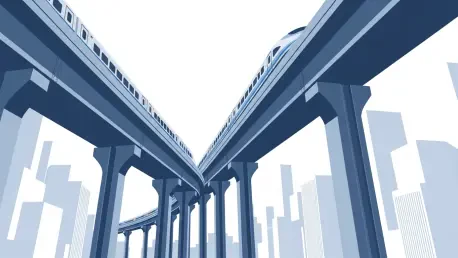
As traditional deep-tunnel métros become financially unfeasible in the current economic climate, Canadian cities have begun exploring more affordable alternatives like light rail systems. The Réseau express métropolitain in Montreal serves as a primary example of this strategic shift toward light rail technology. By utilizing elevated tracks or building at grade where possible, light rail projects can bypass the astronomical expenses associated with deep underground tunneling and the complex ventilation systems it requires. Even with its own set of financial challenges and logistical hurdles, the per-kilometer cost of the REM is a fraction of the Blue Line extension, offering a potential blueprint for future urban mobility across the country. This model suggests that while high-capacity transit is necessary, it does not always require the most expensive engineering solutions to be effective. The pivot toward lighter, more flexible infrastructure could allow cities to expand their networks faster and more broadly, covering more territory for every dollar invested by the public.
The analysis of Canada’s transit crisis indicated that a fundamental overhaul of the planning and procurement process was the only viable path forward. Researchers suggested that the most effective solutions involved a return to simpler planning frameworks and a significant increase in direct government oversight to limit the influence of private subcontractors. It was determined that focusing on cost-effective technologies and standardized station designs could drastically reduce the time spent in the design phase. Policymakers noted that identifying why Canadian projects remained uniquely expensive compared to international peers was a critical first step in restoring fiscal sanity to the industry. The consensus favored a model where accountability was prioritized through fixed-price contracts and rigorous auditing of project milestones. By adopting these strategies, the nation sought to ensure that essential transit expansions remained physically and financially possible for future generations. These findings provided a clear roadmap for reclaiming the efficiency of the past.