
The involvement of the Association of German Transport Companies ensures that the technical protocols developed in the Rhine-Main region can be adopted as industry-wide standards. As the landscape of urban commuting undergoes a radical transformation, the KIRA+ project has emerged as a cornerstone of German innovation, moving beyond experimental phases to create a robust framework for autonomous mobility. This initiative is spearheaded by a powerful consortium including the Rhein-Main-Verkehrsverbund and Deutsche Bahn, aiming to weave SAE Level 4 autonomous on-demand services into the existing fabric of daily transit. The project is not merely about testing driverless pods; it is a strategic effort to harmonize the complex middleware required for seamless communication between vehicles and centralized control centers. By focusing on the MILA.mobility framework, the project addresses the critical need for a unified software architecture that bridges the gap between individual vehicle sensors and the regional transit infrastructure.
Innovative Vehicle Technology and Design
The HOLON Urban Shuttle Features
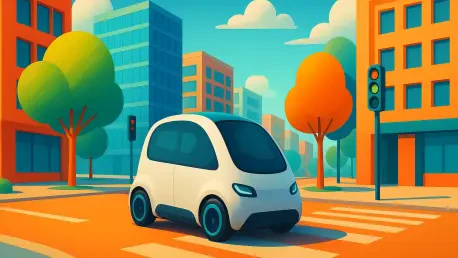
At the heart of the KIRA+ fleet is the HOLON urban, a vehicle that represents a departure from the traditional approach of modifying existing passenger cars for autonomous use. Instead, this shuttle was engineered from the ground up to serve as a high-tech public utility, integrating advanced driving technology provided by Mobileye. The design emphasizes a purpose-built chassis that accommodates the sensors and compute power necessary for SAE Level 4 operations, allowing the vehicle to navigate complex urban intersections and pedestrian zones without constant human intervention. While the technology is capable of independent operation, the current testing phase retains a human safety monitor on board to oversee performance and provide reassurance to passengers as they adapt to this new mode of travel.
This cautious approach ensures that any technical anomalies are managed in real-time while the system gathers the massive amounts of data required to refine its situational awareness. Beyond its external sensor suite, the HOLON shuttle utilizes sophisticated mapping data to navigate the specific districts of Darmstadt and Offenbach with high precision. These vehicles are equipped with redundant systems to ensure safety, meaning that even if one component fails, the shuttle can safely come to a halt or continue its journey using backup hardware. The integration of such technology into a public transit environment requires more than just raw computing power; it necessitates a deep understanding of local traffic patterns and the ability to interact predictably with human drivers.
Accessibility and Passenger Capacity
One of the defining characteristics of the HOLON urban is its unwavering commitment to inclusivity, a factor often overlooked in earlier iterations of autonomous vehicles. The shuttle’s interior has been meticulously designed to be fully accessible, featuring low-floor entry points and automated ramps that cater to passengers with reduced mobility. In its standard configuration, the vehicle offers comfortable seating for five passengers, making it an ideal solution for last-mile connectivity where traditional buses might be underutilized. However, the true innovation lies in its flexible layout, which includes a dedicated space specifically engineered for wheelchair users. When a wheelchair is present, the vehicle maintains three additional seats, ensuring that the service remains available to multiple commuters simultaneously.
This focus on universal design ensures that the benefits of autonomous transit are shared by all members of the community, regardless of their physical abilities or age. The strategic emphasis on passenger comfort extends to the digital interface within the shuttle, where riders can track their progress and receive real-time updates about their journey. By prioritizing the user experience, the KIRA+ initiative aims to overcome the psychological barriers often associated with driverless technology. The shuttle acts as a mobile extension of the public transit system, providing a safe and clean environment that feels familiar to those accustomed to modern trains. As the project progresses from 2026 to 2028, feedback from early adopters will be instrumental in fine-tuning these interior features.
Operational Framework and Regional Integration
Collaborative Roles and Management
The operational success of the KIRA+ project is built upon a complex web of partnerships that distribute technical and logistical responsibilities among industry leaders. The Rhein-Main-Verkehrsverbund serves as the strategic architect, ensuring that the autonomous service is fully integrated into the existing regional tariff and scheduling systems. Meanwhile, DB Regio takes on the critical role of fleet operator, managing the day-to-day logistics of vehicle deployment and technical maintenance. A vital component of this management structure is the technical supervision center, where specialized staff monitor the shuttles in real-time from a remote location. This center serves as a digital safety net, allowing human operators to intervene if a vehicle encounters a situation it cannot resolve independently.
Supporting the physical infrastructure is a sophisticated digital backbone provided by ioki, a company specializing in intelligent on-demand mobility. Their platform powers the booking application that allows passengers to request a shuttle at their convenience, moving away from the rigid schedules of traditional transit. The software uses advanced algorithms to pool passenger requests, optimizing routes in real-time to ensure maximum efficiency and minimal wait times. This digital-first approach allows the KIRA+ service to adapt dynamically to fluctuations in demand, such as morning rush hours or late-night travel needs. By integrating this technology into the broader transit network, the project creates a seamless experience where users can transition from a train to an autonomous shuttle using a single digital interface.
Evolution Toward Scalable Mobility
KIRA+ is not an isolated experiment but rather the direct successor to the initial KIRA project, which concludes its first major phase in 2026. This transition marks a shift in focus from proving basic technical feasibility to achieving deep system integration and regional scalability. The expertise gained during the previous years has been codified into the new phase, allowing the team to bypass early hurdles and focus on refining the MILA middleware architecture. As the project moves forward, mapping drives for additional routes in the Rhine-Main region are scheduled to commence in early 2027, expanding the service area to cover more diverse urban and suburban environments. This phased expansion is critical for understanding how autonomous shuttles behave in different contexts, from town centers to business districts.
The continuity between the project phases also allows for the ongoing refinement of the centralized control center, which was established during the first iteration of KIRA. This facility now serves as a hub for data collection and analysis, providing insights into vehicle performance, battery health, and passenger behavior. These insights are shared among the partners, including the German Aerospace Center, which conducts scientific evaluations to determine the project’s impact on regional traffic flow and emissions. By treating the Rhine-Main region as a living laboratory, the consortium can test various operational models to find the most cost-effective solution for local municipalities. This data-driven approach ensures that the eventual rollout of autonomous shuttles is grounded in empirical evidence.
Strategic Impact on Public Transportation
Addressing Industry Challenges
The strategic deployment of autonomous shuttles in the Rhine-Main region addresses several pressing challenges currently facing the public transportation industry. One of the most significant issues is the chronic shortage of qualified bus drivers, which has led to service reductions and increased operational costs for transport associations. Autonomous technology offers a potential solution to this labor crisis by automating the driving task, allowing personnel to be redirected toward higher-level technical supervision and passenger assistance roles. Furthermore, the ability to operate these shuttles around the clock makes it possible to provide 24/7 service, even in underserved rural areas where low demand makes traditional fixed bus routes economically unfeasible for most local governments.
In addition to labor issues, the KIRA+ initiative targets the environmental and economic sustainability of urban transit systems. By utilizing electric shuttles that are shared among multiple passengers, the project contributes to a reduction in local carbon emissions and helps to alleviate road congestion. The digital shift toward on-demand services also allows for more precise resource allocation, as vehicles are only deployed when there is actual demand, rather than running empty on fixed schedules. This efficiency not only lowers the carbon footprint of the transit network but also reduces the financial burden on taxpayers. Consortium leaders emphasized that the intelligent integration of these services was the key to their success, ensuring that shuttles complemented existing rail and bus infrastructure.
Future Directions for Driverless Transit
Ultimately, the KIRA+ project transformed autonomous shuttles from an experimental novelty into a fundamental pillar of the German national transit system. The project partners identified that the key to success lay in moving beyond the vehicle itself and focusing on the underlying middleware and organizational integration. By 2028, the lessons learned in Darmstadt and Offenbach provided the basis for a national rollout strategy that prioritized accessibility and economic efficiency. The initiative successfully demonstrated how digital logistics and autonomous driving could solve the last mile problem, making public transit a more attractive option for millions of commuters. This transition marked the beginning of a new era for public mobility, characterized by a seamless blend of rail and flexible technology.
Moving forward, the focus shifted toward expanding these services into even more complex environments and exploring the potential for higher speeds and larger vehicle capacities. Policymakers and transport authorities began implementing new regulatory frameworks that allowed for the removal of on-board safety monitors in favor of pure remote supervision, further reducing operational costs. Investment was also directed toward enhancing the interoperability of different autonomous platforms, ensuring that commuters could travel across regional borders without technical interruptions. These steps ensured that the technological advancements made in the Rhine-Main region were not lost, but rather served as the permanent foundation for a modern, efficient, and climate-neutral public transportation network.