
A political savant and leader in policy and legislation, Donald Gainsborough is at the helm of Government Curated, where he navigates the complex intersection of state governance and transportation regulation. With the recent signing of House Bills 1273 and 1469 in Virginia, the state has positioned itself at the forefront of a national movement to tighten safety standards within the rideshare industry. In this discussion, we explore the nuances of these new mandates, ranging from the technicalities of comprehensive background checks and real-time identity verification to the strategic acceleration of implementation timelines and the shift in corporate cooperation.
New regulations require rideshare background checks to include all addresses where a driver has lived since age 18. How does this comprehensive history help identify risks that a standard multi-year check might miss, and what specific steps must screening firms take to ensure these records remain accurate?
Standard background checks often operate within a limited window, such as the last seven years, which can leave significant gaps if an individual has a history of offenses in a different jurisdiction from their youth or early adulthood. By requiring a full history of addresses since age 18, we are effectively closing the “jurisdictional hop” loophole where a driver might move to escape a troubled past. Screening firms must now engage in a much more granular level of due diligence, verifying records across multiple state and local databases rather than relying on a single national snapshot. To maintain accuracy, these firms are now mandated to be accredited by the Professional Background Screen Association, ensuring they follow strict protocols for data verification and notification. This level of scrutiny is designed to ensure that the person behind the wheel has a documented history of safety that spans their entire adult life, not just a recent snapshot.
Rideshare platforms are now required to offer in-app audio and video recording options during trips. What specific protocols must be in place to secure this sensitive data, and how do these digital tools change the legal landscape for resolving safety disputes between drivers and passengers?
The introduction of in-app recording is a massive shift in how we approach the “he-said, she-said” nature of incident reporting, but it requires ironclad data security to protect the privacy of both parties. These files must be encrypted and stored in a way that neither the driver nor the passenger can tamper with or view them unless an actual safety report is filed. In the legal realm, this creates a definitive digital record that can quickly exonerate the innocent or provide undeniable evidence of misconduct, which is vital given the thousands of reports of sexual misconduct filed annually. By having these tools integrated directly into the platform, we are moving away from external dashcams toward a centralized, regulated system of accountability. It essentially brings a virtual witness into every vehicle, significantly lowering the barrier for reporting and resolving disputes with concrete evidence.
Preventing drivers from sharing login credentials or accounts is a primary focus of new identity verification mandates. How do real-time identity checks function technically to prevent fraud, and what are the specific civil penalties or enforcement mechanisms used to ensure companies maintain these rigorous standards?
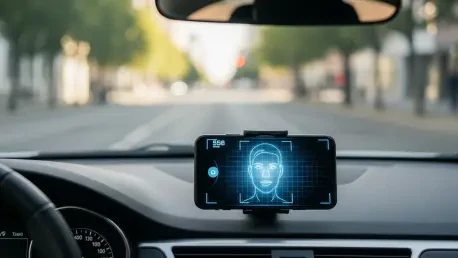
Real-time identity checks typically involve biometric verification, such as requiring a driver to take a “selfie” or use facial recognition before they can go online and at various intervals throughout their shift. This prevents a high-risk individual from “renting” a legitimate driver’s account, a practice that has caused significant concern for regulators and passenger families alike. Under House Bill 1273, if a company fails to maintain these rigorous standards or if a driver is found sharing credentials, they face civil penalties that are now funneled directly into the Department of Motor Vehicles. These fines serve as both a deterrent and a funding mechanism for the state to keep a watchful eye on platform activities. The goal is to ensure that the person who passed the background check is the exact same person who is actually opening the car door for a passenger.
Safety requirements that were originally delayed for several years are now being accelerated for much sooner implementation. Why is it critical to fast-track these timelines, and how does the recent collaboration between tech companies and state regulators differ from the resistance seen in other major markets?
Waiting until 2027, as the original reenactment clause suggested, was simply not an option when you consider the rapid pace at which the rideshare industry is evolving and the immediate nature of the safety threats. By removing that clause and setting a hard start date of July 1, 2026, Virginia is signaling that public safety takes precedence over corporate administrative convenience. We’ve seen significant resistance in places like Colorado, where companies argued that frequent checks were too burdensome, but in Virginia, Uber actually supported the removal of the delay. This collaboration suggests that the industry is beginning to realize that uniform, high-standard regulations actually help their brand by building consumer trust. It is a pivot from the “growth at all costs” mentality toward a sustainable model where safety is a core feature of the service rather than a secondary hurdle.
Despite some declines in incident categories, reports show that fatal physical assaults within the rideshare industry have increased significantly in recent years. How can standardized accreditation for background check companies mitigate these specific risks, and what metrics should be used to evaluate the success of these laws?
The data is startling: while some sexual assault categories saw a 21% decrease in recent years, fatal physical assaults jumped by a staggering 185% in certain company reports. Standardized accreditation through the Professional Background Screen Association ensures that the firms vetting these drivers aren’t cutting corners or using incomplete data that might miss violent tendencies. Success for these laws will be measured by a direct downward trend in these fatal incidents and a more consistent disqualification rate for applicants with violent criminal histories. We also need to look at the volume of safety reports filed through the new in-app recording tools; an increase in reporting combined with a decrease in actual physical harm would indicate the system is working. Standardizing these practices across the industry means that a “high-risk” driver cannot simply jump from one platform to another to bypass safety protocols.
Civil penalties for safety violations are being directed to the Department of Motor Vehicles to fund administration and enforcement. What specific resources does the agency need to effectively monitor platform compliance, and how will these fines be structured to deter recurring violations by large-scale transportation networks?
The DMV requires specialized technical staff who can audit the digital verification logs and ensure that the biometric checks are actually happening as mandated. Redirecting civil penalties to the agency provides a dedicated revenue stream that doesn’t rely on the general taxpayer, essentially making the industry pay for its own oversight. Fines are structured to escalate for recurring violations, ensuring that for a massive network, the cost of non-compliance is always higher than the cost of implementing the safety tech. This creates a financial ecosystem where the DMV has the manpower to perform spot checks and data audits, keeping the platforms on a short leash. It turns a regulatory mandate into a self-sustaining enforcement cycle that rewards compliance and heavily penalizes negligence.
What is your forecast for rideshare safety?
My forecast for the industry is one of “standardized transparency,” where the wild-west era of unregulated gig work is replaced by a sophisticated, tech-driven safety net. Within the next three to five years, I expect the protocols we are seeing in Virginia—such as biometric verification and universal background check standards—to become the national baseline rather than the exception. As these tools become more integrated, the data suggests we will see a significant reduction in the most violent incident categories, as high-risk individuals are systematically filtered out of the pool of eligible drivers. Ultimately, the future of rideshare safety lies in this blend of legislative rigor and technical innovation, ensuring that every time a Virginian opens an app, they are met with a verified professional in a monitored, secure environment.