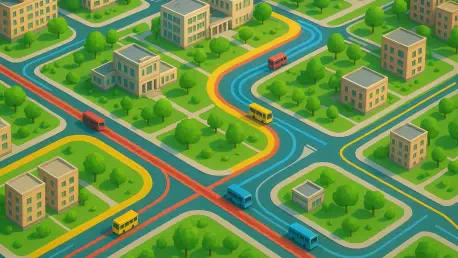

Navigating the bustling streets of Bellingham has long required a mastery of complex transit maps that often resembled a tangled web of legacy routes rather than a modern transportation network. The complex network of six overlapping routes known as the Blue Line has been replaced by a streamlined backbone system to improve service reliability. This structural shift represents a decisive move by the Whatcom Transportation Authority to address long-standing logistical bottlenecks that frequently paralyzed campus transit during the busiest hours of the academic day. By dismantling the convoluted Blue Line, which previously consisted of six distinct but overlapping paths, the agency has modernized the regional infrastructure to better serve a growing population. This overhaul is not merely a cosmetic change but a fundamental realignment of transit services to match the actual ridership patterns of residents and the university community. The goal is to eliminate the persistent confusion that once plagued students and local commuters alike, ensuring that bus frequency is optimized for high-traffic corridors rather than spread thin across redundant and outdated circuits throughout the city core.
Optimizing the University Corridor: The Backbone System and Campus Circulators
The cornerstone of this new transit architecture is the introduction of Route 190, which now serves as the primary high-frequency artery for university commuters throughout the region. Operating at 15-minute intervals during the academic year, this line provides a dependable schedule that allows students to plan their arrivals with much greater precision. By establishing a central backbone, the authority has removed the variability that often resulted from the previous loop systems. This consistency is crucial for a university environment where minutes can mean the difference between arriving on time for a lecture or missing a significant portion of a session. Furthermore, the 190 route acts as a conduit that bridges the gap between the downtown core and the southern residential districts, effectively centralizing transit activity along the most heavily utilized pathways. This strategic move ensures that resources are concentrated where they provide the most immediate benefit to the majority of the daily ridership, reflecting a modern approach to urban transit design.
To bolster this central line and manage the sheer volume of passengers on campus, the authority has deployed the new Campus Circulator, which integrates Routes 97 and 98. These specific lines were engineered to absorb the massive surge of student riders traveling between downtown, Samish Way, and Bill McDonald Parkway. By creating a dedicated loop for these high-density areas, the redesign prevents the main backbone from becoming overwhelmed during peak passing periods. This localized focus is a direct response to the campus-wide gridlock that was frequently observed in previous years when through-traffic and student shuttles were forced to share the same narrow corridors. The introduction of these circulators effectively decouples local campus transit from regional service, allowing for a more predictable and efficient flow of traffic across the entire university district. This specialized approach addresses the unique geographic challenges of the area while maintaining a high standard of service for every passenger who relies on public transportation to reach their final destination.
Regional Connectivity: Improving Flow Beyond the Campus Perimeter
The 2026 redesign extends its influence well beyond the immediate university borders, replacing several legacy routes with more direct alternatives to enhance regional movement. For instance, Route 5 has been established to connect the downtown hub directly to Fairhaven via Samish Way, offering a more intuitive path for residents. Simultaneously, Route 6 has been refined to provide a significantly faster commute for those living in the Puget and York neighborhoods. This was achieved by removing the time-consuming campus detours that were previously embedded in the 196 and 197 lines. By bypassing the congestion of the university core, these regional routes can maintain tighter schedules and reduce the overall travel time for non-student commuters. This separation of transit goals ensures that neighborhood residents are no longer delayed by the specific ebbs and flows of university life, creating a more equitable transit environment for all Bellingham citizens regardless of their destination. This directness is a key component of the agency’s long-term efficiency strategy.
Addressing the specific needs of high-density student housing, Route 7 has been designated to serve the Happy Valley area with a focus on comprehensive coverage. Although this route features a longer loop compared to its predecessors, it is strategically positioned to handle the massive concentration of residents in the south campus vicinity. This adjustment reflects a commitment to prioritizing the areas with the highest potential for transit usage. By dedicating a specific route to this residential hub, the transit authority can manage the high boarding numbers more effectively than the previous fragmented system allowed. The redesigned Route 7 serves as a vital link, ensuring that students living further from the main academic buildings still have reliable access to the campus core. While the longer loop may require a slight adjustment in personal scheduling, the increased capacity and dedicated focus on this high-demand area are expected to provide long-term benefits in terms of route stability and the reduction of overcrowded buses during peak hours.
Economic Realities and Future Strategic Steps: Navigating the Transition
The partnership between the transportation authority and the university is a cornerstone of the local economy, as student ridership represents approximately 40% of all transit trips in the region. Data indicates that students are ten times more likely to utilize the bus system than personal vehicles, making them the most significant demographic for transit planning. However, this service redesign arrives at a time of shifting economic conditions, including a scheduled fare increase where fixed-route prices will double from $1 to $2. To protect the student population from immediate financial strain, the university successfully negotiated a one-year extension on its universal bus pass agreement, freezing current rates for students through September 2027. This fiscal strategy allows for a measured implementation of the redesign, giving all parties the time to evaluate the performance of the system before the next phase of the contractual agreement and fare adjustments take full effect later next year.
The final implementation of the 2026 redesign served as a bold blueprint for future urban mobility initiatives in the region. By prioritizing structural efficiency over legacy convenience, the transit authority established a framework that significantly reduced systemic delays. For students and residents, the next logical step involved actively engaging with the new real-time tracking tools to optimize their individual commute patterns. Commuters were encouraged to provide feedback through the official digital portal to help fine-tune the frequency of the Campus Circulators. University administrators also looked toward integrating these transit improvements into broader campus sustainability goals, ensuring that the reduction in private vehicle usage remained a top priority. As the community moved forward, the focus shifted to monitoring long-term ridership trends and preparing for the next phase of the universal pass negotiations. The successful navigation of this transition period proved that a modernized system could effectively meet the needs of an academic population.