
Pet ownership across the United Kingdom has reached record levels in recent years, yet the legal framework governing road traffic accidents involving domestic felines remains a point of intense national debate and emotional contention for millions of households. While drivers are legally mandated to report collisions with dogs, horses, or livestock under the current Road Traffic Act, the British government recently reaffirmed its stance against extending these specific requirements to include cats. This decision followed extensive parliamentary discussions and public petitions that sought to grant cats the same legal protections as other domestic animals. Proponents of the change argued that mandatory reporting would ensure injured animals receive medical attention and provide closure for grieving families who often never learn the fate of their pets. However, officials cited significant enforcement challenges and the inherent behavioral differences between cats and larger animals as primary reasons.
Legislative Framework: The Road Traffic Act
The existing legal landscape is primarily defined by the Road Traffic Act 1988, which specifies that drivers must report accidents involving certain animals to the police if the owner is not present. This list includes horses, cattle, asses, mules, sheep, pigs, goats, and dogs, reflecting a historical focus on agricultural assets and animals that pose a significant physical risk to vehicles and passengers. Cats were originally excluded from this list because they were viewed as free-roaming creatures whose movements are difficult to regulate or predict compared to leashed dogs or fenced livestock. In the current legislative session spanning from 2026 to 2028, lawmakers examined whether this Victorian-era logic still holds weight in a society where pets are increasingly treated as integral family members. Despite the high volume of correspondence from constituents, the Department for Transport concluded that adding cats would create a disproportionate administrative burden on the police.
Critics of the recent rejection argue that the distinction between a dog and a cat in the eyes of the law is an arbitrary one that fails to account for the evolving social value of feline companions. Under the current system, a driver who strikes a dog must stop and provide their details or report the incident within twenty-four hours, yet striking a cat carries no such legal obligation. This discrepancy often leads to scenarios where injured cats are left on the roadside, potentially suffering for hours when timely intervention might have saved their lives. Government representatives maintained that the practicalities of identification present a major hurdle, as cats frequently lack collars and are not always microchipped, making it difficult for a driver to locate an owner or for authorities to verify the incident. While the government acknowledged the distress caused to pet owners, it emphasized that current road safety priorities must remain focused on incidents involving larger animals or human injury.
Technological Solutions: Microchipping and Community Action
One of the strongest arguments for revising the reporting laws stems from the widespread adoption of microchipping technology, which has significantly improved the chances of reuniting lost pets with their owners. Since mandatory microchipping for cats became a standard requirement, the ability for veterinary practices and local councils to identify a deceased or injured animal has reached unprecedented levels of efficiency. Advocacy groups pointed out that if drivers were required to report these incidents to local authorities rather than the police, the administrative strain could be mitigated while still achieving the goal of notification. By utilizing a centralized database, a simple scan could instantly alert a family to their pet’s location, preventing the prolonged agony of uncertainty. However, the government remained skeptical about the logistics of equipping every patrol with scanning hardware, suggesting instead that the responsibility should remain a voluntary best practice for local councils.
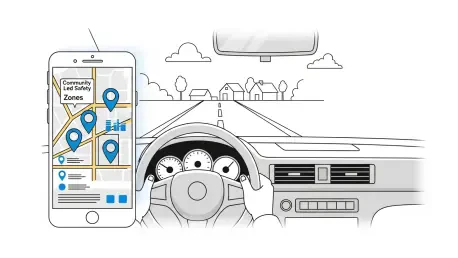
The recent legislative history showed that while formal mandates were dismissed, the dialogue surrounding the issue prompted several local councils to adopt more transparent reporting procedures for their waste management departments. Stakeholders identified that the most effective way to influence future policy was through the continued collection of data regarding road incidents to prove the scale of the problem. Advocates suggested that pet owners should support insurance providers that offered benefits for accident recovery and participated in community-led mapping projects that identified collision hotspots. These efforts were designed to create a comprehensive safety net that operated outside the traditional legal framework. By focusing on practical, technology-driven solutions and community cooperation, pet owners sought to bridge the gap left by the parliamentary decision. The focus shifted toward empowering individuals to take action, ensuring that feline welfare remained a priority in the broader conversation about road safety.