
The arrival of the 2026 World Cup has forced a dramatic confrontation between the ambitious expectations of international travelers and the reality of aging American transit infrastructure. As more than five million fans navigate the eleven host cities this month, the tournament has become the ultimate proving ground for whether massive sporting events can act as a catalyst for permanent urban improvement. Municipal leaders are no longer discussing these upgrades in the future tense; they are currently managing the largest surge in public transportation ridership since the mid-twentieth century. This influx of tourism has provided a rare, high-stakes deadline that has successfully accelerated projects which previously faced decades of bureaucratic stagnation. By shifting the focus from temporary event-based fixes to long-term regional connectivity, cities are attempting to prove that the immense investment required to host the world can pay dividends for local residents long after the final championship match has concluded. The central challenge lies in ensuring that these billion-dollar developments do not become idle relics, but instead serve as the new backbone for a more mobile and accessible American urban landscape.
Strategic Connectivity: Seattle’s Transit Maturation
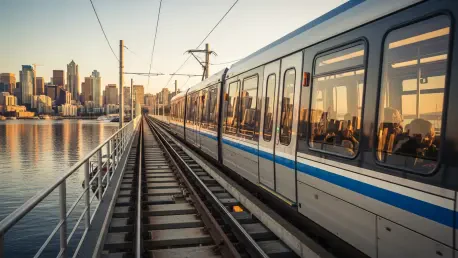
Seattle stands as a premier example of how consistent, long-term planning can meet the sudden demands of a global event without succumbing to last-minute chaos. The centerpiece of the city’s current transit strategy is the Crosslake Connection light rail line, which utilizes a groundbreaking engineering feat: electric rail running across a floating bridge. This specific project has fundamentally altered the geography of the region by linking major urban hubs with a level of reliability that was previously impossible. During the tournament, this system has doubled the frequency of stops in the downtown core, moving tens of thousands of passengers per hour away from congested surface streets and toward the various fan zones and stadiums. The success of this implementation is not the result of a sudden rush to prepare for the tournament, but rather a disciplined adherence to a development schedule that treated the arrival of international crowds as a non-negotiable milestone. This approach has demonstrated that readiness for a mega-event is best achieved through persistent, incremental expansion rather than the construction of isolated, event-specific facilities that lack a clear post-tournament purpose.
Beyond the physical expansion of tracks and stations, Seattle has revolutionized its approach to passenger behavior and state-wide connectivity through sophisticated digital integration. Drawing on data from previous international events, the city has implemented a comprehensive messaging system and fare incentive program designed to discourage the use of rental cars. Visitors and locals alike are currently using unified mobile applications that streamline the transition between light rail, buses, and ferries, making the transit system the most convenient option for stadium access. Furthermore, the state government has leveraged the tournament’s momentum to fund new intercity bus routes that extend deep into the interior of the region, ensuring that the infrastructure legacy is not confined to the urban center. This statewide perspective acknowledges that the economic and social benefits of improved transit must reach beyond the immediate vicinity of the sporting venues. By focusing on the user experience and regional reach, the city is fostering a new culture of public transit reliance that is expected to persist well beyond the summer, fundamentally changing how the Pacific Northwest moves.
Southern Mobility: The MARTA Redesign and Its Social Impacts
In Atlanta, the Metropolitan Atlanta Rapid Transit Authority, known as MARTA, is currently navigating its most significant bus network overhaul in over four decades. This redesign is a direct response to the pressure of the tournament, but its primary goal is to address the shifting demographics and employment centers of the modern city. The new system prioritizes high-frequency service, ensuring that a much larger percentage of the population now lives within a short walk of a reliable transit stop. To accommodate the massive crowds attending matches, the city has also introduced a fleet of modernized railcars featuring expanded interiors and improved digital navigation tools. This modernization effort builds on the legacy of the 1996 Olympics, but with a more refined focus on capacity and efficiency. By treating the tournament as a deadline, Atlanta has managed to bypass much of the political inertia that typically slows down large-scale network changes, resulting in a more robust and responsive transit system that is designed to handle both international tourists and daily commuters with equal effectiveness.
However, the implementation of such a sweeping redesign has created a complex dialogue regarding the balance between system-wide efficiency and neighborhood-specific access. While the new high-frequency routes triple the number of residents who can access reliable transit, some established local routes have been consolidated or eliminated, causing concern among long-term riders who depend on those specific connections. This tension highlights the inherent difficulty of using a global event to drive domestic policy; the needs of a world-class sporting tournament often favor fast, high-capacity trunk lines, whereas local commuters may rely on a more granular web of neighborhood services. Transit advocates in Atlanta are closely monitoring how these changes impact vulnerable populations, arguing that the success of the World Cup infrastructure should be measured by its ability to serve the person going to a grocery store as effectively as the person going to a stadium. This ongoing debate underscores the necessity of inclusive planning, ensuring that the drive toward modernization does not inadvertently leave behind the very residents who form the core of the city’s daily transit ridership.
Localized Solutions: Upgrades in Boston and Kansas City
The approach in cities like Boston and Kansas City has been more targeted, focusing on specific bottlenecks and localized enhancements that offer high value for both visitors and residents. In the Boston area, a $35 million investment has been directed toward accessibility and platform upgrades at the Foxboro station, a move that directly facilitates stadium access while permanently improving the commuter rail experience for the southern suburbs. Similarly, Kansas City has utilized the tournament deadline to push through significant streetcar extensions that connect the downtown core to various cultural and commercial districts. These projects are not merely about moving fans during the tournament; they are about creating a more cohesive urban fabric that encourages foot traffic and local economic activity. By focusing on these high-impact nodes, these cities are demonstrating that even modest, well-placed investments can significantly improve the overall functionality of a metropolitan area. The challenge for these municipalities is to manage the temporary strain on resources during the event while ensuring that regular service levels are maintained for those who are not attending the matches.
The financial reality of these projects remains one of the most significant hurdles for host cities, as neither FIFA nor the federal government has provided the massive, multi-billion-dollar grants often associated with major international events. Without a dedicated federal windfall, local transit agencies have had to rely heavily on regional tax revenue, creative financing, and projected ticket sales to fund their infrastructure goals. This lack of a central funding source has forced cities to be exceptionally disciplined in their spending, prioritizing projects that have a clear and immediate benefit for local taxpayers. This fiscal constraint has actually served as a safeguard against the creation of “white elephants,” as every dollar spent must be justified by its long-term utility to the community. Consequently, the upgrades seen in Boston and Kansas City are largely focused on “plumbing”—the essential, often invisible improvements to signaling, accessibility, and capacity that keep a city running. While these improvements may not be as flashy as a new stadium, they represent a more sustainable and responsible approach to hosting a global event under tight budgetary restrictions.
The Final Whistle: Evaluating the Lasting Transportation Impact
Urban planners have long used the “wedding analogy” to describe the dangers of hosting mega-events, noting that cities often spend heavily on superficial decorations for the guests while ignoring the fundamental repairs needed for the family. To avoid this pitfall, the successful host cities of this tournament have embraced “system-level thinking,” ensuring that every new bus lane, railcar, and digital upgrade serves the general public rather than just functioning as a shuttle for fans. The goal has been to create a foundation of mobility that remains useful for the next thirty years, effectively using the tournament as a catalyst to fulfill existing promises to the electorate. By integrating stadium access into the broader regional transit grid, cities have avoided the trap of building specialized infrastructure that serves no purpose once the final whistle blows. This strategy has transformed the tournament from a potential logistical nightmare into a rare opportunity to demonstrate the viability of public transit in regions that have historically been dominated by the private automobile.
The 2026 World Cup served as the ultimate stress test for urban planners and municipal transit authorities across the entire United States. Cities that successfully integrated their tournament preparations into existing long-term development goals found that the temporary influx of visitors accelerated projects that would have otherwise languished for years. In Seattle, the floating bridge light rail became a permanent fixture of regional commuting, while Atlanta’s bus network redesign successfully transitioned from a spectator-focused system back to a community-centered utility. These agencies moved beyond the immediate pressure of the matches to secure a future where public transport was seen as a primary, rather than secondary, mode of travel. Moving into the period from 2026 to 2028, the focus shifted toward maintaining these high service frequencies without the support of tournament-driven revenue. The hard-won improvements in accessibility and rider communication remained as the standard for future infrastructure investments. Ultimately, the lessons learned from this period provided a clear roadmap for how American cities can leverage large-scale events to build a more resilient and equitable transportation network.