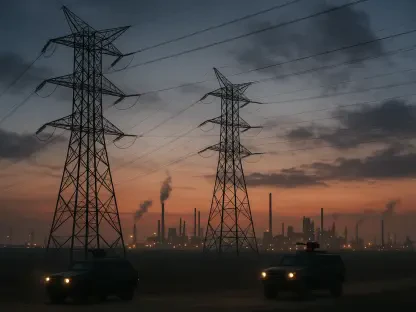

The transition toward digital environmental governance means that data gaps in electronic reporting will automatically be categorized as high-risk gross violations. This mandate, established under Law No. 340-VIII of the Republic of Kazakhstan, officially came into effect on September 8, 2026, fundamentally altering the compliance landscape for the nation’s largest industrial entities. For years, the Entrepreneurial Code served as a general protective shield for businesses, emphasizing preventive control and limiting the state’s ability to intervene in private operations. However, this legislative update marks a decisive pivot toward a specialized, high-scrutiny environmental regime. By moving the regulatory authority for Category I and II facilities—those with the most significant ecological footprints—directly into the Environmental Code, the government is signaling that environmental integrity now outweighs traditional administrative protections for major industrial players. This “environmentalization” of state control ensures that high-impact activities are no longer governed by generalist rules but by a rigorous, technology-driven framework designed to ensure absolute accountability.
The dual-track system created by this reform establishes a clear distinction between minor business activities and heavy industry. While Category III and IV facilities, characterized by minimal to low environmental impact, remain under the protective purview of the Entrepreneurial Code, the nation’s major polluters are now subject to a far more aggressive oversight model. This transition reflects a sophisticated maturation of Kazakhstan’s legal system, aligning domestic industrial regulation with international environmental, social, and governance standards. The move was born from a recognition that general business protections often hindered the timely identification and mitigation of large-scale ecological risks. Consequently, the new law eliminates many of the procedural buffers that previously allowed industrial operators to delay or contest environmental monitoring, creating a more direct and efficient pipeline between the detection of a violation and the enforcement of corrective actions or penalties.
Regulatory Bifurcation: Prioritizing Ecology Over General Business Shield
The most significant structural change introduced by Law No. 340-VIII is the formal extraction of environmental control for Category I and II facilities from the Entrepreneurial Code. Previously, all business entities in Kazakhstan operated under a unified set of administrative safeguards intended to prevent arbitrary state interference. This generalist approach often prioritized the stability of the entrepreneurial environment over the immediate needs of environmental protection, frequently requiring lengthy justifications for on-site inspections. Under the new 2026 framework, these high-risk industrial facilities are governed primarily by the Environmental Code, which grants regulators specialized powers that exceed the standard limitations found in general business law. This shift effectively removes the “safety net” that major corporations once relied upon, replacing it with a regime that views ecological compliance as a mandatory prerequisite for operational legitimacy rather than a secondary administrative requirement.
This bifurcation ensures that the state can tailor its inspection protocols to the specific risks associated with heavy industry, such as mining, metallurgy, and oil and gas extraction. For these sectors, the legal emphasis has shifted from “preventive monitoring” to “direct control.” While the Entrepreneurial Code focused on guiding businesses toward compliance through warnings and advisory sessions, the Environmental Code now emphasizes rigorous verification and immediate enforcement. The state’s ability to act is no longer restricted by the broad business protection clauses that were designed to shield small and medium enterprises from overregulation. Instead, large-scale operators are held to a standard of continuous transparency, where the burden of proving compliance rests more heavily on the operator. This specialized focus allows environmental inspectors to utilize more technical and specific criteria when evaluating a plant’s performance, ensuring that oversight is as complex and nuanced as the industrial processes being monitored.
Digital Enforcement: The Integration of Automated Emission Monitoring Systems
A central pillar of the reform is the technological modernization of state oversight, specifically through the mandatory adoption and legal primacy of automated emission monitoring systems. For facilities categorized as high-impact, traditional manual sampling and periodic on-site visits are being replaced by a digital “source of truth” that operates in real-time. These automated systems transmit data directly to government databases, providing an unalterable record of an operator’s environmental performance. Under the new legislation, this electronic data serves as the primary evidence for compliance, significantly reducing the opportunities for data manipulation or disputes over the timing and accuracy of manual readings. The law formally categorizes infractions identified through these remote systems into three distinct tiers: minor, significant, and gross violations. This tiered system allows the government to respond proportionally to data anomalies, moving away from a one-size-fits-all approach to enforcement.
The legal weight granted to remote monitoring represents a substantive change in enforcement power. When an automated system flags a gross violation, such as a massive spike in hazardous emissions, it serves as an immediate and direct legal basis for ordering an unscheduled on-site inspection. Regulators no longer need to wait for a scheduled window or provide the extensive prior notifications that were once required under the Entrepreneurial Code. Furthermore, the reliance on digital governance streamlines the state’s ability to monitor vast industrial zones without the logistical constraints of physical travel. This digital transparency also creates a significant deterrent for operators who might previously have attempted to obscure operational failures. Because the systems are continuous, any attempt to bypass or tamper with the monitoring equipment is itself a severe violation, ensuring that the integrity of the data remains the cornerstone of the modern Kazakh environmental regulatory landscape.
Broadened Grounds for Inspection: Responding to Meteorological and Operational Anomalies
The 2026 legislation significantly expands the triggers that allow state inspectors to conduct comprehensive and unscheduled probes of industrial sites. In the previous regulatory era, inspections were often narrow and confined to checking specific permits or qualification requirements. The new Law No. 340-VIII empowers regulators to assess a facility’s adherence to environmental legislation in its entirety, allowing for a deep-dive investigation into the operational integrity of a plant. This means that inspectors can now evaluate the actual environmental performance and the functional state of filtration and waste management systems, rather than simply reviewing paperwork. The scope of these comprehensive inspections is designed to be holistic, ensuring that every facet of an industrial operation aligns with national ecological standards and public safety requirements.
Furthermore, the law introduces specific environmental triggers for intervention that were previously absent or ill-defined. For instance, the state now has the explicit right to launch unscheduled inspections in response to adverse meteorological conditions. During periods of heavy smog, temperature inversions, or extreme wind, industrial operations can have a disproportionately negative impact on local air quality. The new legal framework allows regulators to intervene immediately to ensure that plants are reducing their output or engaging auxiliary filtration during these high-risk weather events. Additionally, the triggers for unscheduled probes now include failure to rectify violations identified through remote monitoring and responses to industrial accidents, fires, or other hazardous natural phenomena. By granting this broad authority, the Kazakh government has created a more agile and responsive inspectorate capable of addressing threats to public health and the environment the moment they arise, rather than months after the fact.
Procedural Transformations: The Revised Appeal Mechanism and Mandatory Administrative Steps
Navigating the legal fallout of an environmental inspection has become more complex due to the revised appeal procedures integrated directly into Article 179 of the Environmental Code. A critical nuance of the reform is the apparent removal of the explicit right for businesses to bypass the administrative hierarchy and take disputes directly to court. Under the previous regime governed by the Entrepreneurial Code, operators could often fast-track their grievances to the judicial system, effectively pausing administrative enforcement. The new law implies a mandatory pre-trial administrative appeal process within the environmental ministry or department. This means that legal departments must now exhaust all internal bureaucratic remedies before a court will even consider hearing the case. This shift is designed to ensure that technical environmental disputes are first evaluated by experts within the regulatory body, potentially reducing the burden on the court system while also centralizing the interpretive authority of the Ministry of Ecology.
Another major procedural shift is the removal of the “stay of execution” for acts ordering or extending an inspection. In the past, industrial operators frequently used the legal appeal process as a stalling tactic, filing challenges against inspection orders specifically to prevent state officials from accessing their sites. Law No. 340-VIII explicitly states that an appeal against the order for an inspection does not suspend the inspection itself. This ensures that the state’s ability to collect data and conduct on-site verifications remains uninterrupted, even if the legal basis for the inspection is being contested. This change prioritizes the immediate collection of evidence and the assessment of ecological risk over the administrative convenience of the corporation. It forces a more proactive stance on compliance, as companies can no longer rely on legal maneuvers to keep inspectors at the gate during a suspected environmental emergency or a period of non-compliance.
Quantifying Liability: Defining the Duration and Financial Scope of Excess Emissions
One of the most technically impactful changes in the new law relates to the standardization of how regulators calculate the duration of “excess emissions.” This calculation is the primary driver of environmental fines and damage assessments, which in the Kazakh industrial sector can often reach millions of dollars. Prior to this reform, the lack of a clear, codified method for determining the “period of excess” led to inconsistent applications of the law and protracted litigation. Law No. 340-VIII addresses this by establishing a strict hierarchy for calculation. For Category I and II facilities, the period of excess is now calculated from the date the last production environmental control report was submitted. This places a massive premium on the accuracy and frequency of internal reporting, as any error discovered during an inspection could lead to a fine covering the entire duration since the last report, regardless of when the actual violation began.
For facilities that have successfully integrated automated monitoring systems, the calculation of financial liability becomes even more rigid. The law mandates that for these sources, the period of excess is determined strictly based on the digital data generated by the monitoring technology. This eliminates the “gray area” that previously allowed for manual interpretation or legal challenges based on the inaccuracy of human sampling. While this provides a level of predictability for operators who maintain their systems perfectly, it also creates a high-stakes environment where a single sensor failure or a sustained emission spike is immediately translated into a quantifiable financial penalty. By codifying these periods, the government has significantly reduced the discretionary power of individual officials, aiming to eliminate corruption and ensure that environmental damage is compensated based on objective, data-driven timelines. This standardized approach forces companies to view their environmental data management as a critical financial risk-mitigation function.
Strategic Realignment: Future-Proofing Industrial Operations Under New Standards
Industrial operators in Kazakhstan recognized that the enactment of Law No. 340-VIII necessitated a comprehensive overhaul of their internal compliance protocols. The transition to a regime where digital data served as the ultimate arbiter of legality forced many companies to prioritize the immediate modernization of their sensor networks and reporting software. Management teams across the metallurgical and energy sectors shifted their focus toward “pre-emptive compliance,” conducting internal audits to identify potential data gaps before they could be flagged by state remote monitoring systems. It became clear that the historical reliance on the Entrepreneurial Code’s protections was no longer a viable long-term strategy, as the specialized nature of the Environmental Code left little room for administrative delays or procedural technicalities. The focus moved from avoiding inspections to ensuring that every data point transmitted to the state was accurate and defensible.
This legislative shift ultimately paved the way for a more transparent and accountable industrial sector that aligned with global ESG expectations. The actionable next steps for enterprises involved the integration of environmental monitoring into their core operational technology stacks, treating ecological data with the same level of security and precision as financial records. Legal departments adjusted by developing robust internal procedures for the mandatory administrative appeal process, recognizing that technical accuracy within these appeals was the only way to avoid protracted disputes. As the state continued to emphasize enforcement over simple prevention, the most successful companies were those that adopted a proactive stance, utilizing their own automated data to identify and rectify inefficiencies before they crossed the threshold into “gross violations.” This new era of digital accountability established a framework where environmental stewardship and industrial profitability became inextricably linked through the medium of real-time data.