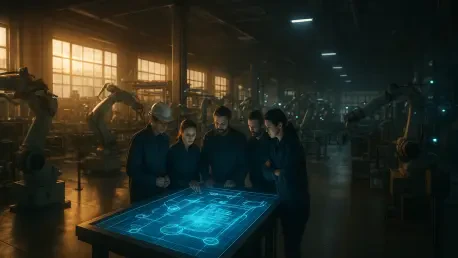

As global trade increases in complexity, the traditional trust-based model is being replaced by an evidence-based framework where risk has fewer places to hide. This shift represents a fundamental move away from fragmented, person-dependent processes toward integrated, intelligent operating systems that function as the central nervous system of a corporation. While many discussions about digital transformation previously centered on superficial improvements like automated translation or basic chatbots, the actual revolution involves the construction of robust control systems. These sophisticated infrastructures link disparate data points, human decisions, and physical evidence into a single, traceable workflow that defines the new standard for international commerce. By viewing digital maturity not just as the accumulation of data, but as the disciplined management of a verifiable chain of evidence, organizations are finally bridging the gap between having information and having real operational control. This evolution ensures that every document, from a technical drawing to a bank certification, is embedded within a digital process that demands authorization and verification at every critical milestone. The era of relying on a supplier’s reputation or a series of disjointed emails has officially ended as the complexity of the global market demands a more rigorous approach to supply chain oversight. Today, the focus has shifted toward building a resilient environment where every participant operates from a single source of truth that updates in real-time.
Overcoming the Limitations of Fragmented Communication
In the current global trade environment, critical project data is often siloed across various platforms, including instant messaging apps, spreadsheets, and endless email threads. This fragmentation creates a significant connection gap where, despite having experienced teams and technically correct documents, projects fail because there is no centralized mechanism to track approvals or changes. Intelligent control systems eliminate these management blind spots by centralizing communication and ensuring that the latest versions of technical drawings or quality standards are always the ones being used on the factory floor. The danger of relying on unstructured data is that it often leads to a lack of accountability when things go wrong. Without a system that forces a connection between a quality defect and a corrective action, issues can easily be buried in a long chat history or forgotten in a busy manager’s head. This centralized approach allows managers to oversee thousands of specific details without losing the thread of the overall project narrative. By the start of 2026, the industry realized that visibility alone is insufficient; what is required is a synchronized ecosystem where every participant operates from a single source of truth that updates in real-time.
The transition to these advanced systems requires moving away from simply turning paper documents into PDFs and toward embedding every document into an active digital process. In this new model, a project cannot move forward unless every legal risk is flagged and every technical tolerance is formally accepted by the responsible party. True digitization is not about the medium of the information, but about the control mechanisms that govern its use. By creating an environment where a document is essentially a set of instructions rather than a passive record, companies can enforce compliance across borders. This shift addresses a critical vulnerability in modern supply chains: the gap between having information and having control. When every action is linked to a specific decision-maker and a verified document, the entire process becomes more resilient against the errors and ambiguities that traditionally plague international business. This method ensures that the right data is not just available, but is actively being utilized to prevent deviations from agreed-upon standards. Consequently, the reliance on verbal agreements or loose understandings has been minimized, replaced by a rigid but effective digital workflow that demands clarity at every stage.
Shifting Focus from Discovery to Disciplined Execution
Historically, the greatest challenge for sourcing companies was finding reliable suppliers in distant markets. In the modern era, digital platforms have made factory identification nearly instantaneous, shifting the bottleneck from discovery to execution. A supplier’s digital profile or a successful initial sample is no longer enough to guarantee long-term success in a volatile global economy. The new frontier of trade management focuses on the chain of validation, which encompasses everything from legal factory verification to the monitoring of specific production milestones. This focus on execution ensures that the commercial relationship is based on evidence rather than just trust. Intelligent systems allow buyers to track whether quality defects were actually rectified or if production was authorized before final approvals were granted. By establishing formal approval gates, these systems prevent projects from spiraling out of control due to unrecorded verbal changes or misinterpreted instructions. This disciplined approach protects both the buyer and the manufacturer by reducing the ambiguity that typically fuels expensive commercial disputes. It transforms the supply chain from a series of transactions into a predictable industrial process.
Furthermore, the emphasis on disciplined execution helps organizations navigate the increasingly stringent regulatory landscape surrounding environmental and social governance. In 2026, the ability to prove compliance through a documented trail of production is as important as the quality of the product itself. Intelligent control systems provide this proof by capturing data at the source, ensuring that information about raw materials, labor practices, and carbon footprints is integrated into the project workflow. This real-time validation prevents the last-minute scramble for documentation that often occurs during audits or customs inspections. By baking compliance into the execution phase, firms can avoid the significant financial and reputational risks associated with regulatory non-compliance. Moreover, this systemic approach allows for better resource allocation, as teams can focus on optimizing production rather than manual record-keeping. The move from discovery to execution represents a maturing of the global trade sector, where the winners are no longer those with the most contacts, but those with the most robust systems for verifying and managing their international partnerships. This evolution has made transparency a fundamental requirement rather than an optional feature of modern procurement strategies.
Integrating Systemic Intelligence into the Commercial Workflow
The role of Artificial Intelligence in global trade is evolving from a standalone tool to a systemic engine embedded within a workflow. While surface AI might be useful for writing reports or answering basic queries, systemic AI functions as a guardian of the process. It can automatically extract data from business licenses, detect contradictory information in price quotations, and flag unusual changes in bank details. This allows the system to prioritize orders that require immediate human intervention, making the entire management process more efficient. Unlike simple automation, systemic AI understands the context of the data it processes, allowing it to identify risks that a human observer might overlook in a mountain of paperwork. For instance, it can cross-reference shipping logs with production reports to find discrepancies that indicate a delay before it even happens. This proactive capability transforms the role of the supply chain manager from a reactive firefighter to a strategic overseer. By automating the routine aspects of data verification, the system frees up human experts to focus on complex problem-solving and relationship management. This integration of intelligence directly into the operational flow ensures that technology serves the business goals rather than just creating more digital noise.
A key component of this technological shift is the human-in-the-loop model, which maintains a balance between machine speed and human judgment. Because international trade involves complex cultural nuances and legal liabilities, AI is not intended to replace human decision-making but to enhance it. The system organizes and flags relevant data, while humans are responsible for making the final investigation and judgment on critical issues. This prevents the confident but wrong scenarios often associated with standalone AI models and ensures that there is always a clear line of accountability for every major decision made during a project. In 2026, the most effective trade platforms are those that present AI-driven insights in a way that empowers the user to act decisively. This collaborative approach minimizes the risk of automated errors while maximizing the efficiency of the workforce. It also facilitates a continuous learning loop where the system becomes more attuned to the specific needs and risk tolerances of the business over time. By keeping humans at the center of the process, firms can maintain the flexibility needed to navigate unforeseen global events while benefiting from the rigorous data processing capabilities of artificial intelligence. This synergy represents a high-water mark of modern industrial management.
Scaling Operations through Centralized Organizational Memory
As companies scale their project volumes, they often become vulnerable to operational memory loss, where the status of an order exists only in the mind of a specific employee. Intelligent control systems solve this by creating a centralized organizational memory that provides visibility across the entire company. This reduces the risk of project failure if a key team member leaves or forgets a specific detail. By institutionalizing knowledge, firms can manage a higher volume of complex projects without a corresponding increase in operational risk. This centralized repository of information becomes a strategic asset, allowing the organization to learn from past projects and apply those lessons to future ones. When a project is documented within an intelligent system, every interaction, change order, and quality report is preserved in context. This ensures that the history of a supplier relationship is not lost to time or turnover. In the fast-paced environment of 2026, the ability to quickly access the historical context of a project is essential for making informed decisions under pressure. This move toward institutionalized visibility allows for a more democratic distribution of knowledge within a company, ensuring that the right information is available to the right people at the right time, regardless of their tenure.
This institutionalized visibility is particularly important for operational integrators—companies that bridge the gap between manufacturing capabilities and the sophisticated requirements of international markets. These entities use software to enforce process constraints, ensuring that production cannot commence until every requirement is met. The goal is to create a risk-free environment where data, decisions, and responsibility are inextricably linked, allowing firms to focus on growth rather than constant firefighting. By codifying best practices into the software itself, these integrators can maintain high standards across a diverse and geographically dispersed supplier base. This approach also facilitates the onboarding of new clients and partners, as the system provides a clear roadmap for success that is not dependent on tribal knowledge. The result is a more scalable and resilient business model that can withstand the pressures of rapid expansion. In 2026, the most successful firms are those that have successfully transitioned from being a collection of individuals to being a system-driven organization. This transformation allows them to handle the complexities of modern trade with a level of precision that was previously impossible. By leveraging organizational memory, companies can build a foundation of consistency that supports long-term profitability.
Developing New Standards in Global Manufacturing Hubs
The transformation of global trade is already visible in major global manufacturing hubs, such as Dongguan, which are moving from simple manufacturing scale to intelligently managed production. These regions are becoming laboratories for producer services, where digital infrastructure connects factories with international buyers through data-driven management. This shift represents the future of manufacturing, where the value added is no longer just the physical product, but the compliance, data management, and intelligence that surround the production process. In these hubs, the local ecosystem is evolving to support high-tech trade through the integration of smart logistics, automated quality control, and real-time production monitoring. This holistic approach allows factories to respond more quickly to changes in demand and to meet the increasingly complex specifications of global buyers. By 2026, the competitive advantage of these regions has shifted from low labor costs to the presence of a robust digital infrastructure that guarantees transparency and quality. This development has attracted a new generation of tech-savvy entrepreneurs who are redefining what it means to be a manufacturer in the digital age. The focus on intelligent management ensures that these hubs remain at the center of the global supply chain.
Ultimately, the shift toward intelligently managed production hubs is changing the definition of traditional manufacturing labels. The value of a product is now inextricably linked to the data that accompanies it through the supply chain. This evolution means that factories must become as proficient in data management as they are in physical assembly. Intelligent control systems provide the bridge between these two worlds, allowing for a seamless flow of information from the factory floor to the end customer. This integration reduces the likelihood of errors and ensures that every product meets the necessary safety and quality standards. Furthermore, it allows for greater customization and flexibility, as the digital twin of the production process can be adjusted in real-time to accommodate specific customer needs. As manufacturing hubs continue to invest in these technologies, they are creating a new standard for global excellence that prioritizes data integrity and operational transparency. This trend is not limited to a single region but is becoming a global phenomenon as manufacturing centers around the world realize the importance of digital connectivity. The result is a more integrated and efficient global trade network where information is the most valuable commodity for ensuring sustainable growth.
Establishing a Legacy of Verifiable Trade Success
The adoption of intelligent control systems transformed the way global trade operated by prioritizing evidence over unverified claims. This transition allowed companies to mitigate risks that were previously considered inherent to international manufacturing and procurement. By standardizing the way data was recorded and decisions were authorized, these systems created a historical record that served as a safeguard against future errors. Businesses discovered that their internal processes were no longer dependent on the memory of individuals but on a robust digital infrastructure. The reduction in commercial disputes was a direct result of the clarity provided by these integrated workflows, which left no room for the ambiguity that often characterized cross-border agreements. As these platforms became the industry standard, the focus shifted from mere survival to optimized growth, supported by a framework that guaranteed accountability and technical precision across every level of the organization. This era demonstrated that the most effective way to navigate complexity was through the rigorous application of data-driven discipline, ensuring that every project was backed by a verifiable chain of custody and quality assurance that met the highest global standards.
The journey toward total supply chain visibility required a shift in how firms allocated their digital budgets, moving away from standalone apps and toward integrated operating environments. Leaders who prioritized these investments observed that the most critical next step was the training of operational integrators who could bridge the gap between technical data and commercial decision-making. This human-centric approach to software implementation proved to be the missing link in achieving scalable growth across diverse global markets. By 2026, the industry recognized that the ultimate solution to trade volatility was not more data, but more discipline in how that data was authenticated and acted upon. Organizations that implemented these structured workflows found that they could onboard new suppliers and enter new markets with significantly reduced lead times and lower defect rates. This progress ensured that even as the scale of global operations expanded, the ability to manage detail and risk remained within human reach, bolstered by the most advanced tools of the era. The commitment to evidence-based trade was not merely a technological upgrade but a fundamental cultural shift that prioritized transparency and documentation for the long-term benefit of the entire commercial ecosystem.