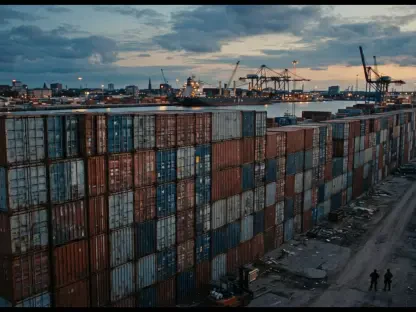

The silent glide of a thousand-ton container vessel through the North Sea without a single soul on board is no longer a scene from a science fiction novel but a tangible reality of modern commerce. As of 2026, the maritime industry has successfully transitioned from experimental prototypes to functional, medium-scale deployments of Maritime Autonomous Surface Ships, or MASS. These vessels, ranging from fully electric local ferries to short-sea traders like the pioneering Yara Birkeland, represent a paradigm shift that promises to reduce human error, lower carbon emissions, and optimize global logistics. Yet, as the engineering hurdles are cleared with increasing speed, the legal scaffolding that has supported international shipping for centuries is showing deep cracks. The fundamental disconnect lies in the fact that maritime law is a body of regulations designed by humans, for humans, and predicated entirely on the physical presence of a crew.
The Regulatory Landscape and the Human Element
Traditional Maritime Laws and the Presumption of Human Agency
The foundational “constitution” of the world’s oceans, the United Nations Convention on the Law of the Sea, known as UNCLOS, was drafted in an era when the idea of a captainless ship was purely speculative. Under Article 94 of UNCLOS, every state is required to exercise its jurisdiction and control over ships flying its flag, specifically mandating that each ship be in the charge of a master and officers who possess appropriate qualifications. This language creates a significant hurdle for autonomous operations because it assumes that the master is a physical person located on the vessel. Legal scholars and maritime experts in 2026 are debating whether a remote operator, situated in a control center hundreds of miles away, can legally fulfill the role of a “master” under existing international treaties. If the law requires a physical presence, then every autonomous voyage technically risks being in violation of international norms, creating a vacuum of accountability that could lead to complex jurisdictional disputes in the event of an accident.
Building on the requirements of UNCLOS, the International Convention for the Safety of Life at Sea, or SOLAS, imposes strict operational duties that are inherently human-centric. For instance, SOLAS Chapter V requires that all ships shall be sufficiently and efficiently manned from a safety perspective. While the International Maritime Organization has begun to issue interim guidelines to accommodate automation, the core text of SOLAS still emphasizes the necessity of a crew to perform emergency duties, such as firefighting, manual steering, and providing assistance to other vessels in distress. In 2026, the challenge is not just whether a machine can steer a ship from point A to point B, but whether it can perform the moral and legal obligations of “rendering assistance” as defined by the decades-old traditions of the sea. Without a crew to lower a lifeboat or pull survivors from the water, an autonomous ship may find itself in a position where it is technologically superior but legally deficient, leading to a fragmented regulatory environment where different nations apply different standards to autonomous transit.
The Legal Definition of the Master and Remote Operation
The role of the “Master” is perhaps the most critical legal concept in maritime history, embodying supreme authority and ultimate responsibility for the ship, its cargo, and its crew. Traditionally, the master is the final arbiter of safety, empowered to make life-or-death decisions that can override even the orders of the shipowner. In the current 2026 landscape, the transition to remote-control centers has blurred this line of authority significantly. If a ship is being operated by a team of technicians at a Shore Control Center, the question arises: who is the master? Is it the person currently holding the joystick, the software engineer who wrote the navigation algorithms, or the manager of the facility? This ambiguity complicates the application of criminal law, especially in cases of environmental disasters or collisions. If a remote operator is distracted or a system experiences a latency lag, the traditional legal framework struggles to assign the same level of “on-the-spot” accountability that is routinely applied to a captain on the bridge.
Furthermore, the physical absence of the master from the vessel creates a ripple effect throughout maritime commerce, particularly regarding the signing of legal documents and the exercise of police powers. Traditionally, the master has the authority to act as a notary, a law enforcement officer, and even a representative of the state in high-seas emergencies. In 2026, as more ships operate at higher levels of autonomy, the industry is forced to reconsider how these functions can be digitized or reassigned. For example, if a ship is boarded by pirates or enters a conflict zone, the lack of a physical master removes the primary human negotiator and legal witness from the scene. This shift requires a radical update to the International Convention on Standards of Training, Certification and Watchkeeping for Seafarers, or STCW. The convention must now evolve to certify “Remote Operators” with a completely different skill set than traditional mariners, ensuring they have the legal standing to make command decisions that are recognized by port states and international courts.
Evolving Standards for Maritime Safety and Liability
Redefining Seaworthiness in the Era of Artificial Intelligence
In the legal world of shipping, “seaworthiness” is a fundamental doctrine that requires a shipowner to provide a vessel that is reasonably fit in all respects to encounter the ordinary perils of the sea. Traditionally, this included having a competent crew and a physically sound hull. In 2026, the definition of seaworthiness has expanded to include the integrity of the ship’s software, the robustness of its cybersecurity protocols, and the reliability of its data links. A ship that is physically perfect but possesses an unpatched vulnerability in its autonomous navigation system could be deemed unseaworthy by a court of law. This shift moves the burden of proof from the daily actions of a crew to the rigorous testing and maintenance of digital systems. Insurers are now demanding more transparency regarding the “black box” algorithms that guide these ships, as a failure in the logic of an artificial intelligence could result in massive claims that traditional hull and machinery policies were never designed to cover.
The International Regulations for Preventing Collisions at Sea, commonly known as COLREGs, present another significant hurdle for the integration of artificial intelligence into the global fleet. COLREGs Rule 5 requires every vessel to maintain a “proper look-out by sight and hearing” at all times. While developers of autonomous systems argue that high-resolution cameras, LIDAR, and radar provide a superior look-out compared to a tired human, the legal interpretation of “sight and hearing” remains stubbornly tethered to human senses. In 2026, the industry is witnessing a push for “functional equivalence,” where technology is accepted if it performs the same safety function as a human, even if it does so through different means. However, the subjective nature of Rule 2, which refers to the “ordinary practice of seamen,” is difficult to code into a machine. An AI might follow the rules of the road perfectly, but it may lack the intuitive “common sense” to deviate from those rules when an unconventional and dangerous situation arises, leading to potential legal liability for adhering to the letter of the law while ignoring its spirit.
Liability Frameworks and the Shift Toward Product Responsibility
The transition to autonomous shipping is fundamentally changing the nature of maritime liability from operational negligence to product liability. For over a century, most maritime accidents were attributed to “human error,” and liability was often limited by international conventions to protect shipowners. However, when an autonomous ship fails, the fault likely lies in the design, the manufacturing, or the software updates provided by a third-party vendor. In 2026, we are seeing a dramatic increase in litigation involving technology providers who were previously insulated from maritime operational risks. This shift creates a complex web of indemnity agreements between shipowners, software developers, and sensor manufacturers. If an autonomous vessel causes a multi-ship collision because of a sensor malfunction, the traditional limitation of liability may no longer apply if the claimant can prove that the shipowner failed to maintain the “cyber-seaworthiness” of the vessel or if the manufacturer provided a defective system.
Cybersecurity has become the new frontier of maritime risk, and by 2026, it has been integrated into the core of liability discussions. Under the current legal climate, a shipowner can be held liable for “privity or knowledge” of a defect that leads to an accident. In the context of MASS, this means shipowners must stay abreast of the latest cyber threats and software patches. A failure to update a navigation system’s firewall could be seen as a lack of due diligence, making the owner fully liable for any resulting damages without the benefit of a liability cap. This is pushing the insurance industry toward new products that combine traditional maritime coverage with specialized cyber-indemnity. Furthermore, the lack of a crew on board means there are no witnesses to testify about the circumstances leading up to an incident, placing an immense legal premium on the data logs and “voyage data recorders.” Ensuring the tamper-proof nature of these logs is essential for the legal resolution of claims in a world where the primary “witness” is a processor.
Global Collaboration and the Path Toward Uniformity
The Role of the International Maritime Organization in Setting Standards
The International Maritime Organization, or IMO, has taken the lead in addressing these challenges through the development of the MASS Code. By 2026, this code has moved from a voluntary guideline to a more structured, mandatory framework intended to provide a uniform international standard for autonomous operations. The goal of the MASS Code is to bridge the gap between existing conventions like SOLAS and COLREGs and the unique requirements of unmanned vessels. One of the primary objectives of the IMO in 2026 is to harmonize the four levels of autonomy, ranging from ships with automated processes and decision support to fully autonomous vessels that can make decisions and determine actions by themselves. Without this global harmonization, autonomous ships would face a “patchwork” of conflicting national laws, making international voyages nearly impossible. For instance, a ship might be considered legal in international waters but “illegal” the moment it enters the territorial waters of a country that requires a physical pilot on the bridge.
The path toward this uniformity is fraught with political and economic tensions between “flag states,” who register the ships, and “port states,” who control the waters where ships dock. Flag states with an interest in technological leadership, such as Norway, Singapore, and Japan, have been proponents of more flexible regulations to encourage innovation. Conversely, many port states remain cautious, citing concerns over the safety of their coastal environments and the potential for technological failures to block vital shipping lanes. In 2026, the IMO’s role has expanded beyond technical safety to include the ethical and social implications of automation, such as the impact on the global seafaring workforce. The challenge lies in creating a legal environment that is “technology-neutral,” meaning it should not matter whether a human or an AI is making a decision, as long as the safety outcome is the same. Achieving this requires a level of international cooperation that is often difficult to maintain in a competitive global economy, yet it remains the only way to prevent a fragmented and inefficient maritime legal system.
Practical Solutions for a Transitioning Global Fleet
To manage the legal risks of this transition, the industry in 2026 has increasingly turned to “sandboxing” and bilateral agreements between specific trading partners. These “Green Corridors” allow autonomous ships to operate under a specific set of agreed-upon rules between two or more jurisdictions, bypassing some of the slower-moving international reforms. These practical arrangements provide a testing ground for new liability models and operational protocols without requiring an immediate rewrite of global treaties. For example, a dedicated autonomous route between two highly digitized ports can implement specialized port-state control measures, where the ship’s software is “inspected” digitally before it even enters the harbor. This proactive approach helps to build the safety record necessary to convince more skeptical regulators and insurers that autonomous systems can meet or exceed the safety performance of human-crewed vessels.
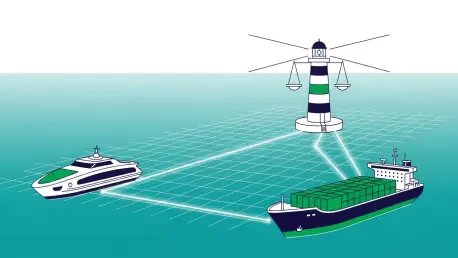
The ultimate integration of autonomous ships into international law will likely involve a hybrid approach, where traditional rules are supplemented by digital-age protocols. By 2026, the industry has recognized that the transition will not be an “all or nothing” event but a gradual shift where autonomous and manned vessels must coexist in the same waterways. This coexistence requires clear “rules of engagement” to ensure that a human captain on one ship knows exactly how the AI on an approaching autonomous ship will react. Establishing these protocols involves a high degree of data sharing and transparency, which was previously rare in the highly competitive shipping industry. Moving forward, the focus must remain on creating a robust legal infrastructure that prioritizes safety and environmental protection while allowing the efficiencies of automation to flourish. The legal readiness of the world’s oceans for autonomous ships is not just a question of changing a few definitions; it is a fundamental reimagining of how humanity interacts with the sea through the lens of technology.
The maritime industry addressed the initial legal uncertainty by prioritizing the development of the MASS Code and emphasizing “functional equivalence” in safety standards. Stakeholders across the globe recognized that the rigid definitions of the past had to give way to more flexible, goal-based regulations that focused on safety outcomes rather than the physical presence of a crew. By 2026, the implementation of “Green Corridors” provided the necessary data to prove that autonomous systems were capable of meeting international obligations. These efforts were supplemented by a shift in the insurance and liability sectors, which moved toward comprehensive product-liability frameworks to account for the role of software and hardware providers. Ultimately, the successful integration of autonomous ships was achieved when international law stopped viewing technology as an exception to the rules and instead adopted it as a central component of modern seafaring. This transition ensured that the global supply chain remained resilient, efficient, and aligned with the evolving technological landscape of the century.