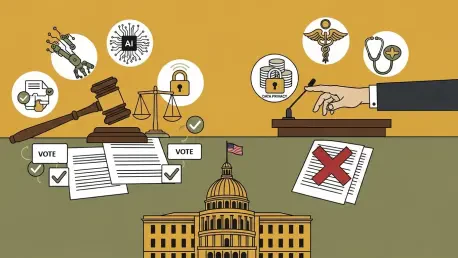

The unexpected friction between Florida’s executive leadership and the state’s legislative body reached a significant climax during a recent special session when high-profile proposals were abruptly halted. The Florida legislature recently convened for a special session that was primarily intended to handle narrow, urgent state matters such as hurricane relief and school choice expansions. However, the political atmosphere shifted dramatically when Governor Ron DeSantis attempted to broaden the agenda to include polarizing issues like artificial intelligence regulations and the dismantling of vaccine-related legal protections. Despite the Governor’s significant influence within his party, the Speaker of the Florida House exerted his considerable procedural authority to block these items on the very first day. This maneuver effectively killed the proposals before they could even be debated on the floor, signaling a clear boundary between executive ambition and legislative procedure. The decision reflects a growing preference among House leadership for a disciplined legislative calendar that prioritizes previously agreed-upon objectives over late additions that could complicate the session’s efficiency and focus.
Procedural Integrity and the AI Debate
The proposed artificial intelligence legislation was designed to address the increasing threat of deepfakes and the use of generative AI in political advertisements, a concern that has gained bipartisan attention. As digital manipulation techniques become more sophisticated in 2026, the Governor’s proposal sought to mandate clear disclosures for any AI-generated political content to protect voters from misinformation. While the intent of the bill aligned with broader national trends regarding digital transparency, the House Speaker’s decision to sideline it was rooted in the belief that such a complex topic requires a more thorough examination. House leadership maintained that a special session, which operates under an expedited timeline, is not the appropriate venue for crafting intricate technology policy. Instead, they argued that a standard sixty-day session provides the necessary committee hearings and expert testimony to ensure that the resulting laws are technically sound and legally defensible for the state’s residents.
Beyond the immediate procedural concerns, the debate over AI regulation in Florida highlights the challenge of governing rapidly evolving technologies without stifling innovation or creating legal loopholes. Legislators are increasingly wary of passing quick-fix solutions that might lead to unintended consequences for the state’s burgeoning tech sector. By insisting on a more traditional legislative cycle, the Florida House ensured that any future AI policies would undergo rigorous vetting from various stakeholders, including tech experts and civil liberties advocates. This cautious approach emphasizes the importance of legislative integrity over political expediency, even when the underlying goals are popular with the electorate. The refusal to rush the bill demonstrates a commitment to a deliberative process that acknowledges the permanence and weight of lawmaking. Consequently, the AI proposal remains on the horizon, likely to resurface when the legislature has the time to devote its full attention to the nuances of digital governance and the protection of democratic processes.
Stability in Public Health Policy
Florida’s stance on vaccine mandates has been a central pillar of its political identity for several years, yet the Governor’s latest push to repeal existing public health statutes met unexpected resistance. The proposed legislation sought to further dismantle the legal frameworks that have historically allowed for certain public health responses, aiming to ensure that vaccine requirements are never again a factor in the state’s governance. However, the House leadership’s decision to block this repeal suggests a strategic pivot toward stability and away from perpetual litigation. Many lawmakers within the Republican supermajority expressed a sense of completion regarding the state’s current protections for individual liberties. They argued that the existing statutes already provide a robust defense against mandates, making further legislative intervention unnecessary at this stage. This shift indicates a desire to move the state’s focus toward other pressing issues, such as economic development and infrastructure, rather than revisiting the vaccine debates of the past.
The rejection of the vaccine-related measures also points to a broader concern regarding legislative overreach and its potential impact on the state’s healthcare infrastructure. By choosing not to dismantle established public health statutes, the House avoided creating a legal vacuum that could have complicated future responses to unforeseen medical crises. This move was viewed by some analysts as a way to protect the state from unnecessary legal challenges that could arise from a poorly defined repeal. It also reflects a pragmatic realization that constant changes to public health law can create confusion for both private employers and healthcare providers. By maintaining the status quo, the legislature prioritized a predictable regulatory environment over the pursuit of further ideological victories in the public health arena. This focus on stability serves as a reminder that even in a highly partisan landscape, the practicalities of governing and the need for legal clarity can occasionally temper the drive for continuous policy shifts, allowing the state to move forward.
The Intersection of AI and Data Privacy
The difficulties surrounding the regulation of artificial intelligence are intrinsically linked to the underlying mechanisms of data privacy and user tracking that define the modern internet. Legislative efforts to curb digital manipulation must account for how personal data is harvested through sophisticated tracking technologies, including first-party and third-party cookies. These digital tools are used to build detailed profiles of individuals, which can then be targeted by AI algorithms to influence behavior or disseminate specific political messages. The Florida House’s hesitation to pass a hurried AI bill reflects a deep-seated recognition that effective governance in this area requires a holistic understanding of the digital ecosystem. Without addressing how data is collected and sold, any attempt to regulate the outputs of AI would likely be superficial and easily circumvented by bad actors. Consequently, the leadership chose to delay the legislation to ensure that future bills include comprehensive protections that address the root causes of digital manipulation.
Furthermore, the decision to delay reflects the significant economic implications that digital regulations have on Florida’s business community. Modern websites rely on a complex array of tracking technologies for essential functions, such as performance monitoring, security, and personalized user experiences. Rushing into AI or data privacy legislation without a nuanced approach could inadvertently harm businesses that rely on these technologies to compete in the global market. The Speaker’s move ensured that the state would not follow the path of jurisdictions where fragmented and overly restrictive laws have created a burdensome compliance landscape for small and medium-sized enterprises. By waiting for a regular session, the legislature can better balance the need for consumer protection with the necessity of maintaining a vibrant and innovative digital economy. This strategy underscores the importance of crafting policy that is both technically accurate and economically sustainable, ensuring that Florida remains a competitive destination for tech investment while safeguarding the privacy of its residents.
Asserting Legislative Independence
The primary result of this legislative session was the clear reassertion of the Florida House’s independence from the executive branch, marking a notable shift in the state’s internal power dynamics. While the Governor has long enjoyed a high level of cooperation from the legislature, the Speaker’s actions demonstrated that the House is willing to act as a rigorous gatekeeper when it comes to the integrity of the lawmaking process. By refusing to expand the special session’s scope, the House leadership protected the institution from being used as a platform for rapid-fire ideological wins that lacked sufficient scrutiny. This stance helped maintain a focus on the session’s original, critical goals, such as international sanctions and disaster recovery, ensuring that the state’s most immediate needs were addressed without distraction. The refusal to yield to executive pressure highlighted a commitment to the constitutional separation of powers, where each branch must respect the procedural boundaries that prevent any single office from dominating the agenda.
Looking ahead, the legislative body established a precedent that favors deliberate policy development over reactionary measures, suggesting that future digital and health regulations will require broader consensus. The House successfully navigated a complex political landscape by prioritizing the quality of legislation over the speed of its passage, which provided a more stable environment for both public and private sectors. Moving forward, it was recommended that the executive and legislative branches engage in more collaborative pre-session planning to ensure that high-priority topics receive the committee time they deserve. This approach allowed the state to avoid the pitfalls of rushed governance and ensured that any new laws regarding AI or public health were built on a foundation of expert testimony and public debate. Ultimately, the session proved that a disciplined legislative process is essential for maintaining the rule of law and protecting the state’s long-term interests. By choosing a path of moderation, the Florida House ensured that the state’s governance remained focused on sustainable solutions.