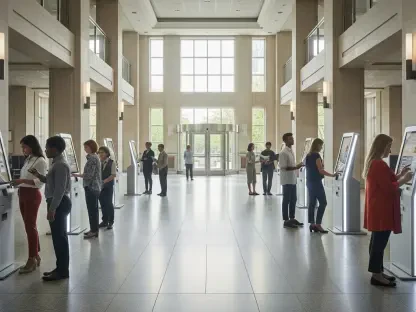

Every check mailed late, every call unanswered, and every case reopened after churn signals a system stretched thin by design, not accident. The One Big Beautiful Bill Act forces a choice with real consequences: lean on federal oversight to set guardrails and build shared infrastructure, or lean on
Introduction In an era where seamless access to services is increasingly expected, government leaders are stepping up to transform how citizens interact with public systems, addressing real challenges faced by many. Consider a scenario where a single parent, juggling work and family

I'm thrilled to sit down with Donald Gainsborough, a visionary in the realm of healthcare technology and policy. As a leader at Government Curated, Donald has been instrumental in driving transformative change in federal and public healthcare systems through intelligent care delivery. With his deep

Addressing the Crisis of Indoor Heat in Urban Areas In urban centers like Des Moines, Iowa, a silent threat looms over many households during scorching summer months: extreme indoor heat in homes without air conditioning, posing a significant public health challenge. With over half of the

In a groundbreaking move that could reshape urban planning in one of America's largest cities, over 70% of New York City voters have approved a pivotal amendment to the City Charter, mandating the creation of a unified, digitized city map under the Department of City Planning (DCP). This decision,

Imagine a city where planners can foresee the impact of a new highway, predict traffic bottlenecks during a major event, or even prepare for natural disasters—all before a single brick is laid. This is not a distant dream but a reality unfolding in Raleigh, North Carolina, where innovative