
The landmark achievement of breaching the hundred-billion-dollar threshold reflects a robust recovery from the previous historical record of eighty-eight billion dollars established in 2022. This milestone signifies a transformative era for Argentina, where the convergence of industrial scaling and global resource demand has propelled the nation into a new tier of international trade. According to the Argentine Exporters Chamber, the country is consistently hitting its targets, showing a nine percent improvement over earlier fiscal estimates. This growth is not merely a statistical anomaly but a reflection of a sustained upward trend that began with a powerful first quarter. By mid-year, the cumulative sales had already exceeded fifty-eight billion dollars, marking the most successful start to a trade cycle since modern record-keeping began. The current economic climate is characterized by high production volumes and favorable conditions that have allowed the nation to surpass previous benchmarks with surprising speed.
The Triple Engine of Energy and Mineral Wealth
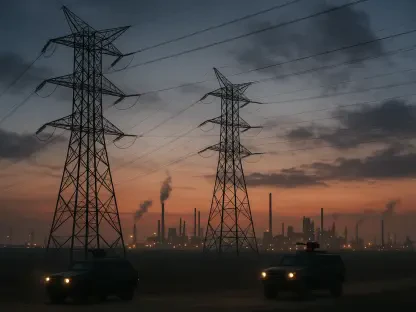
The surge in energy production has fundamentally reshaped the national export profile, with crude oil emerging as a primary driver of this historic performance. Revenue from the energy sector exceeded five and a half billion dollars in the first seven months of the year, a staggering sixty percent increase over the previous annual cycle. This massive growth is largely attributed to the maturity of the Vaca Muerta shale formation, which has transitioned from a developmental project into a powerhouse of regional energy supply. For the first time, oil exports have consistently challenged the traditional dominance of agricultural commodities like corn and soybeans, reflecting a structural shift toward more diverse resource extraction. The state-of-the-art infrastructure and increased drilling efficiency have allowed the country to capitalize on global price stability. This evolution signifies Argentina’s arrival as a major player in the global energy market, providing a new level of stability.
Simultaneously, the mining sector has experienced an unprecedented expansion, with lithium and gold acting as the twin engines of this growth. Export values for lithium skyrocketed by nearly two hundred percent this year, driven by the intense global demand for battery technology and the opening of new extraction sites in the northern provinces. This “white gold” boom has positioned Argentina as a critical node in the global electric vehicle supply chain, bringing in over one billion dollars in the first half of the year alone. Meanwhile, gold remains a steady contributor, leveraging high international prices to add over three billion dollars to the national coffers. The synergy between these minerals has created a mining sector that is expected to reach nine billion dollars by the end of the year. This diversification into high-demand industrial minerals provides a vital hedge against the volatility of other sectors, ensuring that the country’s trade balance remains resilient.
Diversification and a Shifting Productive Matrix
While the rise of energy and minerals is a significant development, the agroindustrial complex continues to serve as the bedrock of the national economy, contributing nearly nineteen billion dollars by mid-year. However, the true story behind these figures is the changing geographic distribution of wealth creation across the nation. In the past, the central agricultural heartlands were the sole engines of export revenue, but the current model has decentralized this productivity. Provinces such as Neuquén, San Juan, and Santa Cruz have become essential contributors to the national trade balance, offering a more balanced economic map. This shift has reduced the country’s historical vulnerability to regional climate events, as the sources of income are now spread across various industrial and environmental zones. By fostering a more diverse productive matrix, the nation has managed to stabilize its revenue streams even during periods of global uncertainty or local environmental shifts.
This structural evolution allows the country to integrate more effectively into the global industrial supply chains that define the modern economy. By focusing on high-value resource extraction and mid-stream processing, Argentina is moving beyond the role of a simple raw material provider. The current strategy emphasizes the integration of advanced technologies in both the agricultural and industrial sectors to maximize efficiency and output quality. This approach has led to the creation of a more stable economic foundation, where the synergy between traditional farming expertise and new energy capabilities provides a unique competitive edge. Furthermore, the development of specialized industrial zones has attracted foreign direct investment that is focused on long-term project sustainability rather than short-term gains. As the nation continues to modernize its productive assets, it is building a resilient system that can adapt to the evolving needs of international markets and the high standards of global consumers.
Strengthening Trade Surpluses and Strategic Alliances
The substantial growth in exports has resulted in a significant trade surplus of over sixteen billion dollars for the first seven months of the year, a three hundred percent increase compared to the previous period. This surplus has played a vital role in strengthening the nation’s macroeconomic position, providing a necessary buffer against external financial shocks. The improvement in the trade balance was supported by a disciplined approach to imports, which decreased slightly even as the domestic production capacity expanded. This healthy fiscal environment has allowed for better management of national reserves and has increased the country’s overall creditworthiness in the eyes of international lenders. The positive relationship between high-volume exports and managed consumption demonstrates a maturing economy that is capable of generating sustainable wealth. By maintaining this balance, the government has been able to reinvest in critical infrastructure that will further support commercial growth.
The successful navigation of this record-setting year required a focus on strategic infrastructure and the removal of logistical hurdles that once slowed the movement of goods. Leaders took decisive action to modernize the national railway network, which connected remote mining regions to deep-water ports more efficiently than in previous cycles. This investment lowered the overhead costs for exporters and ensured that Argentine products remained price-competitive in the global market. Furthermore, the implementation of educational programs focused on technical skills in the energy and mining sectors provided a steady pipeline of talent to sustain high production levels. By prioritizing these structural improvements, the nation established a framework for long-term commercial success that extended beyond the immediate windfall. Future efforts were directed toward the development of green hydrogen and renewable energy technologies to ensure the country remained at the forefront of the global energy transition.