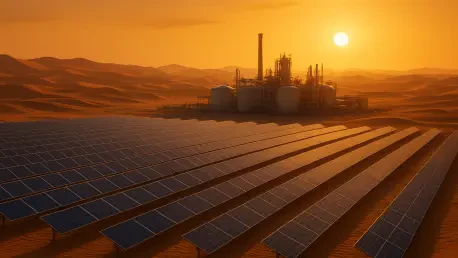

Large-scale green hydrogen production in Algeria relies on an integrated energy mix where solar power provides 70 percent of the electricity required for electrolysis. This foundational approach represents a significant departure from the nation’s historical economic reliance on the extraction and export of crude oil and natural gas. By implementing the National Hydrogen Strategy, the government has set a definitive course to capitalize on its high solar irradiation levels and vast Saharan landscapes. The shift is not merely an environmental gesture but a calculated geopolitical move to anchor Algeria as the primary energy hub for the Mediterranean. As European demand for decarbonized industrial fuels reaches critical levels, Algeria is effectively repositioning its energy ministry and state enterprises to act as a bridge between African renewable potential and European industrial necessity. This transition marks the end of the traditional hydrocarbon era and the beginning of a complex, hydrogen-led economic diversification program designed to ensure long-term national stability.
Forging a Path Through Strategic Partnerships
Collaborative Frameworks and Market Demand
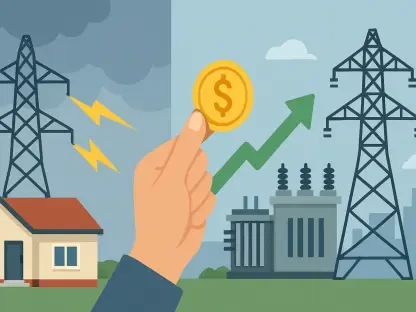
The current acceleration of Algeria’s hydrogen ambitions serves as a direct and necessary response to the persistent energy volatility that has recently gripped the European continent. With energy prices fluctuating by nearly 40 percent and traditional supply chains facing geopolitical disruptions, European nations are aggressively seeking more stable, geographically proximate partners for their green energy needs. Algeria’s proximity to the southern coast of Europe provides a logistical advantage that many other potential suppliers simply cannot match. Consequently, the state-owned energy giant Sonatrach has intensified its collaboration with German industrial leaders, including Bosch and Siemens Energy. These partnerships are designed to move beyond simple trade agreements, focusing instead on the shared development of critical technological infrastructure. By establishing local manufacturing for electrolyzers and large-scale seawater desalination plants, Algeria is creating the industrial backbone required to support the massive quantities of pure water and electricity needed for electrolysis.
This alignment of interests has fostered a structured, three-phase roadmap aimed at achieving industrial maturity and ensuring the nation becomes a dominant force in the global market. The initial pilot phase is currently operational at sites like Hassi R’Mel, where engineering teams are testing small-to-medium scale production technologies ranging from 2MW to 50MW capacity. These facilities are the proving grounds for larger ambitions, with the government targeting a total production of 1.5 million tonnes by 2030. Following this period, the strategy moves into an expansion phase where the focus shifts toward securing approximately 10 percent of the total European market share. By building out this capacity now, Algeria is preparing for a final stage of global competitiveness scheduled to reach full realization by 2050. During this ultimate phase, the country intends to operate as a top-tier, cost-efficient industrial exporter, providing a reliable supply of clean fuel that satisfies both environmental mandates and the rigorous energy requirements of heavy European industry.
Strategic Integration of Supply Corridors
Central to this vision is the development of the Sout## Corridor, a massive infrastructure project designed to transport hydrogen from North Africa directly into the heart of Europe. This corridor involves repurposing existing natural gas pipelines and constructing new dedicated hydrogen lines that connect Algeria with Italy, Austria, and eventually Germany. Such a project is vital because it mitigates the high costs associated with maritime shipping and provides a continuous, high-volume flow of energy. Joint feasibility studies conducted with Spanish firms like Cepsa have further validated the technical and economic viability of these routes. By utilizing the existing trans-Mediterranean pipeline network, Algeria can significantly reduce the initial capital expenditure required for distribution. This strategic integration ensures that the country is not just a producer but a foundational part of the European energy grid. The collaborative nature of these projects creates a mutual dependency that encourages long-term political and economic stability between the Maghreb region and the European Union.
Furthermore, the focus on knowledge transfer through these international partnerships is essential for Algeria to achieve technological independence in the hydrogen sector. By working alongside German and Italian engineering firms, Algerian technicians and researchers are gaining direct access to proprietary molecular separation technologies and advanced electrolysis processes. This educational and technical exchange is intended to upskill the domestic workforce, transforming the local labor market from one focused on manual resource extraction to one driven by high-tech manufacturing and chemical engineering. Such a shift is critical for the sustainability of the hydrogen program, as it ensures that the maintenance and operation of sophisticated facilities can be managed locally. Additionally, the integration of these partnerships facilitates the development of a domestic supply chain for the components used in renewable energy systems. By manufacturing parts for wind turbines and solar arrays within its own borders, Algeria reduces its reliance on imported technology and retains more of the economic value generated by the green hydrogen transition.
Economic Transformation and Future Challenges
Financial Impacts and Infrastructure Investment
From a strictly financial perspective, the transition to green hydrogen represents a powerful engine for economic revitalization and the accumulation of foreign currency reserves. Analysts estimate that once large-scale commercial production is fully realized, annual export revenues could reach approximately $10 billion. This influx of capital is particularly significant as it allows Algeria to offset the projected decline in long-term oil and gas demand. By integrating a diversified renewable energy mix, the country can strategically preserve its remaining natural gas reserves for high-value industrial applications or targeted exports during periods of peak demand. This internal optimization is projected to save the national treasury more than $21 billion by 2040. Such savings provide a critical buffer for the state budget, enabling further investment in public infrastructure and social services. The move toward hydrogen effectively decouples the nation’s fiscal health from the volatile cycles of the global oil market, offering a more predictable and sustainable path for national development.
However, the scale of this ambition requires a staggering level of capital investment, estimated at roughly $25 billion for infrastructure development through 2040. Securing this level of funding necessitates a shift toward hybrid financing models that blend international private capital with state-sponsored funds. This approach helps spread the financial risk while ensuring that the Algerian state maintains its sovereign control over essential energy assets. To attract these billions in investment, the government is focusing on creating a stable and transparent regulatory environment that offers long-term supply contracts to international buyers. These contracts are essential for providing the price certainty that lenders and investors require before committing to such large-scale, multi-decadal projects. By establishing these financial frameworks early, Algeria is attempting to mitigate the capital risks associated with a nascent global hydrogen market. The success of this economic transformation depends on the government’s ability to balance its need for external investment with its long-term goals for national energy sovereignty and industrial autonomy.
Overcoming Structural Barriers to Sovereignty
Beyond the financial requirements, Algeria faces significant structural and technological hurdles that must be addressed to ensure the resilience of its hydrogen economy. One of the most pressing issues is the intensive water requirement of the electrolysis process, which necessitates the construction of massive seawater desalination facilities along the Mediterranean coast. These plants must be powered by renewable energy to maintain the “green” certification of the resulting hydrogen, adding another layer of complexity to the infrastructure planning. Furthermore, the variability of solar and wind power means that the energy mix must be carefully managed to provide a consistent load for electrolyzers. By targeting an energy split of 70 percent solar and 30 percent wind, the strategy aims to utilize the distinct peak production times of each resource to create a more stable power supply. This technical balancing act is crucial for optimizing the efficiency of the production facilities and reducing the cost per kilogram of hydrogen. Overcoming these mechanical and logistical barriers is the primary focus of the current pilot projects.
The conclusion of the initial phase of development demonstrated that Algeria was capable of aligning its domestic policy with international energy standards. By focusing on molecular separation technology and regional pipeline integration, the state established a blueprint for other resource-rich nations to follow. The transition necessitated a proactive stance on securing patents and fostering localized innovation to prevent a new form of technological dependency on the West. Ultimately, the successful execution of these strategies allowed the country to redefine its role from a simple provider of raw materials to a sophisticated exporter of processed, high-value energy products. Moving forward, the focus must remain on the expansion of the domestic electrolyzer industry and the implementation of rigorous carbon-tracking systems to ensure all exports meet the stringent environmental regulations of the European market. By prioritizing these actionable steps, Algeria solidified its position as a clean energy powerhouse, effectively bridging the gap between its hydrocarbon past and a sustainable, hydrogen-driven future that prioritized both economic growth and energy security.