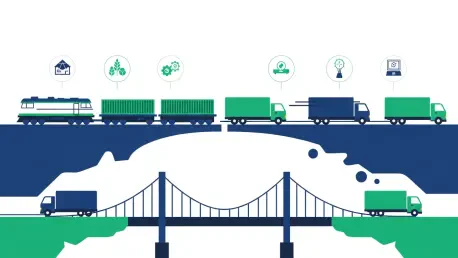

Eliminating the invisible economic borders between provinces and territories has long been viewed as the most effective method for unlocking dormant growth within the Canadian national economy. For decades, the complexity of differing regulations across provincial lines acted as a silent tax on businesses, complicating everything from the transport of heavy goods to the certification of skilled labor. However, recent evaluations have seen Canada achieve a historic A+ rating in internal trade efficiency, a score that reflects a massive shift in how the federation manages its domestic market. This achievement is not merely a result of political rhetoric but stems from a rigorous overhaul of the Canadian Free Trade Agreement and a newfound commitment to mutual recognition. By streamlining the way goods and services move across the country, the government has created a more resilient economic landscape that allows local enterprises to scale without the traditional hurdles of interprovincial bureaucracy.
Strengthening Economic Resilience Through Regulatory Modernization
The journey toward an A+ rating began with a fundamental change in how trade agreements are structured within the country, specifically moving away from the restrictive frameworks of the past. Under the modernized Canadian Free Trade Agreement, jurisdictions adopted a negative list approach, which essentially means that all trade is considered free and open unless a specific exception is formally filed. This structural shift forced provinces to defend their existing barriers rather than requiring businesses to lobby for access to new markets. In 2026, the success of this model is evident as the number of filed exceptions has dwindled to an all-time low, signaling a deeper level of trust between regional governments. This environment has empowered entrepreneurs to view Canada as a singular, unified marketplace rather than a collection of distinct economic silos. Consequently, the transaction costs for small businesses have dropped significantly as the need for specialized legal counsel has decreased.
Beyond the legal framework, the harmonization of technical standards has been a cornerstone of this improved trade environment, particularly in high-impact sectors like transportation and agriculture. Standardizing rules for trucking, such as maximum weight limits and safety inspections, has eliminated the need for costly delays at provincial borders where drivers previously had to adjust loads or swap equipment. In 2026, the implementation of a national digital logging system has further streamlined this process, allowing for real-time verification of compliance across all jurisdictions without the need for manual paperwork. Furthermore, the mutual recognition of professional certifications has allowed the workforce to become more fluid, addressing labor shortages in critical areas like healthcare and construction. When a certified electrician in one province can now work in another without undergoing redundant testing or licensing fees, the entire national economy benefits from improved labor allocation.
The successful pursuit of an A+ rating for internal trade proved that regional cooperation could yield significant national rewards when supported by clear policy objectives and technological innovation. It was observed that the elimination of provincial barriers acted as a catalyst for internal investment, as firms finally found it easier to do business with their neighbors than with international partners. Policymakers discovered that mutual recognition was the most effective tool for maintaining high standards while removing unnecessary friction from the marketplace. The national strategy focused on transparency and the rigorous application of the Canadian Free Trade Agreement, which eventually transformed the domestic trade landscape. Actionable steps were taken to ensure that digital interoperability became the standard for all provincial business registries moving forward. Future strategies were built upon this foundation, emphasizing the necessity of including emerging technologies in unified regulatory frameworks.