
The geopolitical landscape of North Africa has undergone a profound transformation as Morocco shifts from a historically reactive posture to a sophisticated and assertive form of strategic statecraft regarding its southern provinces. This transition represents more than just a diplomatic adjustment; it is a total mobilization of national resources to ensure that the territorial integrity of the kingdom is recognized as an immutable fact by the international community. By leveraging its unique institutional stability, Morocco has managed to bypass the volatile political shifts that often plague neighboring states, allowing the Monarchy to implement a vision that spans decades rather than election cycles. This continuity has fostered an environment where security interests are perfectly aligned with economic ambitions, creating a narrative that emphasizes progress and stability over the ideological rhetoric of the past. As the kingdom moves through 2026, the emphasis has placed the Sahara at the center of a broader Atlantic project, turning a once-disputed zone into a vital corridor for global trade and energy. This proactive approach has forced international actors to reconsider their positions, moving away from outdated frameworks toward a more pragmatic acceptance of the Moroccan Autonomy Initiative as the only viable path forward for lasting peace in the region.
The Realist Foundation: Geostrategy and Narrative Control
Modern Moroccan diplomacy is firmly rooted in a realist understanding of global power dynamics, viewing the Sahara not merely as a territorial claim but as a critical geostrategy corridor connecting the Mediterranean with sub-Saharan Africa. By positioning itself as the primary guardian of this sensitive zone, Rabat has successfully demonstrated to Western powers that its sovereignty is synonymous with regional security. In an era where the Sahel faces increasing instability, Morocco’s firm administrative control and military surveillance offer a necessary bulwark against transnational threats and irregular migration. This pragmatic focus on material power and order has allowed the kingdom to secure high-level alliances with global players who prioritize stability over abstract political disputes. By framing the Sahara as an essential link in the Atlantic maritime route, Morocco has effectively made its presence in the region a prerequisite for the economic and security interests of its most important international partners.
Beyond the application of hard power, the kingdom has masterfully utilized constructivist tactics to reshape the international perception of the Sahara conflict. Rather than relying on the dry legalism of the mid-twentieth century, Moroccan diplomacy now promotes a narrative of “territorial integrity” and “national unity” that aligns with contemporary global norms. This shift involves extensive public relations efforts and cultural diplomacy aimed at highlighting the historical and social ties between the Sahrawi tribes and the Moroccan state. By engaging with international think tanks, media outlets, and academic institutions, Rabat has successfully moved the conversation away from the outdated decolonization lens toward a focus on internal stability and the rights of a sovereign state to maintain its unity. This new discourse emphasizes the democratic progress within the southern provinces, presenting the local population as active participants in the Moroccan national project rather than as subjects of a frozen conflict.
Development Diplomacy: Creating a New Economic Reality
The 2007 Autonomy Initiative remains the cornerstone of Morocco’s proactive strategy, fundamentally altering the parameters of international negotiations. By proposing a framework for local self-governance under Moroccan sovereignty, the kingdom provided a “third way” that broke the deadlock between total independence and centralized integration. This move was a masterstroke of political engineering that allowed Morocco to assume the role of the constructive and flexible party in the eyes of the United Nations. International observers have increasingly viewed the proposal as “serious, realistic, and credible,” particularly as it addresses the administrative needs of the local population while respecting the state’s red lines. This initiative did not just exist on paper; it served as a signal to the world that Morocco was willing to institutionalize a modern, decentralized form of governance that could serve as a model for other regional disputes.
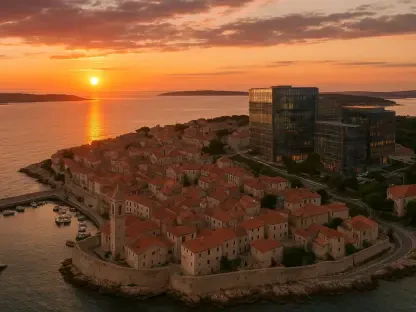
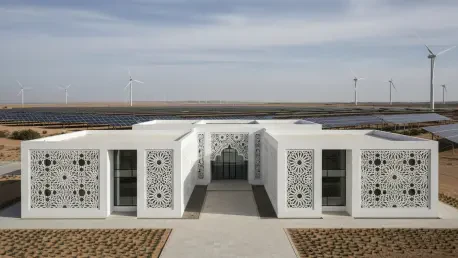
This political framework is supported by a massive program of “Development Diplomacy,” which effectively erases the distinction between domestic economic policy and foreign relations. Over the last decade, and continuing through 2026, the kingdom has poured billions of dollars into infrastructure projects in cities like Laayoune and Dakhla, transforming them into modern urban centers. The construction of the Dakhla Atlantic Port and the expansion of massive wind and solar farms have created an economic reality that is impossible for the international community to ignore. By providing high-quality healthcare, education, and employment opportunities to the residents of the southern provinces, Morocco has demonstrated a level of effective governance that a theoretical independent entity could likely never achieve. This economic integration creates a “fact on the ground” that makes the prospect of reversing Moroccan sovereignty seem increasingly impractical and detrimental to the well-being of the local inhabitants.
Continental Influence: Reclaiming the African Narrative
Morocco’s strategic return to the African Union in 2017 was a watershed moment that marked the end of its “empty chair” policy and the beginning of a new era of continental leadership. After years of observing from the sidelines, the kingdom realized that the most effective way to protect its interests was to influence the African narrative from the inside. Since rejoining, Rabat has utilized “South-South” cooperation as a primary tool of influence, building deep economic ties through banking, telecommunications, and agricultural projects across the continent. This approach has allowed Morocco to transcend the Sahara dispute by becoming an indispensable economic partner for many African nations. By focusing on shared challenges like food security and climate change, the kingdom has built a broad coalition of support, effectively neutralizing the efforts of traditional rivals who once used the African Union as a platform for hostility against Moroccan territorial integrity.
The success of this continental outreach has mirrored a surge in international endorsements from major global powers, further solidifying Morocco’s position. The decision by various nations to open consulates in Laayoune and Dakhla serves as a de facto recognition of Moroccan sovereignty and a rejection of the status quo. These diplomatic gains are the result of Morocco’s ability to synchronize its domestic legitimacy with the strategic needs of its allies, functioning as a middle power that exerts influence far beyond its geographic borders. As major European and American partners have formally backed the autonomy plan, the global conversation has shifted from the necessity of a referendum to the implementation of a final political solution based on the Moroccan framework. This international consensus reflects a growing understanding that the kingdom’s stability is essential for the security of both the Mediterranean basin and the wider African continent.
Actionable Pathways: Consolidating Sovereignty and Regional Growth
The Moroccan state successfully demonstrated that a combination of economic investment and diplomatic persistence could fundamentally alter a long-standing territorial dispute. By prioritizing the development of the southern provinces, the kingdom established a baseline of prosperity that served as its own justification for administrative control. This strategy involved the creation of specialized economic zones and the integration of Sahrawi business leaders into the national trade network, which effectively decentralized the conflict’s resolution. Moroccan officials focused on building tangible assets, such as the Dakhla Atlantic Port, which acted as a catalyst for international investment and forced foreign corporations to recognize the legal and administrative reality of Moroccan jurisdiction. This approach moved beyond mere rhetoric, providing a blueprint for how a state can utilize infrastructure to anchor its sovereignty in a contested region.
To maintain this momentum, the kingdom must now focus on deepening the institutional capacity of local governance within the southern provinces. The next logical step involves the full implementation of advanced regionalization, which would grant local assemblies greater control over their budgets and development agendas. By fostering a generation of local leaders who are deeply invested in the Moroccan constitutional framework, Rabat can ensure that the narrative of national unity is sustained by those on the ground. Additionally, leveraging the new Atlantic port as a hub for green energy exports to Europe will further entwine Moroccan sovereignty with the global energy transition. The international community should look toward these developments as a model for resolving similar frozen conflicts, emphasizing that economic dignity and practical self-governance often provide more stability than ideological purity or outdated legal precedents. Past successes have shown that when development precedes diplomacy, the path to a final resolution becomes much clearer.