
The strategic integrity of the United States military’s ground mobility depends on a reliable supply chain, yet recent procurement decisions have left a critical gap in the armored vehicle inventory that threatens operational preparedness. Senator Tammy Baldwin has launched a pointed critique of the U.S. Army’s management regarding the Joint Light Tactical Vehicle contract, focusing on the decision to shift production from Wisconsin-based Oshkosh Defense to Indiana-based AM General. This transition involved a massive eight-point-six billion dollar deal finalized in previous years, a move Baldwin argues has compromised national security by favoring a less prepared contractor over a proven manufacturer. Since the transition, reports indicate that the project is nearly two years behind the original schedule, with approximately two billion dollars in Department of Defense funding already expended. This lack of progress has sparked concerns about the military’s selection process.
Stalled Production: A Critical Gap in Ground Mobility
The operational consequences of these delays are becoming increasingly evident as service members wait for equipment that has been stalled by technical and logistical hurdles at the new production facilities. Despite the significant financial investment already allocated by the federal government, the military has not officially accepted a single production-standard vehicle from AM General since the contract was re-awarded. This stagnation creates a massive hole in the supply chain for tactical vehicles, which are essential for replacing aging fleets of High Mobility Multipurpose Wheeled Vehicles in various combat roles. Without a steady stream of new deliveries, the maintenance costs for older vehicles continue to climb, draining resources that could be better utilized for modernization. Senator Baldwin has emphasized that this situation is not merely a bureaucratic oversight but a failure to provide frontline troops with the advanced protection features promised by the project.
Transitioning the manufacturing of a sophisticated platform like the Joint Light Tactical Vehicle is an immense undertaking that requires specialized infrastructure and a trained workforce already familiar with the platform’s complexities. AM General’s struggle to meet production milestones suggests that the initial assessment of their readiness may have been overly optimistic, leading to the current state of paralysis. By bypassing an established production line that was already functioning at peak efficiency, the Army inadvertently created a bottleneck that could take years to resolve. Furthermore, the lack of transparency regarding when the first batch of vehicles will finally be ready for deployment has frustrated lawmakers who demand accountability for the billions of taxpayer dollars involved. The situation serves as a stark reminder of the dangers inherent in disrupting established industrial partnerships for the sake of long-term cost projections that do not work.
Industrial Consequences: Economic Strains and Strategic Transitions
Beyond the immediate tactical concerns, the decision to relocate the JLTV contract has caused significant economic distress across the Fox Valley region of Wisconsin, where the defense industry serves as a primary driver of stability. Oshkosh Corporation, which has successfully produced the vehicle for years, reported a substantial decrease in defense-related revenue, totaling hundreds of millions of dollars in lost opportunities. This financial contraction has trickled down to the local level, manifesting in the announcement of layoffs for approximately one hundred and sixty workers whose livelihoods were tied to the program. These job losses represent more than just numbers on a balance sheet; they signify a disruption in the local ecosystem that supports small businesses and community services. Senator Baldwin has argued that the loss of these positions is a direct result of a procurement strategy that failed to recognize the value of a stable, experienced workforce.
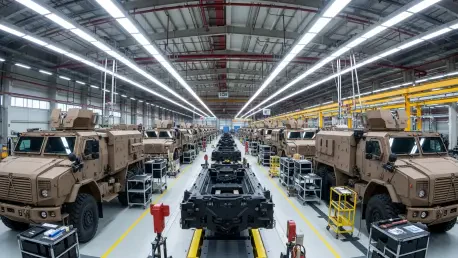
While the Army has indicated a plan to reduce its funding for the Joint Light Tactical Vehicle by 2027, the United States Marine Corps continues to express an urgent requirement for these platforms to fulfill its operational goals. This divergence in branch strategies creates a unique opening for the Department of Defense to reconsider its current path and explore alternatives that could expedite delivery to the Marines. Oshkosh Defense has positioned itself as a ready-now solution, maintaining the necessary facilities and technical knowledge to immediately resume production and fill the void left by the current contractor’s delays. With an existing infrastructure capable of manufacturing up to twelve hundred vehicles annually, the company offers a low-risk option for a military that cannot afford further setbacks in its modernization timeline. Baldwin has advocated for a dual-source approach or a pivot back to established producers to ensure that the Marines receive equipment.
The oversight regarding the JLTV contract demonstrated that prioritizing theoretical cost savings over proven operational performance created significant risks for both the military and the domestic economy. Lawmakers and military leaders acknowledged that the current trajectory required a rapid reassessment of contractor performance metrics to prevent further waste of public funds. By advocating for a return to experienced manufacturers, Senator Baldwin sought to stabilize the defense supply chain and preserve the skilled workforce essential for future innovation. Future procurement policies began to emphasize the importance of industrial stability and proven delivery records, ensuring that transitions between contractors did not result in a two-year production vacuum. This approach encouraged a more resilient manufacturing base that prioritized the immediate needs of the warfighter over long-term financial speculation. Risk assessments and localized economic impact studies became standard practice.