
Donald Gainsborough is a seasoned authority on the intersection of geopolitical strategy and global financial markets, currently serving at the forefront of policy analysis as the leader of Government Curated. With the conflict in Iran reaching its six-month milestone, the geopolitical landscape has shifted toward what the administration describes as an “economic D-Day,” a phrase that captures the sheer scale and intended finality of the current sanctions regime. Gainsborough brings a sharp perspective to how these high-stakes maneuvers, including a direct naval blockade of Iranian ports, are not just targeting a regime but are fundamentally altering the flow of global trade. We discuss the intricate web of shadow fleets, the aggressive pursuit of cryptocurrency assets, and the tangible, often painful, economic consequences that are beginning to reverberate from the trading floors of Wall Street to the local gas stations across the United States.
With the implementation of a naval blockade and the label of an “economic D-Day,” how do these measures differ from the decades of sanctions we have already seen, and what is the immediate strategic goal?
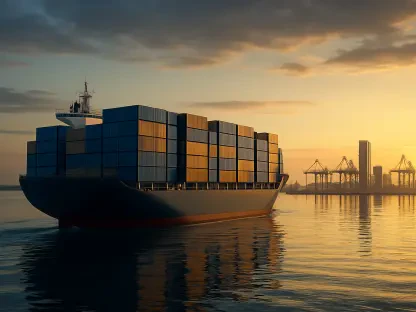
The shift we are witnessing is a move from passive containment to active, physical intervention. For forty-five years, since the 1979 embassy hostage crisis, the U.S. has utilized sanctions, but the “economic D-Day” label signals an attempt to achieve a total systemic collapse of Tehran’s revenue streams. Treasury Secretary Scott Bessent’s announcement of a naval blockade marks a transition into a more kinetic form of economic warfare, physically preventing vessels from entering or exiting Iranian ports. We are currently seeing the Treasury target 60 specific individuals and vessels, focusing on the heart of their aviation, digital assets, and shipping sectors. The immediate goal is to leave the regime with zero room to maneuver, closing the “grey-zone” loopholes that allowed them to survive previous iterations of pressure. It is a suffocating strategy designed to starve the military and its proxies of the resources they need to sustain a prolonged conflict.
How do you anticipate America’s primary trading partners, particularly China and various Asian hubs, will react to the threat of secondary penalties on their shipping and banking entities?
The tension in the international community is reaching a boiling point because the U.S. is essentially forcing its allies and rivals alike to choose a side. China remains the most significant player here, as they are the primary destination for Iranian oil, purchasing a massive 1.4 million barrels per day throughout 2025. By extending secondary penalties to entities in Singapore, Hong Kong, and Beijing, Washington is sending a message that no transaction is invisible. We are hearing from analysts like Rachel Ziemba that while these measures are currently incremental, the underlying intent is to intimidate trading partners into a total freeze. It is a high-risk gamble; if these countries continue to facilitate trade through shadow networks, the U.S. may be forced to choose between backing down or triggering a massive trade rift with some of the world’s largest economies.
The Treasury has been increasingly aggressive in targeting “shadow fleets” and digital assets. Could you elaborate on the scale of these operations and how they’ve managed to circumvent the system for so long?
The scale of this underground economy is truly staggering, involving a sophisticated network of “shadow fleets” designed to hide the origin of petroleum. In December 2025, the U.S. sanctioned 29 vessels and even targeted individuals like Egyptian businessman Hatem Elsaid Farid Ibrahim Sakr for his alleged ties to these operations. More recently, in April 2026, the crackdown moved toward the network of Mohammad Hossein Shamkhani, where the Treasury successfully seized nearly half a billion dollars from shadow banking networks. Iran has leaned heavily on cryptocurrency to facilitate transactions for the Islamic Revolutionary Guard Corps, using digital tokens and gold to prop up the value of their currency amidst soaring instability. The U.S. is now trying to dismantle this digital and physical infrastructure piece by piece, but it remains a game of cat and mouse where the stakes are measured in billions of dollars.
How are these aggressive measures and the ongoing maritime conflict impacting the everyday lives of Americans, particularly regarding energy costs and inflation?
For the average American, the geopolitical reality hits home most sharply at the gas pump. Since the initial strikes on February 28, we have seen the average price for a gallon of petrol surge from $2.98 to a painful $4.09. This price hike is a direct result of the tightening global oil supply and the strategic bottleneck at the Strait of Hormuz, where roughly one-fifth of the world’s oil used to transit before the route became a combat zone. The ripple effect is felt everywhere: higher fuel prices lead to increased freight costs, which eventually manifest as more expensive groceries and consumer goods. This inflationary pressure is creating a climate of deep dissatisfaction, with recent polls showing that only 32 percent of Americans approve of the current economic performance. There is a visceral sense of anxiety that if Iranian retaliation accelerates, we could see these costs spiral even further out of control.
On Wall Street, we are seeing a split between the oil sector and safe-haven assets like gold. How is the financial sector pricing in the risk of a long-term conflict?
Wall Street is currently in a state of high-alert volatility, with investors frantically shifting their portfolios toward safe-haven assets. Gold has surged by 0.8 percent to hit $4,639.49 per ounce, its highest level since mid-May, as traders look for stability in an era of “economic D-Day.” Meanwhile, the oil giants are taking a beating; we’ve seen ExxonMobil tumble by 0.9 percent, while BP and Chevron have also seen their shares slide by 2 percent and 0.8 percent, respectively. Brent crude, the global benchmark, recently fell back to $85.22 a barrel as the market reacted to the news of new tariffs on Canada alongside the Iran sanctions. There is a profound sense of uncertainty because if insurers and shipping companies decide the risk of Gulf shipping is too high, the entire logistical framework of the energy market could freeze up.
What is your forecast for the US economy and the global energy market if this “Economic D-Day” remains the status quo for the next six months?
My forecast is that we are entering a period of “persistent fragility” where the global energy market will have to permanently price in a conflict premium. As we approach the September 8 deadline for winding down academic and personal money transfers, the isolation of the Iranian economy will become total, which will likely lead to even more desperate and unpredictable retaliation from Tehran. I expect petrol prices to remain volatile, likely hovering in the $4.00 to $4.50 range, which will keep the domestic political climate in the U.S. extremely charged as we head toward the midterms. We are seeing a historic shift where the U.S. is using its financial dominance to try and settle a military conflict, but the cost of that transition is a world where energy security is no longer a given. Investors and consumers alike should prepare for a long, difficult road where the stability we once took for granted is replaced by the harsh realities of economic warfare.