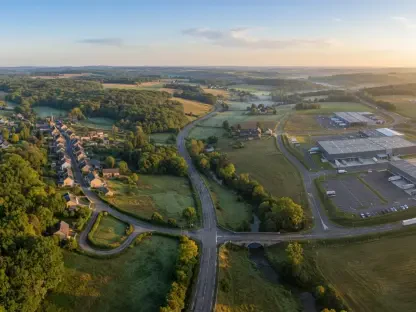

Rural communities in Northwestern Pennsylvania are increasingly viewed as medical deserts where the needs of foresters and farmers are sidelined by corporate bottom lines. The closure of inpatient and emergency services at Bradford Regional Medical Center (BRMC) serves as a localized case study for a much broader national trend: the collapse of rural healthcare infrastructure. This crisis represents the intersection of geographical isolation, aging demographics, and the limitations of state-led intervention programs. For residents of Bradford, Pennsylvania, the situation has moved beyond policy debate into a frightening reality where the basic safety net of emergency medical care has simply vanished. Historically, Bradford was a burgeoning hub of the American industrial spirit, fueled by the mid-19th-century oil rush. During its peak in the 1930s, the city served as the headquarters for iconic brands like Zippo and maintained a population of over 19,000 residents. It was during this era of prosperity that the medical center was established, functioning as a robust, independent facility that performed complex surgeries and maintained hundreds of inpatient beds for over 140 years. As oil production slowed and the local population dwindled to roughly 7,500, the economic foundation of the hospital began to crumble. This demographic shift created a vicious cycle where a shrinking tax base led to service cuts, making the area less attractive for young families and medical professionals. This steady decline transformed a once-prosperous industrial center into a community struggling to maintain the most basic medical necessities for its remaining residents.
The Financial Mechanics of a Medical Desert
The Failure: Why Traditional Billing Models Collapse
A significant portion of this crisis stems from the inherent flaws in the “fee-for-service” model used to fund American hospitals. Under this system, revenue is generated by patient volume, rewarding hospitals for the number of tests, procedures, and surgeries they perform. For rural hospitals in “forgotten lands” like Bradford, this model is fundamentally predatory because sparse populations cannot provide the patient volume needed to cover the massive overhead of 24/7 emergency departments and high-tech intensive care units. When a facility must maintain expensive equipment and specialized staff regardless of whether five people or fifty walk through the door, the math simply fails to add up. This financial mismatch leaves rural facilities in a constant state of insolvency, where every empty bed represents a step closer to total closure. Consequently, healthcare in these regions becomes less about clinical outcomes and more about balancing a ledger that was never designed for low-density areas.
Furthermore, rural populations tend to be older and suffer from higher rates of chronic disease, requiring expensive long-term care that the fee-for-service model often fails to reimburse adequately. Medicare and Medicaid reimbursement rates frequently fall short of the actual cost of care in isolated regions, where the lack of competition and high transportation costs for supplies drive prices upward. This creates a scenario where the sickest patients are the least “profitable” for the hospital to treat, leading to a perverse incentive to minimize services. When medical centers cannot break even on basic care, they are forced to prioritize fiscal survival over the medical needs of the community they were built to serve. This structural instability has led to a cascade of closures across the Appalachian region, leaving thousands of square miles without accessible trauma care. The result is a tiered system where geographical location determines the quality and speed of life-saving interventions, effectively penalizing those who live outside major metropolitan corridors.
Experimental Solutions: The Limitations of Global Budgeting
In 2019, Pennsylvania attempted to rectify these issues through the Pennsylvania Rural Health Model, which moved hospitals toward a “global budget” system. Instead of being paid per procedure, participating hospitals received fixed, biweekly lump-sum payments to encourage preventative care and financial stability. The goal was to pivot away from “sick care” and toward “population health,” theoretically keeping residents healthier and reducing overall costs by focusing on nutrition, exercise, and chronic disease management. This approach was intended to provide a predictable revenue stream, allowing hospital administrators to plan for the long term without worrying about fluctuations in patient volume. By decoupling income from the number of procedures performed, the state hoped to create a more resilient network of rural clinics and specialized centers that could focus on the specific health challenges of their local demographics.
Despite Bradford’s participation in this model, the intervention proved insufficient to counteract decades of systemic neglect and the rising costs of modern medicine. The hospital’s owner, a large health system based in Buffalo, cited federal funding cuts and long-standing financial pressures as the primary reasons for the eventual closure. This failure raises critical questions about whether billing adjustments alone can truly save facilities that are already suffering from extreme population decline and corporate consolidation. The transition to a global budget requires a level of administrative overhead and community integration that many struggling hospitals cannot afford to implement. Moreover, if the base budget is set too low to begin with, the “stability” it provides is merely a slower path to bankruptcy. The experience in Bradford suggests that while payment reform is necessary, it cannot serve as a panacea for the deeper socio-economic crises that are hollowing out small-town America.
The Reality of the “Slow Bleed”
The Erosion: How Essential Services Vanished
The closure of BRMC’s emergency department was not a sudden event but the culmination of what locals call a “slow bleed.” This decline accelerated during the COVID-19 pandemic, which served as a financial breaking point for many rural systems. During the crisis, the hospital was forced to cancel lucrative elective surgeries—the primary source of profit for most American hospitals—while bearing the increased costs of treating severely ill patients and maintaining rigorous safety protocols. The exhaustion of the local nursing staff and the reliance on expensive “travel nurses” further drained the facility’s reserves. By the time the immediate pandemic subsided, the hospital was in a significantly weakened state, both financially and operationally. This fragility made it an easy target for regionalization efforts by its parent company, which began viewing the Bradford site as a redundant liability rather than a vital community asset.
In the years leading up to the final shutdown, the hospital’s parent company shuttered the maternity ward, surgical services, and the intensive care unit. This systematic reduction forced residents to seek critical care in distant cities like Olean, New York, or Erie, Pennsylvania. For a patient experiencing a heart attack or a stroke, these extra miles across mountainous terrain are often the difference between life and death. The removal of specialized units creates a “brain drain” effect, where the most skilled physicians and technicians move away to find work in better-equipped facilities, further degrading the quality of care for those who remain. This erosion of services also has a psychological impact, as residents lose confidence in their local provider and begin to bypass the hospital for even minor issues, accelerating the decline in patient volume. Eventually, the facility is reduced to a “stabilization and transfer” site, which is often a precursor to total abandonment of inpatient services.
Geographic Obstacles: The Physical Dangers of Distance
The geography of Northwestern Pennsylvania adds a layer of physical danger to the healthcare crisis that urban policymakers often overlook. The region is defined by mountainous terrain and severe winter weather that frequently disrupts transportation and communication. Heavy lake-effect snow from Lake Erie often grounds medical helicopters, which are the primary means of transporting trauma patients to larger regional centers when local facilities are unavailable. In these conditions, the golden hour for emergency response—the critical window in which medical intervention is most likely to prevent death—is often lost. When the “birds” cannot fly, the community’s safety net relies entirely on ground transport, which is frequently compromised by the same weather conditions that ground the aircraft. This environmental reality makes the presence of a local, fully-functional emergency department a matter of survival rather than mere convenience.
When weather conditions prevent air transport, patients are left at the mercy of ambulances navigating slippery, winding roads that can add hours to a trip to the nearest trauma center. The loss of local emergency services has transformed a moderate concern regarding travel into a life-threatening gamble for thousands of families. The community is effectively trapped in a “valley of risk,” where the natural environment conspires with a lack of infrastructure to isolate the sick and elderly. For many Bradford residents, the realization that an ambulance may take over an hour to reach a hospital during a blizzard has changed their entire perspective on living in the area. This geographic vulnerability creates a sense of profound insecurity, as the basic infrastructure that modern society takes for granted—emergency medical intervention—is no longer guaranteed. This isolation is not just a logistical hurdle; it is a fundamental threat to the long-term viability of rural life in the Appalachian foothills.
Grassroots Resistance and Corporate Betrayal
The Movement: Saving Bradford Hospital
The residents of Bradford have not accepted the loss of their healthcare silently, giving rise to a grassroots movement led by local advocates and county officials. Their organization, “Save Bradford Hospital,” exemplifies the struggle between rural communities and the large corporate entities that manage their resources. The movement focuses on the profound sense of betrayal felt by those who saw their community-built hospital treated as a disposable asset by a distant management team. For generations, the hospital was supported by local donations, volunteer work, and civic pride; to see it dismantled by a corporation based in another state was a shock to the local psyche. The advocates have organized rallies, town halls, and social media campaigns to bring attention to their plight, attempting to shame the parent company into restoring services or selling the facility to a more committed operator.
Frustrations are centered on a perceived lack of transparency regarding how funds were utilized before the closure. Residents have questioned why a parent corporation could announce a $200 million strategic plan for its broader system while failing to maintain basic emergency services in Bradford. This disparity has reinforced the sentiment that rural areas are being sacrificed to improve the balance sheets of distant health systems that prioritize urban growth over rural stability. The “Save Bradford Hospital” movement has also highlighted the legal and ethical obligations of nonprofit healthcare systems, arguing that their tax-exempt status should require a higher level of commitment to all the communities they serve, not just the most profitable ones. This conflict represents a broader national debate about the role of the “community hospital” in an era of massive corporate healthcare conglomerates that often operate with the cold efficiency of private equity firms.
Political Isolation: The Silence of the Hinterlands
The movement also highlights the political isolation felt by residents in rural Pennsylvania. Despite efforts to lobby state and federal legislators, advocates report a lack of meaningful response or intervention from the government. While urban areas often receive massive subsidies for infrastructure and development, rural regions like McKean County frequently find themselves at the bottom of the priority list. This silence has led to the feeling that “foresters, farmers, and essential workers” are secondary to the interests of urban centers and large-scale medical conglomerates. The political divide is not just about party affiliation but about a fundamental gap in understanding the needs of low-density populations. Without a strong political voice, rural advocates find it difficult to secure the emergency funding or regulatory changes needed to keep their local facilities afloat during times of crisis.
The inability of local leaders to secure help from higher levels of government illustrates the fragility of rural political influence in an increasingly urban-centric world. As the hospital’s corridors go dark, the community perceives a systemic indifference to their survival, which fuels a cycle of resentment and alienation. This political vacuum leaves rural advocates with few options other than to watch as their local infrastructure is dismantled by corporate decision-makers who have never stepped foot in Bradford. The lack of a robust state-level intervention strategy specifically designed for these high-risk areas suggests that policymakers are content to let “market forces” dictate the survival of rural towns. However, healthcare is not a typical market commodity; it is a public necessity, and the political failure to recognize it as such has left a significant portion of the population vulnerable to the whims of corporate restructuring.
The Human Cost of Healthcare Collapse
The Decision: Forced Migration and Lost Security
The most poignant aspect of the Bradford story is the personal toll on individuals who are forced to abandon their ancestral homes. For many residents, the hospital was the foundation of their safety and the primary reason they felt comfortable aging in place. When the emergency bay finally closed, it served as a signal for many to pack their bags and move closer to urban medical centers in places like Pittsburgh or Buffalo. This is not a choice made out of a desire for a change in lifestyle, but a survival tactic necessitated by the disappearance of local services. Elderly residents, who may have lived in the same house for fifty years, now find themselves navigating the stress of relocation because they can no longer trust that they will survive a medical emergency if they stay. This displacement ripples through the community, as the loss of these long-term residents weakens the social fabric and reduces the historical memory of the town.
This “decision of logic, not heart” represents a forced migration that is becoming increasingly common in rural America as infrastructure collapses. When a community loses its hospital, it loses its ability to care for the elderly and its ability to attract new businesses or young families who prioritize safety and accessibility. The removal of acute care services acts as a death knell for the city’s long-term viability, as no one wants to invest in a location where a basic heart attack cannot be treated. Real estate values often stagnate or decline following a hospital closure, making it harder for those who want to leave to afford a new home elsewhere. This creates a “poverty trap” where those who have the means to leave do so, while those who cannot afford to move are left in a community with diminishing resources. The long-term demographic shift resulting from these closures ensures that these regions will struggle to recover for decades to come.
The Identity Crisis: A Community Without a Safety Net
Beyond the medical and economic implications, the loss of the hospital signals a loss of community identity and civic pride. In a small town like Bradford, the local hospital was one of the largest remaining employers and a symbol of the town’s ability to provide for its own. Its conversion into a mere outpatient center—a site with no capacity for emergencies or surgeries—is viewed by many as a symbol of the town’s terminal decline. The building itself, once a hive of activity and a source of hope, now stands as a quiet reminder of what has been lost. This loss of identity makes it harder to recruit new teachers, police officers, and small business owners, as the “quality of life” metrics for the town continue to drop. The sense of being a “complete” community with a full range of services has been replaced by a feeling of being a peripheral outpost that is being slowly phased out.
The “forgotten land” of rural Pennsylvania now faces an uncertain future where survival depends on how fast one can drive to the next town. Residents are forced to be stubborn and independent not by choice, but by necessity, as they navigate a world where they are no longer a priority for the systems designed to protect them. The silence in the emergency bays of Bradford is a stark warning of the high price of efficiency in the business of saving lives and the fragility of the American rural safety net. To address this crisis, future initiatives focused on creating dedicated rural health cooperatives that are owned and operated by the community itself, rather than distant corporations. Strategic investments in telehealth and mobile intensive care units were considered as potential stopgaps, though they lacked the permanence of a physical hospital. The state ultimately looked toward a model where rural healthcare was treated as a public utility, ensuring that the geography of one’s home did not dictate the timing of their last breath.