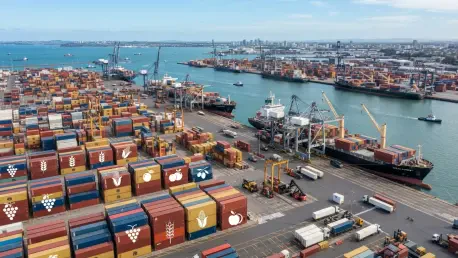

Australia’s record-breaking $1.37 trillion in two-way trade faces a critical test as rising protectionism and geopolitical friction between the United States and China threaten global stability. According to recent data from the Australian Bureau of Statistics, the nation achieved this historic economic milestone despite fluctuating commodity prices and shifting diplomatic alliances across the Indo-Pacific. A significant portion of this success was driven by the resilient agricultural sector, which experienced a notable six percent increase to reach a total valuation of $83 billion. Beef and veal exports stood out as primary growth engines, contributing more than $20.7 billion to the national economy. This occurred even as producers navigated temporary trade hurdles, including a brief period of tariff adjustments in the North American market. The ability of local exporters to maintain high volumes suggests a robust demand for Australian premium goods across the globe, though maintaining this momentum requires navigating an increasingly complex web of international relations and domestic political pressures.
Strategic Pivot: Strengthening Economic Resilience
The Role of China in Market Normalization
The normalization of diplomatic and commercial relations with Beijing has emerged as a cornerstone of the current trade surplus. China has successfully reclaimed its position as the largest single market for Australian products, with annual export values reaching nearly $20 billion. This figure represents nearly double the volume directed toward the United States, highlighting the immense scale of the Chinese consumer base and its appetite for Australian resources. The removal of various trade barriers on essential commodities, such as premium wine, rock lobster, and barley, has allowed several industries to recover rapidly from previous restrictions. While the dependence on a single large partner carries inherent risks, the current administration has focused on stabilizing these ties to ensure immediate economic benefits for regional producers. The influx of capital from these rejuvenated trade routes has provided much-needed liquidity to the rural sector, supporting jobs and infrastructure investment. This phase of stabilization is viewed as a necessary step to provide the financial cushion required for broader long-term economic reforms.
Diversification and the Shift Toward Southeast Asia
While the recovery of the Chinese market is significant, the federal government has simultaneously prioritized a strategy of broad-based international diversification to mitigate future risks. This approach involves strengthening ties with established partners such as Japan and South Korea while aggressively pursuing emerging opportunities in Southeast Asia, particularly Indonesia. The European Union remains a high-priority target, as access to its 450 million consumers could provide a vital buffer against potential shocks in the Indo-Pacific region. Trade Minister Don Farrell has consistently emphasized that a diverse portfolio of export destinations is the best defense against the rising tide of global protectionism. By securing preferential access to multiple high-value markets, Australia aims to reduce its vulnerability to localized economic downturns or sudden policy shifts by major powers. This multi-faceted engagement strategy reflects a sophisticated understanding of the current geopolitical environment, where economic security is increasingly linked to the depth and variety of international partnerships and the flexibility of local supply chains.
Legislative Strategy: Securing the European Union Partnership
The pursuit of a comprehensive free trade agreement with the European Union encountered significant domestic resistance from various political and industry groups. Critics, led by the Coalition and the National Farmers Federation, argued that the proposed terms were insufficient for local dairy and livestock producers who sought better market access. In response, the government sought legislative support from the Greens to ensure the passage of necessary trade frameworks despite the opposition from traditional agricultural advocates. Prime Minister Albanese championed the principles of free and fair trade during his engagements at the APEC summit, where he advocated for more transparent international standards. To move forward, policymakers focused on developing more inclusive negotiation strategies that addressed the specific concerns of rural stakeholders while maintaining a commitment to global integration. By prioritizing long-term stability over short-term gains, the nation established a blueprint for navigating an increasingly fragmented trade landscape. This proactive stance provided a foundation for securing future prosperity.