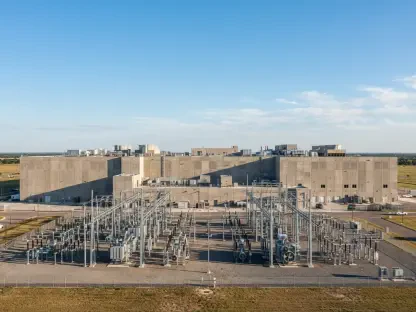

The mid-2027 opening of the first commercial co-use Sensitive Compartmented Information Facility will provide private-sector partners with the secure infrastructure needed for classified work. This milestone is part of a broader federal metamorphosis aimed at bridging the gap between innovative commercial prototypes and operational military and civilian tools. As 2027 approaches, the United States is prioritizing five distinct programs designed to dismantle bureaucratic inertia and leverage high-speed automation. These initiatives represent a unified strategy to ensure the nation remains resilient against emerging global threats while modernizing internal efficiencies. By focusing on shared secure facilities, real-time cyber analytics, and utility-scale quantum benchmarking, federal agencies are shifting toward a more agile, modular operating environment. This proactive modernization effort is essential for maintaining a competitive edge in an increasingly digital and adversarial global landscape.
Modernizing Defense Acquisition and Cybersecurity Responses
The Department of Defense has long struggled with the “Valley of Death,” where promising commercial technologies fail to transition into active military use due to complex security and accreditation requirements. To solve this, the Defense Innovation Unit’s Bridge Program is automating Risk Management Framework assessments using artificial intelligence. This shift aims to reduce the time required for an Authorization to Operate from several months to under thirty days, mirroring the rapid iteration cycles found in the private sector. By mid-2027, these automated protocols will likely be the standard for all nontraditional vendors entering the defense space. This self-service security model allows the warfighter to access cutting-edge tools at the speed of commercial development, ensuring that the military can rapidly integrate private-sector breakthroughs. These changes effectively lower the barrier to entry for innovative startups, fostering a more diverse and capable industrial base.
In parallel with defense updates, the Cybersecurity and Infrastructure Security Agency is revolutionizing federal network protection through its Security Information and Event Management as a Service (SIEMaaS) platform. By integrating disparate security data across various federal agencies into a unified, automated analytics engine, SIEMaaS democratizes high-tier cybersecurity for all civil departments. The platform’s performance goals are highly ambitious, seeking to reduce traditional threat response times from an average of fourteen days to approximately forty minutes. Offering this as a centralized service at no cost allows even smaller agencies to maintain a robust defensive posture against sophisticated cyber adversaries. As we move through 2027, the focus will remain on scaling the infrastructure to meet the anticipated high demand for real-time monitoring and event correlation. This unified approach ensures that a threat detected in one agency can be neutralized across the entire federal enterprise simultaneously.
Validating Emerging Technologies and Energy Infrastructure
While quantum computing remains a burgeoning field, DARPA’s Quantum Benchmarking Initiative is steering the conversation toward practical, utility-scale applications that offer tangible benefits. The initiative focuses on determining if a commercially viable quantum computer can be constructed by 2033, with the 2027 phase serving as a critical verification point for technical feasibility. By collaborating with twenty diverse organizations, DARPA is establishing rigorous metrics to evaluate which technical approaches—such as superconducting qubits or trapped ions—are worth long-term federal investment. This objective analysis prevents the waste of resources on speculative ventures, ensuring that taxpayer dollars are funneled into validated concepts. The data generated during this phase will provide a definitive roadmap for future research, clarifying the specific computational tasks where quantum systems hold a clear advantage over classical architectures. This systematic validation is essential for maintaining technological leadership.
Protecting the nation’s energy grid is equally vital, leading the Department of Energy to launch the AI-FORTS program to counter sophisticated cyber threats. This initiative focuses on the “triple threat” of AI: defending against AI-powered attacks, using AI to enhance defensive posture, and securing the models themselves from adversarial manipulation. Managed by the Office of Cybersecurity, Energy Security, and Emergency Response, the program seeks to achieve operational resilience for critical infrastructure. A standout project involves Sandia National Laboratories, where new tools automate the processing of massive datasets to identify subtle patterns indicative of a cyberattack. By 2027, these AI-powered detection systems are expected to be fully deployed across the energy sector, providing operators with the ability to neutralize threats before they cause physical damage. This ensures the grid can maintain essential functions even while under active attack, securing the nation’s power supply.
Transforming Healthcare Operations and Future Strategy
In the civilian sector, the federal government is addressing the administrative burdens of the American healthcare system through the Electronic Prior Authorization initiative. Managed by the ONC and CMS, this program replaces manual processes like faxes and phone calls with digital workflows to prevent delays in patient care. Utilizing HL7 FHIR standards, the initiative creates a seamless connection between hospitals and health plans, facilitating real-time clinical approvals. Proactive testing sprints are currently being conducted in production-like environments to identify technical gaps before the 2027 regulatory requirements take full effect. This effort is particularly critical for rural and underserved medical communities, which often face the greatest hurdles in digital modernization. By automating the authorization process, the government is reducing provider burnout and ensuring that patients receive timely treatments, representing a major step toward a fully digital health ecosystem.
The technological landscape of 2027 ultimately demonstrated that federal agencies could successfully pivot toward automation and commercial integration when faced with urgent national priorities. By standardizing protocols and providing shared secure infrastructure, the government moved beyond pilot programs to establish a new baseline for operational efficiency. The success of these initiatives provided a blueprint for future modernization efforts, emphasizing that interoperability and proactive security were non-negotiable components of digital governance. Moving forward, the focus should remain on maintaining these systems through continuous updates and expanding the collaborative models that brought together the public and private sectors. Leaders effectively reduced bureaucratic friction, allowing for a more responsive and resilient federal enterprise that better served the needs of both the military and the general public. These efforts proved that systematic, mission-oriented technology investment was the most effective way to secure the nation’s digital future.