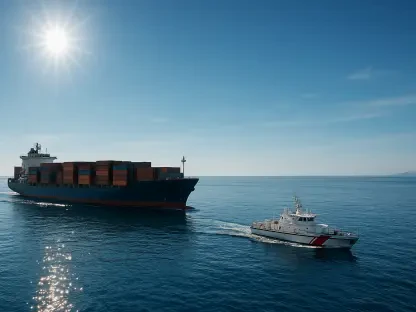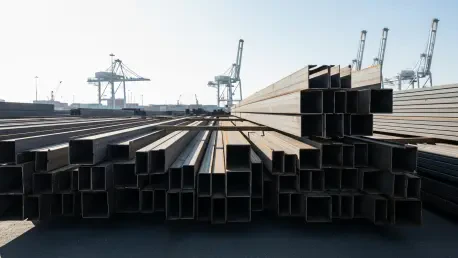

The intricate interwoven network of global manufacturing has arrived at a transformative moment where the traditional foundations of international trade are being dismantled by the intensifying friction between the European Union and China. What began as a series of isolated disagreements over the rising costs of raw materials has rapidly evolved into a comprehensive and high-stakes struggle for technological leadership and supply chain security. This confrontation highlights a broader, systemic conflict where economic superpowers must navigate the delicate balance between upholding established free trade principles and shielding their domestic manufacturing sectors from aggressive foreign competition and massive oversupply. Steel has emerged as the central flashpoint in this dispute, serving as a primary proxy for the wider battle over industrial influence. While European leaders focus on creating economic resilience to prevent the erosion of their industrial base, Chinese officials continue to advocate for open markets and warn that rising protectionism could destabilize global commerce.
Safeguarding the European Industrial Heartland
European manufacturers are currently navigating a complex environment characterized by exceptionally high energy prices and the stringent requirements of new environmental regulations that make competing with cheaper imports nearly impossible. The implementation of the Carbon Border Adjustment Mechanism and other sustainability mandates has significantly increased the operational costs for local steel producers. These enterprises are struggling to maintain their market share against a surge of products originating from regions where environmental standards are less rigorous and production is heavily subsidized. This “perfect storm” of inflationary pressure and regulatory compliance has placed the European industrial heartland in a precarious position, threatening thousands of high-skilled jobs and the long-term viability of the regional metalworking sector. Consequently, there is an urgent demand for a cohesive strategy that can provide a level playing field without completely alienating international partners.
In response to these mounting pressures, the European Commission has initiated more robust safeguard measures designed to protect the region’s industrial heartland from what it defines as predatory pricing. These policies are not merely about economics; they are intended to maintain social stability and ensure that vital capital remains within the domestic manufacturing sector rather than fleeing to regions with lower operational costs. By imposing targeted tariffs and restrictive quotas on specific grades of steel, Brussels aims to create a buffer that allows local companies to transition toward greener production methods without going bankrupt. However, this protective stance carries significant risks, including the potential for reciprocal trade barriers that could impact other sectors of the European economy. The current strategy reflects a fundamental shift in priority, where the preservation of a sovereign industrial capacity is now viewed as being just as important as the pursuit of low-cost consumer goods.
Market Disruptions and Strategic Countermeasures
Conversely, the perspective from Beijing emphasizes that trade restrictions represent significant disruptions to the efficiency of global supply chains that will eventually drive up costs for consumers worldwide. For Chinese officials, maintaining access to international markets is an essential component of their economic strategy, particularly as the domestic construction and infrastructure sectors experience a cooling period. The vast manufacturing base in China requires high-volume exports to maintain operational stability and prevent widespread industrial stagnation within its own borders. Analysts point out that these export markets have become a necessary “safety valve” to absorb excess industrial capacity that cannot be consumed locally. From this viewpoint, European safeguards are seen as protectionist obstacles that hinder the natural flow of goods and services. This disagreement has led to a cycle of diplomatic warnings and the threat of retaliatory measures against European exports, further complicating the geopolitical landscape.
This ongoing standoff has introduced a new era of volatility into global commodity markets, forcing critical industries such as automotive manufacturing and heavy machinery production to operate under constant uncertainty. Investors and procurement managers are closely watching for any sudden changes in trade policy that could disrupt existing logistics networks and lead to unpredictable price spikes. The fear of a sudden shortage or a drastic increase in the cost of high-strength steel has prompted many firms to reconsider their inventory strategies and long-term supply contracts. As a result, many nations are now actively pursuing various forms of strategic decoupling to reassess their industrial dependence on single overseas suppliers. This trend is particularly evident in the electronics and renewable energy sectors, where the reliability of component delivery is paramount. The friction over steel is thus acting as a catalyst for a much wider reorganization of how products are designed, sourced, and sold across the world.
Evolving Trade Dynamics and the Move Toward Resilience
The current tensions are part of a recurring historical pattern where protectionist sentiments tend to surge during periods of global economic cooling and heightened geopolitical rivalry. History shows that governments frequently pivot toward restrictive policies when domestic jobs and manufacturing security are perceived to be at risk from external forces. From previous steel tariff disputes to the broad trade barriers observed in earlier years, the cycle of market opening followed by defensive closure remains a constant feature of the industrial age. The 2026 landscape reflects this evolution, as policymakers increasingly prioritize national industrial stability over the unchecked globalization that dominated the previous decades. This shift has led to the creation of regional trade blocs that prioritize internal security and reliability over pure cost efficiency. As these blocs solidify, the old rules of the World Trade Organization are being tested, requiring a complete rethink of how international commerce is regulated.
Strategic planners concluded that the most effective way to navigate this fragmented landscape was to prioritize the development of localized supply chains that could withstand political disruptions. Governments shifted their focus toward incentivizing the repatriation of essential metallurgical processes while fostering domestic innovation in low-carbon steel production to maintain a competitive edge. This transition moved away from a reliance on the lowest possible price point toward a system that valued stability and transparency above all else. Companies engaged in more robust due diligence to ensure their procurement strategies aligned with evolving regulatory standards and national security requirements. By diversifying the geographic distribution of their raw material sources, organizations successfully reduced their vulnerability to sudden tariff spikes or export restrictions. These collective actions represented a decisive pivot toward a more resilient industrial model that acknowledged the reality of a multipolar world where trade is no longer just about economics.