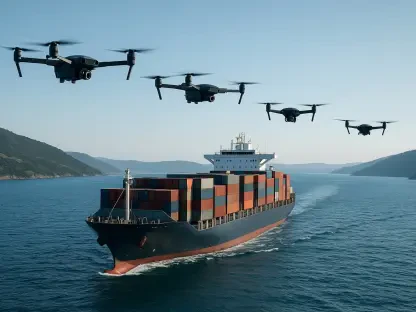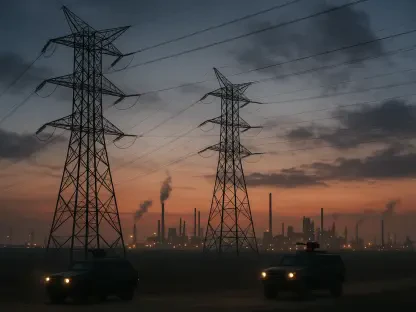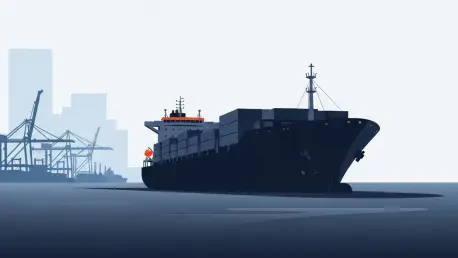

The flickering screens on a modern oil tanker’s bridge often reveal a stark contradiction between the upbeat diplomatic cables sent from the White House and the grim naval warnings flashing across tactical monitors. While political leaders broadcast a message of normalization and the resumption of unrestricted trade, the physical reality on the water remains defined by the persistent threat of sophisticated underwater explosives and unresolved naval blockades. This disconnect creates a high-stakes environment where a single miscalculation could ignite another round of global economic turmoil, leaving the international maritime community to navigate a precarious path between administrative optimism and tactical survival.
The urgency to declare the region safe stems from a deep-seated need to stabilize global energy markets after months of unprecedented volatility. The Trump administration has focused on a narrative of rapid recovery, suggesting that the most vital maritime chokepoint on the planet is once again open for business. However, for those responsible for multi-billion-dollar assets and the lives of crews, the situation is far from settled. The gap between political theater and maritime security has never been wider, as the world watches to see if the “fully authorized” passage promised by officials is a tangible reality or a premature claim designed for domestic consumption.
A Tale of Two Realities in the Persian Gulf
The current situation in the Persian Gulf presents a confusing duality where political declarations and military assessments refuse to align. On one hand, the executive branch in Washington has signaled a “fully authorized” and toll-free reopening of the Strait of Hormuz, aiming to facilitate a return to the traffic levels seen before the recent conflict. This optimistic projection is intended to reassure markets and encourage shipowners to resume their standard routes. By highlighting a projected increase from 25 to 50 ships per day, administration officials are attempting to paint a picture of a region that has successfully transitioned from a war zone to a stable trade corridor.
In contrast, the Joint Maritime Information Center continues to issue “SEVERE” threat warnings to every vessel entering the area. This naval monitoring body, operated by the U.S. Navy, highlights that the blockade against certain regional ports remains legally and physically in effect until the formal implementation of a ceasefire on June 19. For a captain approaching the narrow passage, these conflicting messages create a dangerous legal and security minefield. While a social media post might suggest the waters are open, the tactical reality involves active naval patrols and the constant monitoring of suspicious underwater signatures that suggest the area is still a high-risk environment.
The Economic Shadow of a Three-Month Conflict
The lingering effects of the recent three-month military friction involving the United States, Israel, and Iran have fundamentally reshaped the global energy landscape. Oil prices previously surged past the $100-a-barrel threshold, while American consumers faced gasoline prices that exceeded $4.50 per gallon at the pump. These spikes were not merely temporary fluctuations but reflections of a systemic supply shock that paralyzed traditional shipping lanes. Although the anticipation of peace has provided some temporary relief, the structural damage to the energy market remains evident in the persistent volatility of crude futures and the increased cost of maritime insurance.
Market stability remains elusive because domestic crude inventories in the United States have dropped significantly, falling five percent below the five-year average. This inventory “thinness” means that the global economy has no cushion against further disruptions, making the current negotiations in Switzerland a high-stakes endeavor for every major economy. Even a minor setback in demining efforts or a breakdown in diplomatic communication could trigger an immediate return to record-high energy costs. Consequently, the push to normalize the Strait of Hormuz is driven as much by the need to replenish these depleted stocks as it is by the desire for regional peace.
Bridging the Gap: Washington Rhetoric and Maritime Hazards
The administration’s aggressive timeline for reopening the Strait faces a significant technical hurdle in the form of thousands of potential sea mines. Political officials have suggested that a full reopening could be accomplished in as little as one week, yet maritime experts and the International Energy Agency argue that this estimate is dangerously optimistic. Clearing safe corridors for massive, slow-moving tankers is a meticulous process that involves specialized sonar equipment and remotely operated vehicles. Historically, such operations have taken months rather than days, especially when dealing with the advanced, low-signature mines utilized in modern maritime warfare.
Furthermore, the naval blockade currently in place creates a jurisdictional quagmire for any vessel attempting to test the waters before the June 19 deadline. Shippers are caught between the desire to take advantage of the promised toll-free window and the risk of being intercepted or redirected by naval assets still operating under combat rules of engagement. This disconnect is exacerbated by the fact that the memorandum of understanding signed in Switzerland has yet to be translated into specific, actionable instructions for the merchant fleet. Without a unified command structure that bridges the gap between political goals and naval enforcement, the risk of accidental escalation remains high.
Why Industry Leaders Remain Guarded Despite Diplomatic Breakthroughs
Major shipping conglomerates and trade organizations like BIMCO and INTERTANKO have maintained a strictly guarded posture despite the positive headlines coming out of Washington. Jakob Larsen, a prominent voice for BIMCO, has noted that the industry has a long memory regarding government reassurances that failed to account for tactical realities. Companies like Maersk are currently prioritizing their own independent risk assessments over administrative enthusiasm, as the loss of a single high-value asset could have catastrophic financial and environmental consequences. For these stakeholders, a “toll-free” transit window is an insufficient incentive if the safety of the crew and the integrity of the vessel cannot be guaranteed.
The industry is specifically looking for granular data on mine-clearing progress and a clear alignment of threat levels before they commit to resuming full-scale operations. Political declarations are viewed as starting points for negotiation rather than definitive proof of safety. Most major carriers have decided to maintain their alternative, though more expensive, routes until verifiable safe lanes are established and the “SEVERE” warning is officially downgraded. The prevailing sentiment among maritime leaders is that the 60-day grace period offered by the administration is a welcome gesture, but it does not replace the need for a transparent and technically sound security protocol.
Key Indicators: Safe Passage in the Post-Conflict Era
The resolution of the maritime crisis eventually hinged on the alignment of security protocols and economic benchmarks. Stakeholders determined that the implementation of a unified communication strategy between the Joint Maritime Information Center and the White House was the only way to restore true confidence. They observed that as long as the Navy’s threat assessments contradicted political rhetoric, the shipping industry remained paralyzed by uncertainty. The transition to a more stable environment occurred only after technical experts provided verifiable proof of cleared corridors, allowing the “wait and see” strategy to evolve into active participation.
Industry analysts also noted that a permanent resolution required addressing the long-term intent regarding transit tolls. Iran’s indication that it intended to impose fees after the initial grace period suggested that the Strait would remain a tool for geopolitical leverage rather than a simple trade route. Consequently, the mediation process in Switzerland sought to establish a framework that separated maritime passage from broader regional disputes. These efforts ultimately aimed to create a neutral monitoring body that could verify safety independent of political cycles. This approach ensured that future shipping traffic was governed by technical safety standards rather than the shifting winds of international diplomacy.