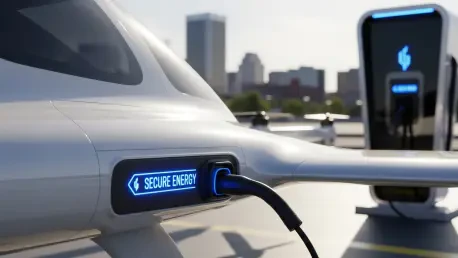

The Commonwealth of Virginia has officially inaugurated a groundbreaking electric aviation pilot program that successfully merges zero-emission transport with a robust and highly sophisticated privacy-centric data framework. This initiative marks a definitive shift away from the surveillance-heavy models often seen in modern digital logistics, specifically targeting the short-haul transit corridor between Richmond and Northern Virginia. By deploying a fleet of specialized electric vertical takeoff and landing aircraft, the project addresses both the environmental urgency of decarbonizing the transportation sector and the increasing public demand for digital anonymity. Unlike previous attempts at urban air mobility, this program incorporates a secure-by-default architecture that ensures passenger movement patterns are never aggregated into exploitable datasets. State officials have emphasized that the primary objective is to prove that advanced aerial infrastructure can coexist with stringent individual privacy protections. As the first routes become operational, the focus remains on validating the hardware’s reliability while maintaining a transparent relationship with the traveling public regarding their personal information.
Secure Aviation Architectures: Protection by Design
Implementing a privacy-first approach required the integration of decentralized data protocols that process information locally on the aircraft rather than transmitting it to a central cloud. This edge computing model utilizes zero-knowledge proofs to verify passenger credentials and flight permissions without revealing actual identities or personal details to the service provider. Such a configuration effectively mitigates the risks associated with large-scale data breaches, as there is no central repository of movement logs for malicious actors to target. Furthermore, the telemetry data generated by the electric propulsion systems is strictly decoupled from any passenger-related metadata, ensuring that engineering diagnostics do not inadvertently expose individual usage patterns. This technical separation is managed through specialized hardware security modules installed on every aircraft, which act as a physical barrier against unauthorized data exfiltration. By prioritizing these high-level cryptographic standards, the program sets a new benchmark for how future autonomous systems handle the sensitive intersection of physical location and digital identity.
The aircraft utilized in this pilot represent the cutting edge of aerospace engineering, featuring high-energy density solid-state batteries that provide the necessary range without the fire risks associated with older variants. These propulsion systems are designed for high-frequency operations, allowing for rapid turnaround times at specialized charging hubs located at existing regional airports. Noise mitigation is another critical component of the hardware design, with multi-rotor configurations that operate at frequencies significantly less intrusive than traditional helicopters. This technical refinement is essential for gaining community acceptance in densely populated areas of Virginia where flight paths often cross residential zones. Integration with the local electrical grid is managed through smart-charging stations that utilize renewable energy sources, further aligning the project with the state’s broader sustainability goals. By focusing on these localized infrastructure improvements, the program avoids the need for massive, centralized construction projects, instead opting for a distributed network that maximizes utility and efficiency.
Regulatory Synergy: Balancing Safety and Personal Freedom
Navigating the complex landscape of federal aviation safety standards while adhering to state-level privacy mandates necessitated a collaborative framework between various government agencies. The Federal Aviation Administration provided oversight for the airworthiness of the electric fleet, while the Virginia Department of Transportation ensured that data handling remained compliant with the latest consumer protection statutes. This dual-layered regulatory approach allowed the pilot program to move forward with a clear set of guidelines that protect both the physical safety of the passengers and their digital rights. One of the most significant hurdles involved establishing a standard for incident reporting that provided enough data for safety investigators without compromising the anonymity of the participants. The solution involved a redacted logging system that automatically strips personal identifiers from flight records before they are submitted to regulatory databases. This compromise demonstrated that high-level safety oversight and individual privacy are not mutually exclusive when the right technological safeguards are implemented.
The successful completion of the pilot’s initial phase proved that electric aviation was capable of meeting rigorous commercial demands while maintaining a strict posture on data sovereignty. Stakeholders recognized that the next logical step involved standardizing these privacy protocols across different manufacturers to ensure interoperability as the network expanded into neighboring states. It was observed that the modular nature of the charging infrastructure allowed for rapid scaling, which suggested that similar models could be implemented in other high-traffic corridors across the country. Future considerations focused on the integration of these aerial routes with existing public transit systems to create a seamless, end-to-end travel experience that remained entirely off-grid from a data perspective. Engineers recommended the adoption of standardized hardware security modules to maintain a consistent level of protection as new aircraft entered the fleet. Ultimately, the program established a blueprint for the ethical deployment of advanced mobility technologies, ensuring that the convenience of electric flight never came at the cost of the fundamental right to travel.