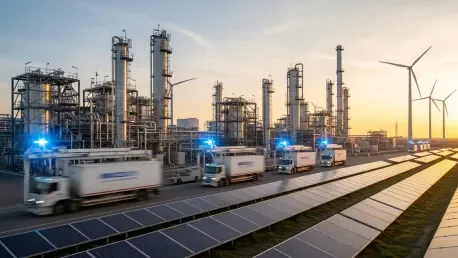

The vulnerability of global energy supply chains became an undeniable reality when traditional fuel prices spiked due to distant regional conflicts, forcing nations to realize that true sovereignty requires energy independence. Relying on fossil fuel imports often leaves a country at the mercy of volatile geopolitical climates, making the transition to renewable sources a prerequisite for maintaining a robust defense posture. Today, the conversation has moved far beyond environmental stewardship, focusing instead on how domestic wind, solar, and nuclear power can insulate a nation from external blackmail and economic coercion. By localizing electricity generation through diverse renewable portfolios, governments are effectively dismantling the leverage that oil-rich adversaries once held over their foreign policy decisions. This strategic shift reflects a broader understanding that a nation’s safety is inextricably linked to its ability to power its own industries without needing permission from a foreign supplier. The current landscape necessitates a radical restructuring of energy infrastructure to ensure that a localized failure or a blocked shipping lane does not lead to a systemic collapse of essential services.
Strengthening Sovereignty Through Mineral Autonomy
Securing the Critical Mineral Pipeline
Securing the raw materials required for the energy transition represents the most significant hurdle in achieving total mineral autonomy and reducing reliance on concentrated global markets. Currently, the production of high-capacity batteries and high-efficiency turbines depends heavily on rare earth elements and minerals like lithium, cobalt, and nickel, which are often sourced from politically unstable regions. This concentration of resources creates a strategic bottleneck that can be exploited by competitors seeking to stall the technological progress of their rivals. To mitigate this risk, investments have shifted toward discovering alternative chemistries that utilize more abundant materials, such as sodium-ion or sulfur-based batteries. Simultaneously, the focus on building robust domestic supply chains has intensified, ensuring that the entire lifecycle of energy production remains under the control of trusted partners. Addressing these logistical vulnerabilities is no longer optional but is instead a vital component of protecting the technological edge that defines modern national power in a competitive world.
Industrial Resurgence in Midstream Processing
Beyond the extraction of raw materials, the ability to refine and process these elements into usable components has emerged as a central pillar of industrial competitiveness and national security. For too long, the midstream processing of critical minerals was outsourced to lower-cost environments, leaving domestic manufacturers vulnerable to export controls and sudden supply disruptions. Correcting this imbalance requires the development of state-of-the-art refining facilities that adhere to high efficiency standards while minimizing the ecological footprint of industrial operations. By internalizing these processes, a nation can ensure a steady flow of components for both civilian and military applications, regardless of the shifting tides of international trade relations. This industrial resurgence also provides a buffer against the weaponization of trade, where essential goods are used as tools of diplomatic pressure. Establishing a closed-loop system that includes advanced recycling of decommissioned hardware further bolsters this resilience by reducing the need for constant new extraction from foreign mines.
Hardening Infrastructure Against Hybrid Warfare
Resilience of Distributed Power Systems
Modern energy security also demands the protection of the electrical grid from increasingly sophisticated cyberattacks that target centralized infrastructure and its control systems. The traditional model of large, centralized power plants connected to far-reaching transmission lines is particularly susceptible to single points of failure that can be exploited by state-sponsored hackers. In response, there has been a significant push toward the deployment of distributed energy resources and microgrids that can operate independently if the main grid is compromised. These decentralized systems provide a layer of redundancy that is essential for maintaining power to hospitals, command centers, and emergency response services during a crisis. Integrating artificial intelligence for real-time monitoring and threat detection has become a standard practice in hardening these networks against digital intrusions. Furthermore, the shift toward a smart grid allows for better load management and the rapid isolation of affected segments, preventing a localized breach from cascading into a nationwide blackout.
Tactical Advantages of Energy Diversification
The transition toward a secure energy future necessitated a shift in how legislative bodies approached grid modernization and resource allocation. Policymakers recognized that relying on a handful of external suppliers for critical hardware invited systemic risks that outweighed the short-term cost savings of globalized procurement. Consequently, the defense sector spearheaded the adoption of modular nuclear reactors and advanced long-duration storage to ensure operational continuity during prolonged outages. This strategic pivot transformed energy policy from a purely economic concern into a foundational element of national defense strategy. Strengthening domestic manufacturing capabilities proved to be the most effective way to insulate the economy from global price shocks and logistical bottlenecks. Future stability depended on the successful integration of these resilient systems into the existing civil infrastructure. Leaders focused on establishing clear standards for hardware security and incentivizing private investment in high-capacity transmission lines that spanned regional boundaries.