
In the landscape of American infrastructure, few entities carry the weight of history quite like Amtrak. Yet, behind the iconic trains traversing the Northeast Corridor lies a digital revolution that remains largely unseen by the 35 million passengers who boarded last year. Donald Gainsborough, a leading figure in policy and the head of Government Curated, has spent his career analyzing how massive organizations modernize without losing their core mission. In this discussion, we explore the “invisible infrastructure” being built to support the future of rail. We delve into the strategic shift from siloed, fragmented databases to a unified “single source of truth,” the foundational role of high-quality data in the AI journey, and the internal cultural shifts required to move a quasi-public giant into the cloud while maintaining ironclad security and employee productivity.
How does the transition from a fragmented network of databases to a “single source of truth” fundamentally change the operational efficiency of a massive organization like Amtrak?
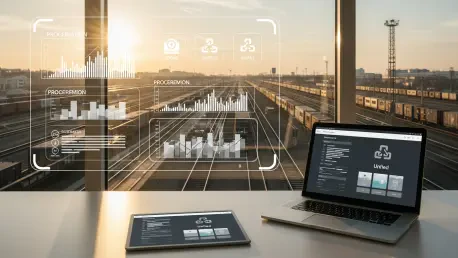
Moving away from a multitude of databases is a monumental task that requires more than just new software; it requires a total reimagining of how information flows through the company. By consolidating HR and supply chain data into a single platform, Amtrak can finally achieve a clear, unified view of its inventory, demand, and forecasts. This shift eliminates the sensory overload of navigating conflicting systems and replaces it with the confidence of knowing exactly where every asset is at any given moment. For the thousands of employees involved, this means less time fighting with legacy tech and more time focusing on the 35 million passengers they serve. The emotional weight of systemic inefficiency is replaced by the streamlined precision of a modernized procurement engine that ensures every part and person is where they need to be.
Many leaders treat AI as a silver bullet, but why do you argue that it is merely a part of the “invisible infrastructure” rather than the final goal of the journey?
Artificial intelligence is often the most talked-about part of modernization, but it can only succeed if the foundation—the data, platforms, and processes—is perfectly aligned. You have to ensure the right data is in the right format before you can ever hope to see a meaningful return on an AI investment. It is the invisible infrastructure that gets the train on the tracks, providing a quiet reliability that powers everything from ticket reservations to complex maintenance schedules. If you rush into AI without that bedrock, you are essentially building a house on sand. At Amtrak, the focus remains on an end state where AI improves the daily lives of employees, making their complex tasks feel simpler and more intuitive rather than adding another layer of confusion.
With finance and enterprise resource planning being the next frontiers for consolidation, what are the specific hurdles in creating a cohesive system for such a diverse organization?
The reality of modern tech is that a one-size-fits-all approach rarely cuts it for a corporation as multifaceted as Amtrak. There are multiple platforms and legacy processes that must be integrated into a new, centralized ERP system, which often feels like re-engineering an engine while the train is moving at full speed. This journey into finance modernization is about ensuring that every transaction and resource is secure, compliant, and easily accessible to decision-makers. It requires a delicate balance of automating several business processes while evaluating their success in real-time to avoid disruptions. The goal is to reach a point where the company isn’t constantly shopping for more technology, but instead has a cohesive system that scales with its needs and keeps the business side as efficient as the tracks themselves.
What does the internal debate regarding cloud migration reveal about the tension between the need for innovation and the mandate for absolute data security?
The decision to move to the cloud was not made lightly and involved extensive internal discussion to ensure that innovation did not come at the cost of performance or safety. When you are dealing with critical national infrastructure, you must believe in a platform that is not only reliable but also ironclad in its compliance and security. It is a strategic move that acknowledges the cloud is the right path forward, but only if it provides a stable environment for the railroad’s massive and sensitive data sets. Executives had to have some very hard conversations to ensure that this transition would actually make the lives of thousands of employees easier rather than more vulnerable. By prioritizing a secure and accessible platform, the organization ensures that its invisible infrastructure remains resilient against any external threats or internal failures.
What is your forecast for the future of rail technology as these foundational digital layers become fully integrated?
I believe we are entering an era where the passenger won’t even see the most impressive technological feats, as the focus shifts entirely to seamless, automated reliability. We will see Amtrak and similar organizations reach an end state where AI manages the minutiae of maintenance and scheduling, allowing human workers to focus on higher-level strategy and passenger service. The sheer scale of 35 million annual passengers will become a data asset rather than a logistical burden, turning the railroad into a predictive machine that anticipates needs before they even arise. This transformation won’t happen overnight, but through these small, deliberate steps toward a unified platform, the invisible infrastructure will eventually become the strongest part of the journey. Ultimately, the goal is to increase productivity across the board so that the physical journey remains as smooth as the digital one supporting it.