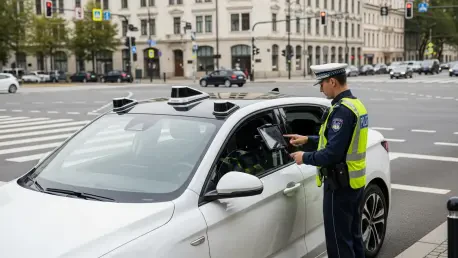

A political savant and leader in policy and legislation, Donald Gainsborough is at the helm of Government Curated, where he navigates the complex intersection of emerging technology and public safety. With a career dedicated to dissecting how legislative frameworks adapt to innovation, Gainsborough provides a critical perspective on the rapid deployment of driverless cars across the American South. This interview explores the friction between local safety concerns and state-level deregulation, the technical nuances of autonomous vehicle (AV) “glitches,” and the evolving protocols that first responders must master to maintain order on increasingly automated streets.
When a self-driving car obstructs an ambulance during a high-stakes emergency response, what specific protocols allow police officers to manually take control of the vehicle? How do these manual overrides impact scene safety, and what training is necessary to ensure first responders can relocate these vehicles within minutes?
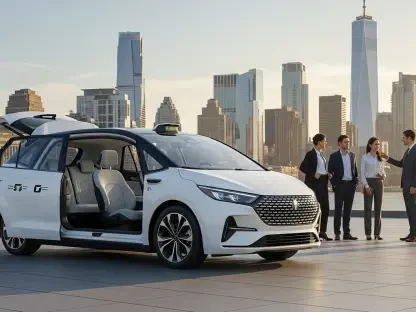
Modern protocols have evolved significantly, allowing a police officer to physically commandeer a vehicle and drive it to a safe location, such as a nearby parking garage, in under two minutes. This capability is a stark contrast to just four years ago when such a system simply didn’t exist, leaving responders helpless. To ensure scene safety, companies like Waymo now provide law enforcement with specific guides and proactive training sessions to demystify the technology. These training modules focus on “troubleshooting” unresponsive units, ensuring that a physical barricade at a crime scene or medical emergency can be cleared without waiting for a remote technician. The goal is to move the vehicle within a minute and a half of arrival, ensuring that the presence of an AV does not significantly hinder the ability to triage patients or access a high-stakes scene.
Texas currently prevents cities from regulating autonomous vehicles, with statewide DMV rules set to take effect this May. How does this centralized approach affect the ability of local municipalities to address specific neighborhood safety concerns, and what should the state-level certification process prioritize to ensure public safety?
The 2017 ban on municipal regulation was designed to foster industry growth, but it has left cities like Austin in a position where they can only monitor “kinks” rather than mandate changes. While local officials collaborate with state agencies to share knowledge of local road networks, the real power shifts this May when the Texas Department of Motor Vehicles introduces a formal authorization process. This new framework must prioritize written certifications from companies stating their vehicles can comply with all applicable traffic laws before they ever carry a passenger. Furthermore, the state must mandate that every operator submits a detailed interaction plan for emergency responders. Centralization ensures a uniform standard, but it places the heavy burden on the state to verify that these cars aren’t just theoretically safe, but practically compliant with the chaotic realities of urban driving.
Autonomous vehicles statistically have lower fatality rates than human drivers, yet they still struggle with tasks like recognizing police hand signals or yielding to emergency zones. How do you reconcile overall safety improvements with these specific technical glitches, and what metrics define when a vehicle is truly road-ready?
We are witnessing a paradox where the “promise” of technology outpaces its current readiness; while Travis County saw over 15,000 human-led crashes in 2024 compared to just two involving AVs, the 230 documented “glitches” in Austin tell a more nuanced story. A vehicle isn’t truly road-ready just because it avoids high-speed collisions; it must also demonstrate an understanding of social driving cues, such as a police officer’s hand signals or the specialized environment of an active emergency zone. Critics rightly argue that “the future isn’t today” because these vehicles still fail at basic secondary tasks that prevent them from becoming physical obstacles. True road-readiness should be measured by the “learning curve” of the software—if a vehicle continues to ignore police or block traffic after initial encounters, it suggests a fundamental gap in the navigation system’s ability to interpret complex human environments.
In instances where autonomous software fails to recognize stop-arm signals on school buses, what technical steps are taken to retrain the navigation systems? How can companies better collaborate with school districts to map bus routes and ensure vehicles do not repeat traffic violations after receiving multiple citations?
The situation with school buses highlights a concerning disconnect, as seen in Austin where Waymo vehicles were issued 25 tickets since August for illegally passing buses with deployed stop signs. When software fails, as it did in both Austin and Atlanta, companies are forced into software recalls and updates to improve signal recognition. Collaboration must go beyond just paying fines; it requires companies to actively collect data on bus routes and stop-arm behavior, as Waymo began doing in December. A major hurdle is the “remote assistance” factor, where human agents sometimes provide incorrect guidance to the car, leading to violations. To prevent repeat offenses, navigation systems must be hard-coded with school zone schedules and bus route maps to ensure the vehicle prioritizes student safety over perceived traffic flow.
Emergency responders in various cities are now receiving quick-reference guidance for managing unresponsive autonomous cars. What does this step-by-step troubleshooting look like in the field, and how do companies provide real-time remote assistance when a vehicle becomes a physical barricade at a crime scene?
Field troubleshooting involves a set of standardized steps: identifying the vehicle’s state, contacting the vendor for immediate support, and using manual overrides to redirect the car away from an active scene. In cities like San Antonio, police and fire departments have undergone specialized training to ensure they can handle a car that has essentially “frozen” or become unresponsive. Companies provide real-time assistance through remote agents who can theoretically see what the car sees, though this is not a foolproof solution. This human-in-the-loop system is designed to provide a safety net, but as we’ve seen, it requires constant refinement to prevent agents from making errors that lead to traffic violations. The physical reality of a 4,000-pound barricade means that first responders must be as comfortable “hacking” or moving these cars as they are using their own sirens.
What is your forecast for the integration of autonomous vehicles in major urban centers over the next decade?
I expect a period of “regulated friction” where the expansion into cities like Dallas, Houston, and San Antonio will be met with increased federal and state oversight following high-profile investigations by the NHTSA and NTSB. Over the next decade, the technology will likely achieve the lower fatality rates promised, but only if the industry moves past the current phase of “not learning” from repeated local violations. We will see a shift where AV companies are treated less like tech startups and more like public utilities, with mandatory real-time data sharing between the vehicles and local emergency dispatch centers. Ultimately, the success of these vehicles won’t be measured by how many miles they drive without a crash, but by how seamlessly they disappear into the background of daily city life without obstructing the vital work of our first responders.