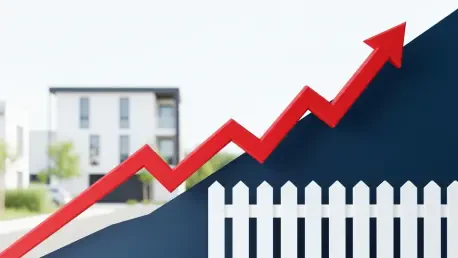

The rhythmic thrum of hammers and saws that once signaled a revitalized American housing market has been replaced by an uneasy silence as global tensions reshape the domestic economy. Just months ago, real estate analysts were celebrating a robust spring rebound, characterized by falling mortgage rates and a surge in buyer demand. However, the onset of Operation Epic Fury has abruptly halted this momentum, turning the promise of a housing recovery into a sudden and chilly stagnation. The shift was as swift as it was unexpected, proving that the stability of the American suburb is intimately tied to the volatility of international geopolitics.
This domestic cooling is the unintended consequence of a conflict taking place thousands of miles away. As military engagement intensifies, the primary casualty is the collective “American Dream” of homeownership. The paradox of the current situation lies in the fact that while the battle is fought in the Middle East, the fallout is felt most acutely in the closing rooms of title companies and the savings accounts of young families. What was once a clear path toward market stabilization has become collateral damage in a high-stakes geopolitical standoff.
From the Strait of Hormuz to the Suburbs: Why This Matters
The economic umbilical cord connecting Middle Eastern oil blockades to the monthly mortgage payments of American families has never been more visible. When the Strait of Hormuz faces a standstill, the ripple effect on global energy supplies is immediate, driving up the cost of living and, by extension, the cost of borrowing. For the average homebuyer, this translates to a direct hit on affordability. The fragility of the post-pandemic housing recovery has been exposed, showing that even the strongest domestic demand cannot fully insulate the market from sudden global supply shocks.
Beyond the financial metrics, the political stakes of this stalled recovery are incredibly high. Republican leadership had banked on a flourishing housing market to serve as a centerpiece of their midterm election strategy, showcasing economic competence and growth. With the market now in a state of paralysis, that narrative is under threat. The administration finds itself in a precarious position where the military actions intended to secure national interests are simultaneously eroding the economic ground upon which their domestic platform stands.
The Economic Chain Reaction: From Energy Spikes to Mortgage Stalls
The mechanism of this economic downturn begins with the surge in energy costs, which serves as a primary driver of inflation. As gasoline and heating prices climb, long-term bond yields typically follow suit, exerting upward pressure on interest rates. Since mortgage pricing is tethered to these yields, the cost of financing a home has surged at the exact moment consumers expected relief. This creates a “lose-lose” scenario where high borrowing costs price out first-time buyers while effectively trapping current homeowners in their existing properties, unwilling to trade a low-rate mortgage for a new, expensive one.
This stagnation is further exacerbated by the erosion of household budgets. Rising grocery and fuel bills leave less room for families to save for down payments, pushing the goal of homeownership further out of reach. Compounding this issue is a pre-existing structural deficit in the national housing supply. With an estimated shortage of 10 million housing units, the transition to a wartime economy has diverted focus and resources away from the construction initiatives needed to close this gap, leaving the market both undersupplied and overpriced.
Expert Perspectives on a Fragile Market
Economists and market observers offer a sobering assessment of these conditions. Stephen Moore has noted that the current environment primarily benefits large financial institutions at the expense of ordinary citizens, as higher rates pad bank margins while exhausting consumer purchasing power. This sentiment is echoed by real estate professionals like Mike Simonsen, who observes a pervasive sense of worry among agents and clients alike. The psychological shift from optimism to caution has been profound, as the uncertainty of war clouds the long-term financial planning essential for real estate transactions.
In contrast, some analysts attempt to find a silver lining by looking at historical data. Jake Krimmel has pointed out that, on paper, current rates are still lower than some historical peaks, yet he acknowledges that consumer sentiment is more influenced by recent volatility than by decades-old benchmarks. In response to these pressures, the Trump administration directed Fannie Mae and Freddie Mac to purchase $200 billion in mortgage-backed securities. While this intervention was designed to suppress interest rates, many experts remain skeptical about whether such a move can counteract the massive inflationary pressures stemming from a prolonged conflict.
Navigating the Stalled Market: Strategies for a Volatile Era
For those still attempting to enter the market, monitoring the Federal Reserve’s response to energy-driven inflation is now a mandatory exercise. Potential buyers must track global energy volatility as a leading indicator of where mortgage rates might head in the coming months. Simultaneously, legislative movements like the Scott-Warren bill offer a glimpse into potential structural changes, as the proposed restrictions on institutional investors buying single-family homes could eventually provide some relief to individual buyers. This bill represents a rare moment of bipartisan cooperation in a period defined by procedural gridlock.
Prospective homeowners are increasingly forced to pivot their financial strategies, often adjusting search criteria or exploring alternative financing models to cope with interest rate fluctuations. Navigating this era requires a blend of patience and proactive policy advocacy. By pushing for modernized housing programs and community bank lending, citizens and policymakers can work toward long-term solutions that transcend the immediate disruptions of war. The goal remained to protect the foundational stability of the housing sector from the unpredictable winds of international conflict.
The administration ultimately realized that domestic prosperity was inseparable from global stability. Policymakers moved to balance military objectives with the urgent need for affordable housing, seeking ways to decouple mortgage rates from energy-induced inflation. Analysts concluded that the resilience of the American suburbs depended on a swift resolution to the crisis in the Middle East. Forward-looking strategies then shifted toward building a more self-reliant housing infrastructure that could better withstand future geopolitical shocks.