
The tenth anniversary of Mexico’s Wholesale Electricity Market coincides with a major policy shift intended to balance state control with private capital participation. This strategic pivot comes at a time when the nation’s industrial appetite is reaching unprecedented levels, particularly within the northern manufacturing hubs. The Federal Electricity Commission (CFE) recently unveiled a monumental $37.5 billion roadmap for the 2026 to 2030 period, signaling a departure from previous isolationist tendencies toward a more integrated and modern infrastructure. This massive capital injection is not merely about maintenance; it represents a fundamental redesign of how Mexico generates, stores, and distributes power to its nearly 130 million citizens. By engaging with 250 institutional investors and major international banks, the state utility is attempting to secure the financial runway needed to overcome years of grid congestion and intermittent supply issues that have occasionally hindered rapid foreign direct investment.
Strengthening the National Energy Infrastructure
Renewable Integration: Deploying Advanced Storage Solutions
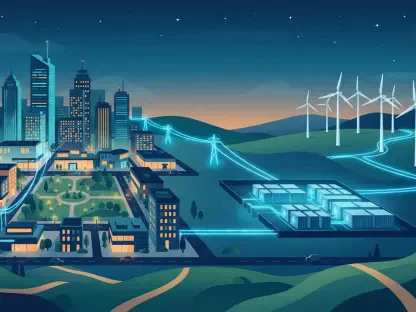
A core pillar of this ambitious roadmap involves the aggressive integration of renewable energy sources to diversify a matrix that has historically leaned too heavily on imported fossil fuels. The government aims to add 20 GW of renewable capacity, but the true innovation lies in the mandatory implementation of Battery Energy Storage Systems (BESS). To ensure grid stability, new solar and wind projects are now required to co-locate storage capacity equal to at least 30% of their total output. This technical mandate is specifically designed to mitigate the inherent variability of renewables, effectively replacing the expensive and carbon-intensive “peaker” plants that currently manage demand surges. By utilizing these advanced battery technologies, the CFE intends to create a more resilient energy profile that can sustain industrial operations through peak hours without relying on the emergency activation of less efficient, secondary generation units that drive up costs.
Grid Expansion: Modernizing the National Transmission Network
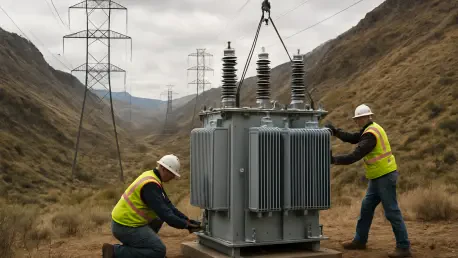
Generation capacity alone cannot solve the energy puzzle if the delivery mechanisms remain outdated or overstretched. Recognizing this bottleneck, the CFE has allocated $6.9 billion specifically for 154 transmission projects through 2030. These initiatives are focused on expanding the national high-voltage grid by more than 6,500 kilometers, ensuring that electricity produced in renewable-rich regions can actually reach the industrial corridors where demand is highest. Currently, over 1,300 qualified users in critical sectors such as automotive manufacturing, mining, and large-scale retail are facing localized supply constraints. By strengthening the interconnections between the southern energy-producing states and the northern industrial heartlands, the commission aims to eliminate the “islands” of congestion that have historically caused localized price spikes and occasional brownouts. This modernization effort is crucial for maintaining Mexico’s competitive edge as a primary destination for nearshoring activities.
Financial Strategies and Market Frameworks
Collaborative Investment: The Mixed Development Scheme
To bridge the massive funding gap required for such a comprehensive overhaul, the CFE has introduced a “Mixed Development Scheme” that fundamentally changes the relationship between the state and private developers. Under this innovative framework, the CFE acts as the guaranteed off-taker for 70% of a project’s total capacity, providing the financial certainty that international lenders demand. The remaining 30% of the generated power is left for the private entity to sell through bilateral contracts or on the spot market, allowing for competitive pricing and market-driven flexibility. This hybrid model provides a secure environment for capital while ensuring the government retains control over the strategic direction of the national grid. The effectiveness of this strategy was recently validated during the first major bidding round, which was five times oversubscribed. This surge in interest resulted in over $10 billion in committed capital for 30 diverse projects, ranging from solar farms to grid infrastructure.
Market Resilience: Leveraging Strategic Debt for Growth
The roadmap successfully established a framework where technological modernization and financial pragmatism worked in tandem. Stakeholders prioritized the deployment of digitized grid management tools to monitor real-time load distribution, which significantly reduced energy waste across the system. Policymakers also recognized that the transition required a workforce skilled in maintaining sophisticated BESS installations and renewable hardware, leading to targeted investments in technical education programs. By aligning national energy security with private sector innovation, the strategy provided a clear path toward a lower-carbon economy. Moving forward, the focus shifted toward expanding these collaborative models to include smaller-scale community energy projects and micro-grids. This evolution ensured that the benefits of the massive $37.5 billion investment reached beyond industrial hubs to rural communities. Ultimately, the plan created a stable environment for long-term industrial planning, proving that state-led initiatives can thrive when integrated with market dynamics.