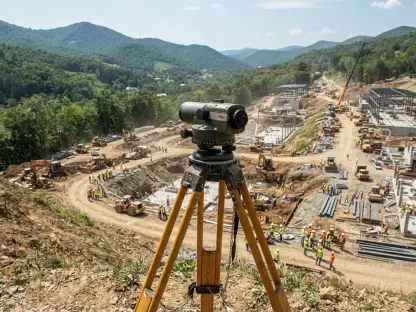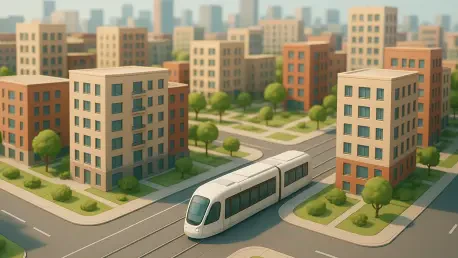

The sounds of heavy machinery and the rhythmic clanging of steel tracks being laid through the central corridor are not merely the noises of construction, but the sounds of a city betting its economic future on a specific vision of urban density. Omaha is positioning itself as the least populous metropolitan area in the United States to attempt the operation of a modern streetcar system. This ambitious $478 million endeavor seeks to bridge the physical and cultural gap between the historic Blackstone District and the recently revitalized Riverfront by 2028, signaling a massive bet on fixed-rail transit in a city long dominated by the automobile. While many larger metropolitan regions are scaling back their transit ambitions, Omaha is charging forward, arguing that a modern streetcar is the essential infrastructure required to compete with other Midwestern hubs for talent and corporate investment. The project stands at a critical juncture where it must prove it can learn from the high-profile missteps of other cities while carving out a unique identity that justifies such a significant allocation of public resources and political capital. Proponents view the project as a catalyst for a new era of urban living, while skeptics continue to worry that the city is chasing an outdated transit trend that may eventually leave taxpayers holding the bag for an underutilized system. As construction progresses, the debate over whether this represents a strategic masterstroke or a precarious gamble continues to intensify among local residents and business leaders alike.
Strategic Foundations and National Models
The architectural and operational foundation of the Omaha streetcar is not an experiment built from scratch but is instead a calculated synthesis of three specific success stories from across the United States. From Portland, Omaha planners have adopted the development-first model, which views the streetcar primarily as a tool for high-density placemaking rather than just a method for transporting people from one point to another. The primary goal is to turn underutilized land and vacant lots along the central corridor into vibrant residential and commercial hubs, mirroring the legendary transformation of Portland’s Pearl District. By signaling to the market that the city is committed to a permanent, fixed-rail route, officials hope to encourage developers to build upward rather than outward. This strategy assumes that the physical presence of tracks in the ground provides a level of certainty that bus routes, which can be altered or canceled overnight, simply cannot offer. The focus remains on creating a walkable, urban environment where the streetcar serves as the connective tissue for a new generation of city dwellers who prioritize accessibility over car ownership.
Connectivity and accessibility form the other two pillars of Omaha’s strategy, drawing heavily on the recent experiences of Kansas City and Oklahoma City. Following the Kansas City model, the proposed route is designed as a straight line through the heart of the city, linking established entertainment districts with major business hubs to ensure a logical and intuitive flow for riders. This simplicity is intended to reduce the learning curve for new users and make the system a natural choice for lunch-hour trips or evening outings. Furthermore, Omaha plans to follow the lead of Oklahoma City by offering a fare-free model for the foreseeable future. This decision is based on extensive data suggesting that eliminating the friction of payment significantly boosts ridership numbers and makes the system a more attractive alternative for both local commuters and visiting tourists. By removing financial barriers, the city aims to maximize the utility of the system from day one, ensuring that the cars are visible and populated, which in turn fuels the perception of a thriving, modern urban core.
Governance and the Question of Public Mandate
One of the most contentious aspects of the Omaha streetcar project is the perceived democratic deficit in its approval process. Unlike many other American streetcar projects that required a direct public vote or the creation of a special tax district through a referendum, Omaha’s plan was approved through administrative channels without a direct mandate from the citizens. Critics frequently point out that in cities like Kansas City and Portland, residents essentially chose to tax themselves to fund the infrastructure, whereas Omaha residents were not given a similar opportunity to voice their preference at the ballot box. This lack of a public vote has led to a persistent sense of unease among certain segments of the population who feel that such a transformative and expensive project should have required broader public consensus. The tension is compounded by the fact that the project is moving forward during a time of economic transition, leading some to question whether the city’s priorities are correctly aligned with the immediate needs of its diverse neighborhoods.
The governance structure of the Omaha Streetcar Authority has also drawn significant scrutiny from local advocates and small business owners along the planned route. The governing board is largely composed of city officials and transit employees, with very little formal representation from the private sector or the specific neighborhoods that are most directly impacted by the ongoing construction and future operations. This perceived lack of a diverse and independent governing body has led to the formation of the Streetcar Impact Alliance, a grassroots group that argues the project is being managed by a small circle of stakeholders rather than the community at large. These critics argue that without more direct input from the people who live and work along the line, the project risks overlooking the practical, daily needs of the residents in favor of high-level development goals. The challenge for the Authority will be to prove that it can remain responsive to local concerns while managing the complex logistics of a multi-year infrastructure build-out.
Funding Mechanisms: The TIF Strategy
The reason the project was able to bypass a traditional public vote lies in its unique and complex funding mechanism known as Tax Increment Financing (TIF). Under this specific arrangement, the $478 million construction cost is intended to be covered by the projected growth in property tax revenue generated by new developments within a designated zone along the streetcar route. City leadership argues that because the project is essentially self-funding through the economic activity it stimulates, it does not place an immediate burden on the general taxpayer or require the issuance of traditional public bonds that would impact the city’s credit rating. From the city’s perspective, TIF is a powerful tool that allows Omaha to build modern infrastructure today by leveraging the increased property values of tomorrow. This financial architecture is designed to capture the “unearned” value created by public investment and reinvest it directly into the project that sparked the growth in the first place, creating a closed-loop system of urban renewal.
However, the use of TIF is a polarizing topic among economists and local activists who argue that there is no such thing as free money in municipal finance. Skeptics argue that TIF is not a magical revenue generator but rather a redirection of funds that would otherwise flow into the city’s general fund to support schools, emergency services, and general road maintenance. There is a persistent concern that by “locking up” the growth in property tax revenue for decades to pay off streetcar debt, the city may be inadvertently starving other essential services of necessary funding as the population grows. Furthermore, the entire financial model rests on the assumption that the predicted development boom will actually materialize and maintain its value over the long term. If economic conditions shift or if the anticipated high-rise apartments and office towers are not built, the city could face a significant budget gap. This puts Omaha in the position of betting heavily on a specific vision of future growth that must be realized to keep the project fiscally solvent.
Cautionary Tales: Lessons from Transit Failures
The risks inherent in Omaha’s ambitious plan are highlighted by the nightmare scenarios seen in cities like Washington, D.C., and St. Louis. In the nation’s capital, a massive streetcar investment ended in frustration and partial closure after the system failed to compete effectively with more efficient and reliable bus routes that covered the same territory. The D.C. experience serves as a stark warning that if a streetcar is not demonstrably faster, more frequent, or more convenient than existing transportation options, it will eventually be abandoned by the daily commuting public. Critics in Omaha use these examples to question the city’s optimistic ridership projections, especially since the proposed streetcar route overlaps significantly with the existing Omaha Rapid Bus Transit (ORBT) line. There is a deep-seated fear that Omaha is building a redundant system that may suffer the same fate as these struggling trolleys, becoming a decorative accessory rather than a functional piece of the city’s transportation infrastructure.
Even more sobering for local planners is the case of the Loop Trolley in St. Louis, which saw only a small fraction of its projected ridership and was eventually forced into a highly subsidized, seasonal operation just to avoid the requirement of repaying federal grants. The St. Louis failure was attributed to a combination of poor route planning, infrequent service, and a lack of integration with the broader transit network. To avoid this outcome, Omaha must ensure that its streetcar provides genuine utility for the average traveler, moving beyond its potential role as a novelty for tourists. The overlap with the ORBT line remains a particular point of contention; if the streetcar simply cannibalizes riders from the bus system without attracting new users from their personal vehicles, the total transit benefit to the city will be marginal. The city must prove that the streetcar offers a unique value proposition that justifies its high cost compared to more flexible and less expensive bus-based solutions.
Economic Growth: Rail as a Development Magnet
Despite the operational and financial risks, proponents of the streetcar point to the massive influx of private capital that is already occurring near the planned route as definitive proof of the project’s value. The city administration claims that the announcement of the streetcar has already helped spur over $1.3 billion in new development, including the massive Mutual of Omaha Tower and several high-profile residential and mixed-use projects. For these supporters, the streetcar is less about moving a high volume of passengers and more about acting as a permanent magnet for growth that provides institutional investors with the long-term confidence they need to commit to the urban core. The Mutual of Omaha skyscraper, in particular, is seen as a cornerstone of this strategy, anchoring thousands of jobs in the downtown area and creating a built-in audience for the streetcar system. From this perspective, the infrastructure is an investment in the city’s tax base that will pay dividends for decades.
The argument for economic development suggests that even if the streetcar experiences lower-than-expected ridership in its early years, the resulting increase in property tax revenue and urban density will more than justify the initial construction expense. By creating a fixed-rail system, Omaha is signaling to the global market that it is committed to a specific geographic corridor for the long term. This permanence is something that bus lines, which can be moved, reduced, or canceled with relative ease during budget cycles, simply cannot provide to a developer looking to build a twenty-story residential tower. The tracks in the ground represent a promise of continued municipal support and a certain level of prestige that attracts a specific demographic of young professionals and empty-nesters. For the city’s leadership, the streetcar is the most effective tool available to reverse decades of suburban sprawl and refocus the city’s energy on a dense, sustainable, and economically vibrant center.
Forward-Looking Actions: Strengthening the Urban Core
The administration finalized several key initiatives during the middle of the current decade to ensure the streetcar survived its initial years of operation and reached its full potential as a transit tool. By adjusting the municipal zoning code to allow for significantly higher density residential projects and removing minimum parking requirements along the corridor, the city successfully created a captive audience of potential riders right at the track’s edge. Stakeholders also established a dedicated maintenance fund that was carefully separated from the general transit budget, providing a necessary safety net against potential fluctuations in property tax revenue during the transition period. These preemptive measures directly addressed the concerns of skeptics who feared the system would become a financial drain on other city services. The proactive nature of these policy shifts demonstrated that the streetcar was never intended to function in a vacuum, but rather as one part of a comprehensive urban strategy.
Furthermore, the decision to fully integrate the streetcar’s digital payment and real-time tracking systems with the existing bus network fostered a unified transit experience for all citizens, regardless of their preferred mode of travel. Authorities implemented a series of signal-priority technologies at major intersections to ensure the streetcar remained faster than private vehicular traffic during peak hours, thereby increasing its appeal to daily commuters. By prioritizing the operational excellence of the system alongside its development goals, the city moved past the initial debates regarding cost and mandate. These strategic steps focused the conversation on the long-term utility of a modernized urban core rather than the short-term disruptions of construction. As the project moves toward its operational phase, the groundwork laid through these policy adjustments and infrastructure integrations has positioned the system to serve as a reliable, functional backbone for Omaha’s future growth.