
City planners in Pontevedra addressed the loss of central street parking by developing thousands of free park-and-ride spots located on the periphery of the urban core. This strategic shift was not merely a logistical adjustment but the foundational step in a comprehensive restructuring of the urban experience that has redefined the relationship between residents and their environment. While many global centers are currently grappling with the conceptual framework of the 15-minute city, Pontevedra has already spent over 25 years refining a model that effectively removes the private automobile from the center of civic life. The transformation of this Galician hub serves as a radical case study in political will and modern urban design, demonstrating how a medium-sized city can prioritize the physiological and psychological needs of its inhabitants over the mechanics of transit. By systematically dismantling the infrastructure of car dependency, the local government has fostered an environment where the street functions once again as a communal space rather than a hazardous corridor for through-traffic. This evolution highlights a fundamental pivot in metropolitan priorities, suggesting that the most successful cities of the future will be those that embrace a human-centric approach to mobility.
The Pre-Transformation Crisis
Historical Challenges
By the late 1990s, Pontevedra faced a severe existential crisis fueled by extreme traffic congestion that threatened the very fabric of its historic identity. Despite a modest population of approximately 85,000 residents, the city was overwhelmed by a staggering 80,000 vehicles daily, creating a density that far exceeded that of much larger metropolises like Madrid or London when adjusted for scale. The urban layout, characterized by narrow medieval streets and ancient plazas, was never designed to accommodate such a massive volume of mechanized transit. Consequently, the city had effectively become a high-speed transit hub for travelers heading to coastal towns, leaving its own residents to navigate a chaotic and fractured landscape. The constant influx of vehicles turned every available corner into a thoroughfare, eroding the quietude of the residential districts and making the simple act of walking a dangerous endeavor. This period was marked by a visible decline in the quality of urban life, as the historic charm of the region was buried under layers of noise, exhaust fumes, and the physical clutter of thousands of idling cars competing for space in a city that had run out of room.
Social and Environmental Impact
The physical environment of the historic center had deteriorated significantly during the peak of vehicle saturation, with ancient squares and narrow lanes essentially serving as informal parking lots. Mayor Miguel Anxo Fernández Lores, a physician by profession, viewed this state of affairs as a public health emergency rather than just a logistical problem. He described the urban landscape of that era as a permanent traffic jam that was fundamentally unlivable, noting that the constant exposure to noise pollution and poor air quality was having a measurable impact on the well-being of the population. Statistically, the saturation of motor vehicles led to high rates of pedestrian accidents and fatalities, creating an atmosphere of fear that discouraged social interaction in public spaces. Children were unable to play safely outside, and the elderly found it increasingly difficult to navigate the uneven terrain and traffic-choked crossings. This total loss of communal space necessitated a drastic change in municipal policy, as the city’s leadership recognized that without a radical intervention, the cultural and social heart of Pontevedra would continue to pulsate with the mechanical rhythm of the engine rather than the vibrant activity of its people.
Strategic Implementation
Tactical Infrastructure Changes
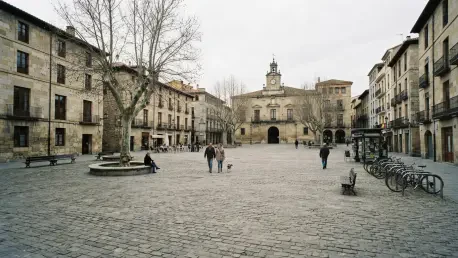
The shift away from car dominance was designed as a phased evolution rather than a sudden shock to the system, allowing the community to adapt to a new way of interacting with their surroundings. Starting in 1999, the municipal government immediately pedestrianized 300,000 square meters of the historic core, which involved the removal of on-street parking and a strict ban on non-essential through-traffic. Infrastructure was modified to favor foot traffic over mechanical speed; multi-lane roads that once served as major arteries were narrowed into single-track service lanes, and sidewalks were significantly widened to encourage walking as the primary mode of transportation. This physical reclaiming of the street transformed the visual and functional character of the city, replacing asphalt with granite paving stones and introducing landscaping that emphasized the human scale. By making it physically more difficult and less convenient to drive through the center, planners effectively incentivized residents and visitors to explore the city on foot. These changes were not just aesthetic upgrades but deliberate psychological cues that signaled a transition in who the city was built for, moving the focus from the driver in the seat to the citizen on the sidewalk.
Speed Control and Traffic Flow
To enforce the new urban priorities and ensure that the remaining essential traffic did not compromise pedestrian safety, the city introduced a blanket 30-kilometer-per-hour speed limit, with some central zones restricted to just 10 kilometers per hour. To ensure compliance without relying solely on police enforcement, nearly 300 speed bumps and raised crosswalks were installed across the municipal map. These physical interventions forced drivers to remain alert and maintain a pace that was compatible with a high-density pedestrian environment. Furthermore, traditional traffic lights, which often lead to cycles of aggressive acceleration and idling, were largely replaced by roundabouts. This change facilitated a slower but more fluid movement for necessary vehicles, reducing the stop-and-go nature of city driving that contributes heavily to local emissions. To support this transition, the city developed a tiered parking system that removed the incentive to circle the block searching for spots. By offering free park-and-ride lots on the city’s periphery and maintaining a limited number of underground garages, the administration successfully redirected the bulk of non-essential vehicle storage away from the precious real estate of the urban core.
Defining Managed Access
Essential Vehicle Use
Pontevedra is not entirely car-free in the literal sense; instead, it utilizes a sophisticated managed access model that distinguishes between unnecessary transit and essential mobility requirements. Residents with private garages, individuals with limited mobility, and emergency services maintain full access to the city, ensuring that the urban core remains functional and accessible for those with specific needs. This nuanced approach recognizes that a modern city cannot operate in a total vacuum and that certain logistical tasks require mechanized assistance. By allowing vehicles into restricted zones only for specific purposes, such as dropping off heavy items or assisting the elderly, the city maintains a high degree of utility while still eliminating the tens of thousands of transiting cars that once dominated the area. This system relies on a combination of physical barriers, permit systems, and a culture of mutual respect among users. The result is a hybrid environment where the presence of a car is the exception rather than the rule, and drivers who do enter the center are keenly aware that they are guests in a space primarily dedicated to people walking, cycling, and socializing.
Logistics and Services
The ongoing functionality of the city’s economy is maintained through carefully timed service windows and logistical protocols that support local commerce without overwhelming the pedestrian experience. Public utilities, such as garbage collection and street maintenance, operate on schedules that minimize disruption, while commercial deliveries are permitted during specific morning and evening hours to support the needs of businesses. Even taxis are integrated into this system, allowed into restricted zones if they have a confirmed booking or are transporting a passenger with specific mobility challenges. This hybrid system demonstrates that a city can prioritize pedestrians without sacrificing the logistical requirements of a modern, thriving economy. By centralizing delivery zones and encouraging the use of smaller, more efficient electric vehicles for last-mile logistics, Pontevedra has shown that urban centers can be both quiet and commercially active. Business owners, who were initially skeptical of the changes, discovered that a walkable city center attracts more foot traffic and longer dwell times, ultimately benefiting the local retail landscape. The city’s logistics model proves that when car dominance is removed, the resulting efficiency often leads to a more streamlined and less chaotic operational environment.
Quantifiable Outcomes
Safety and Health Benefits
The results of this multi-decade experiment are most clearly visible in the municipal safety data, which reflects a complete transformation of the urban health landscape. Since 2011, Pontevedra has recorded zero traffic-related fatalities, a staggering improvement from the 30 deaths recorded in the decade prior to the implementation of the car-free policy. This achievement is not merely a matter of luck but the direct result of an infrastructure designed to eliminate high-speed conflict between cars and humans. Environmentally, the impact has been equally profound, with carbon dioxide emissions dropping by 70% as the volume of idling and transiting vehicles plummeted. The reduction in noise pollution has restored a sense of tranquility to the streets, fundamentally altering the city’s acoustic environment and reducing the stress levels of its inhabitants. Health professionals in the region have noted that the increase in daily physical activity, as residents walk to work and school, has led to improved cardiovascular health across various demographics. By treating urban design as a medical intervention, the city has successfully addressed the root causes of urban malaise, creating a cleaner, quieter, and significantly safer environment for every citizen regardless of their age or physical ability.
Social and Economic Vitality
The pedestrian-first approach has fostered a unique culture of independence and social cohesion, most notably among the city’s younger population. Today, approximately 80% of children aged 6 to 12 walk to school alone, a figure that is virtually unheard of in most modern Western cities. This level of autonomy is made possible by the safety of the streets and a community-led supervision network where local shopkeepers and residents look out for the well-being of the youth. Economically, the city has thrived by rejecting the construction of large suburban malls in favor of maintaining a compact, walkable core that supports small, independent businesses. This high quality of life has made Pontevedra the fastest-growing city in its region, attracting young families who seek a safe and vibrant environment for their children. As a result, the municipality has generated more jobs per capita than many neighboring cities that remained focused on traditional, car-centric growth models. Livability has effectively become the city’s primary economic engine, proving that a high-density, low-traffic environment is not a deterrent to investment but a powerful magnet for it, creating a virtuous cycle of growth and community stability.
Challenges and Scalability
Internal Critiques and Gaps
Despite the overwhelming success of the model, the transition has not been without its internal challenges and vocal critics who point to lingering gaps in the city’s infrastructure. Some residents find that navigating the city by car has become increasingly arduous, as restricted arteries and one-way loops result in significantly longer routes for tasks that once took minutes. This has led to concerns from delivery drivers and taxi operators who argue that the complexity of the road network increases operational costs and reduces efficiency. Additionally, urban planning experts have noted that the public transit network has not always kept pace with the rapid pedestrianization of the core. For the elderly or those living in outlying districts, the lack of a robust, high-frequency bus system can make it difficult to access the city center without a private vehicle, potentially leading to social isolation for those who cannot walk long distances. There were also early criticisms regarding the top-down nature of the initial implementation, with some community members feeling that the changes were imposed without sufficient public consultation. These critiques highlight the ongoing need for flexible planning that addresses the diverse mobility requirements of an aging and expanding population.
Global Application
While Pontevedra’s success has inspired cities like Oslo and Freiburg to pursue similar goals, replicating this model in North America or larger global megacities presents a unique set of structural and cultural hurdles. Issues such as vast urban sprawl, low-density residential zoning, and the massive infrastructure costs associated with retrofitting larger regions make city-wide mandates difficult to implement. Experts suggest that for larger metropolitan areas, a district-by-district approach or the creation of purpose-built car-free neighborhoods may be the most viable way to export these principles. This involves focusing on high-density nodes where walking and cycling are already feasible and then gradually connecting these zones through high-quality transit corridors. The “Pontevedra model” serves as a powerful proof of concept, but its application requires local adaptation that accounts for existing transit habits and geographical realities. By viewing the pedestrianization process as a modular strategy rather than an all-or-nothing requirement, planners can begin to dismantle car dependency in even the most sprawling environments, proving that the move toward human-centric cities is a scalable goal if approached with patience and precision.
A Roadmap for Resilient Urbanism
The transformation of Pontevedra established a definitive precedent for how mid-sized urban centers managed the transition from vehicle dominance to pedestrian-centric living. Authorities focused on the fundamental needs of the human body and the social requirements of the community, which allowed them to reclaim thousands of square feet of public space. This process proved that political courage and a clear vision were more critical than massive technological investments when it came to improving the lives of citizens. The model demonstrated that by restricting non-essential traffic, a city did not just save lives but also stimulated its local economy and fostered a deeper sense of belonging among its residents. Urban planners from across the globe took these lessons and began applying them to their own specific contexts, recognizing that the era of the car-centric city was a temporary phase rather than a permanent destination. The actionable path forward involved a gradual reduction in parking availability, the implementation of strict speed controls, and a persistent focus on making the street a place for interaction. As these strategies were refined, the legacy of this Spanish city became a global standard for resilient, sustainable, and truly livable urban environments.