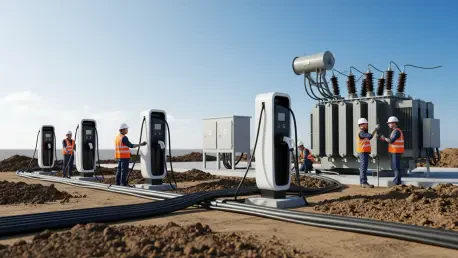

The transition to electric mobility in small and medium-sized American towns has reached a critical juncture where the availability of capital no longer serves as the primary determinant of project success or failure. While federal and state governments have authorized billions in subsidies for the 2026 to 2028 fiscal years, the physical landscape of many municipalities remains largely unchanged by these financial injections. Observers often point to the slow rollout of high-speed charging hubs as a sign of bureaucratic inefficiency, but the root causes are significantly more complex and systemic than simple red tape. Local leaders frequently find themselves holding massive grants without the technical blueprints or grid capacity to execute the work effectively. This misalignment has created a backlog of shovel-ready projects that are stuck in a state of perpetual limbo, waiting for a modernized electrical foundation that was never designed for the sudden, massive demand of a decentralized transportation network.
The Infrastructure Bottleneck: Grid Constraints and Technical Realities
Grid Integration: The Hidden Cost of Power Delivery
One of the most significant physical barriers to the expansion of local electric vehicle charging networks involves the existing capacity of the localized electrical distribution grid. Many suburban and rural power lines were constructed to meet residential demands that did not include the simultaneous high-voltage draws required by Level 3 fast chargers. Consequently, when a municipality attempts to install a cluster of charging pedestals, they often discover that the nearest transformer or substation requires a total overhaul to prevent local brownouts. These utility upgrades frequently involve multi-year lead times and costs that far exceed the initial project budgets provided by grant funding. From 2026 to 2028, utility providers have struggled to keep pace with the influx of interconnection requests, leading to a bottleneck where chargers are physically installed but remain disconnected from the grid for months as they wait for the necessary infrastructure reinforcements to be completed.
Hardware Resilience: Managing Reliability and Software Standards
Beyond the fundamental challenges of the power grid, the physical hardware of charging stations presents a series of maintenance and reliability issues that many local governments were unprepared to manage. Recent studies have indicated that a substantial percentage of public charging ports are non-functional at any given time due to hardware degradation or software synchronization errors between the vehicle and the pedestal. The lack of standardized components makes repairs difficult, as proprietary parts often have long lead times or require specialized technicians who are not locally available. Furthermore, the rapid evolution of software protocols like the Open Charge Point Protocol requires constant firmware updates to ensure compatibility with the newest vehicle models hitting the market. Without a dedicated long-term maintenance budget and a clear technical support strategy, municipalities risk installing expensive equipment that becomes obsolete or inoperable within just a few years of its initial deployment.
Structural and Administrative Barriers: Navigating Operational Hurdles
Workforce Development: Bridging the Specialized Talent Gap
The successful deployment of electric vehicle infrastructure is heavily dependent on a skilled workforce that remains in critically short supply across the United States. Installing high-voltage charging equipment is not a task for general-purpose electricians; it requires specialized training in Electric Vehicle Supply Equipment (EVSE) standards and advanced load management systems. As the demand for these installations spiked between 2026 and 2028, the shortage of certified electrical contractors became a primary driver of project delays and increased labor costs. Many local technical colleges and vocational programs are still in the process of updating their curricula to include these modern technologies, creating a significant gap between the immediate need for labor and the available talent pool. This shortage often forces small towns to compete with major metropolitan areas for the same limited pool of contractors, frequently resulting in smaller projects being deprioritized or suffering from substandard installation practices that lead to early system failures.
Regional Synergy: Scalable Solutions for Infrastructure Sustainability
The most effective municipal leaders addressed these mounting challenges by pivoting toward regional collaboration and the standardization of development codes to create more predictable environments for investment. They recognized that the siloed approach to infrastructure planning was no longer viable and instead formed multi-county consortia to pool resources for technical expertise and bulk hardware procurement. By adopting unified permitting processes, these regions reduced the administrative burden on developers and accelerated the installation timelines for key transit corridors. Furthermore, local governments established public-private partnerships that shifted the responsibility for long-term maintenance to experienced third-party operators, ensuring that charging stations remained functional well beyond the initial grant period. These stakeholders prioritized the integration of battery storage solutions to mitigate peak demand on the grid, providing a blueprint for a resilient and scalable network that supported the broader transition to sustainable transportation.