
Public service delivery has undergone a fundamental shift as government agencies move away from the administrative failures of the past and toward a digital-first governance model. The era of the “administrative train wreck,” characterized by massive backlogs and inaccessible services, has reached its end as public institutions recognize that antiquated workflows cannot survive the pressures of a modern, rapidly growing population. As constituents increasingly demand the same level of digital efficiency from their government that they receive from the private sector, the focus has shifted toward building a resilient, cloud-based infrastructure. This transition represents a departure from the reactive policies of previous decades, favoring a proactive stance that prioritizes user experience over bureaucratic tradition.
The significance of modernizing public infrastructure is underscored by the current demographic shift where population surges in major metropolitan centers are outpacing the capacity of physical offices. In this environment, institutional stability depends entirely on the ability to handle massive volumes of inquiries without a corresponding increase in manual labor costs. Modern digital transformation strategies now focus on cloud migration and omnichannel engagement as the primary levers for change. By moving away from the “brute force” method of simply hiring more staff to answer phones, agencies are leveraging automation to create a more scalable and sustainable service model that can adapt to fluctuating public needs in real-time.
Quantifying the Shift: Adoption Trends and Real-World Impact
Statistical Evidence of the Modernization Imperative
The “math of failure” provides a stark illustration of why traditional government staffing models have become obsolete in the face of modern demand. For many years, the standard response to service delays was to expand call centers, yet the gap between a 100-person team and 650,000 daily inquiries remains unbridgeable through human effort alone. This statistical reality has forced a total reassessment of how public capacity is calculated. Current data suggests that for states experiencing double-digit population growth, an automation rate of at least 70% is the baseline requirement to prevent a complete collapse of administrative services. Without these automated layers, the sheer volume of mundane inquiries effectively paralyzes the ability of government workers to address more serious or complex constituent needs.
As we move through 2026, adoption statistics indicate a rapid and widespread transition toward cloud-based contact centers that offer more than just a telephone line. Agencies are diversifying their engagement strategies to include web portals, mobile applications, and automated text services, effectively spreading the load across multiple digital channels. This shift is not merely about convenience; it is a calculated response to the technical limitations of legacy on-premise hardware. Modern cloud solutions allow for instant scalability, ensuring that a sudden spike in demand does not result in the dropped calls or system crashes that once defined the public’s interaction with state-level bureaucracy.
Practical Implementation: The Texas Department of Public Safety Case
The successful 12-week migration of the Texas Department of Public Safety (DPS) licensing division provides a definitive roadmap for rapid institutional change. Faced with an overwhelming surge in applicants and a system described by internal leadership as a “train wreck,” the agency bypassed traditional, multi-year procurement cycles in favor of a nimble cloud-based model. By implementing an omnichannel engagement system, the division was able to process an additional 10,000 cases every week without increasing its physical footprint. This success demonstrated that the primary barrier to efficiency was not a lack of funding or personnel, but rather a reliance on outdated communication architecture that could not facilitate modern data flow.
A critical component of this success was the deployment of virtual agents and chatbots to handle high-frequency, low-complexity interactions. By allowing these automated systems to take the lead on routine tasks, the licensing division effectively tripled its overall resolution rate. The strategy of “starting small and iterating” allowed the agency to secure early wins by automating simple inquiries before moving to more nuanced administrative services. This approach provided the necessary proof of concept to secure long-term support for deeper technological integration, showing that even the most entrenched bureaucracies can achieve high performance when they prioritize scalable technology over manual expansion.
Expert Perspectives: Overcoming Structural and Psychological Barriers
Dismantling the Subject Matter Expert Trap
Transformation experts frequently highlight the “Subject Matter Expert Trap” as a primary reason why many government digital projects fail to deliver meaningful results. This phenomenon occurs when long-term employees attempt to replicate their manual, broken processes within a new digital framework, essentially creating a faster version of an inefficient system. To truly modernize, agencies must resist the urge to simply digitize existing workflows and instead focus on reimagining how those tasks should be performed in a modern context. This requires a willingness to challenge the “way things have always been done” and a commitment to dismantling the administrative silos that prevent data from moving freely across different departments.
The consensus among industry leaders is that data interoperability is the cornerstone of effective digital governance. When information is locked within independent silos, agents are forced to work with incomplete profiles, leading to repeated inquiries and constituent frustration. Modernizing the public sector requires a holistic view of the individual, where a single digital record can inform interactions across multiple agencies. By breaking down these internal walls, government entities can ensure that their technological investments result in a more cohesive and intelligent service model. Hiring more people remains a superficial fix that cannot compensate for the fundamental lack of a unified data strategy.
Identifying Internal Champions: Reimagining Workflows
Successfully navigating the transition to digital-first governance depends heavily on identifying internal “champions” who are willing to drive cultural as well as technological change. These leaders are essential for fostering an environment where legacy thinking is replaced by a focus on constituent outcomes. Rather than being self-limiting, these champions seek to leverage every available tool to optimize government operations from the ground up. This cultural shift is necessary to move beyond the “brute force” mentality that has historically dominated public sector scaling. By empowering individuals who understand the potential of cloud-based flexibility, agencies can ensure that their modernization efforts are not stymied by institutional inertia.
Furthermore, these champions play a vital role in bridging the gap between IT departments and administrative leadership. They ensure that technological solutions are aligned with the actual needs of the workforce and the public, preventing the implementation of tools that are sophisticated but impractical. The focus remains on creating a resilient organization that can adapt to new challenges as they arise, rather than one that is tethered to a rigid set of manual protocols. As agencies continue to refine their internal cultures, the emphasis on innovation is becoming a standard part of public sector management, driving a more agile approach to administrative problem-solving.
Future Projections: The Path Toward Constituent-Centric Governance
The Unified Portal: One Way into the Agency
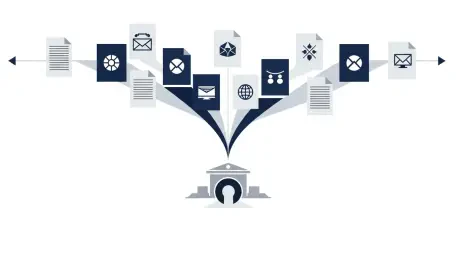
The logical progression of current digital trends is the realization of the “Unified Portal” model, where all state and local services are consolidated into a single common interface. This approach, often referred to as “One Way into the Agency,” aims to eliminate the confusion caused by fragmented websites and disconnected service desks. Instead of forcing a resident to navigate three different portals for a driver’s license, a professional permit, and a tax inquiry, a unified system provides a seamless, constituent-centric experience. This model hides the complexity of internal government bureaucracy from the user, offering a streamlined interaction that mirrors the most advanced private-sector service platforms.
As AI continues to mature, its role in this unified environment will shift from basic automation to sophisticated workforce optimization. In the coming years, human agents will increasingly be reserved for high-value tasks that require emotional intelligence and complex legal interpretation, while the vast majority of routine transactions will be completed through intelligent self-service interfaces. This evolution will not only improve efficiency but also enhance the quality of the work performed by public servants. By removing the burden of repetitive data entry, agencies can focus their human talent on the cases where their expertise and judgment are most needed, leading to better outcomes for the public and more fulfilling careers for employees.
Agile Procurement: Restoring Public Trust Through Transparency
The success of 12-week cloud deployments has fundamentally challenged the stereotype of the slow-moving government bureaucracy, proving that public agencies can be as agile as their private-sector counterparts. This shift toward faster procurement and implementation cycles allows governments to respond to societal changes with a speed that was previously thought impossible. By demonstrating tangible results in months rather than years, agencies can begin to restore public trust that has been eroded by decades of administrative inefficiency. The long-term benefits of this transparency include real-time metrics that allow constituents to see exactly how their government is performing, from wait times to case resolution rates.
The path toward the future of governance is paved with data-driven decision-making and a commitment to reducing the friction between the state and the citizen. As agencies adopt real-time productivity tracking and advanced analytics, they gain the ability to proactively manage resources and anticipate spikes in public demand. This high-throughput environment ensures that the public sector remains relevant and effective in a digital world. By embracing a model of continuous improvement and technological flexibility, government institutions are securing their role as reliable providers of essential services, capable of weathering any demographic or economic shift that may occur.
Summary and Final Synthesis
The journey from fragmented, siloed operations toward an integrated, data-driven public service model defined the successful administrative strategies of the mid-2020s. Agencies that moved away from “brute force” scaling in favor of scalable cloud solutions and omnichannel flexibility managed to overcome the limitations of their legacy infrastructure. This transition allowed for a more responsive and efficient government that prioritized the constituent’s time and resources. The move toward automation and cloud migration provided the necessary foundation for institutional stability, proving that technological debt could be resolved through strategic iteration and clear leadership.
The decisions made to abandon antiquated processes and embrace a digital-first mindset represented a turning point for the public sector’s survival. By focusing on the user experience and breaking down internal silos, the most successful organizations transformed their service centers from points of frustration into models of modern efficiency. The integration of virtual agents and unified portals demonstrated that the scale of public demand did not have to lead to administrative failure. These initiatives provided a clear path forward, showing that the restoration of public trust was achieved through consistent performance, transparent metrics, and a relentless commitment to organizational modernization.