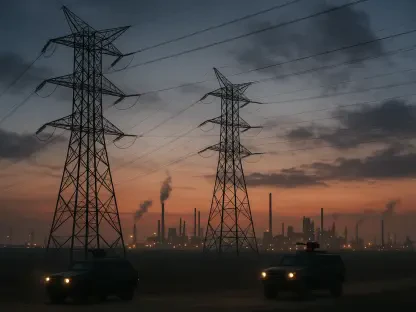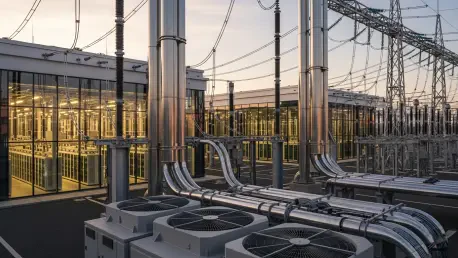

The exponential growth of generative artificial intelligence models has necessitated an unprecedented expansion of data center infrastructure that consumes vast quantities of electricity at a rate far exceeding the capacity of existing municipal power grids. This sudden surge in demand is no longer a theoretical concern for energy planners; it is a present-day crisis that threatens to destabilize local electricity markets and increase costs for residential consumers. As hyper-scalers like Amazon Web Services and Microsoft continue to deploy massive server farms, the underlying utility infrastructure requires significant upgrades. These enhancements involve not only the generation of more power but also the reinforcement of transmission lines and the modernization of substations to handle high-density loads. The central conflict arises from the fact that while these advancements promise global economic benefits, the physical strain is felt most acutely at the regional level where the facilities are built. This shift requires a new social contract regarding resource allocation.
The Grid Crisis: Balancing Tech Expansion with Public Utility Needs
Public utility commissions are currently grappling with the complex question of how to allocate the enormous capital expenditures required to integrate AI-driven data centers into the national grid. Historically, infrastructure costs were shared among all ratepayers under the assumption that industrial growth eventually lowers costs through economies of scale, but the intensity of AI power needs has challenged this long-standing economic model. Many consumer advocacy groups argue that tech companies should pay impact fees or premium rates to ensure that individual households are not subsidizing the high-profit ventures of multibillion-dollar corporations. Conversely, tech giants often point to their multi-year power purchase agreements and investments in green energy as evidence of their commitment to grid stability. This friction highlights a fundamental shift in the relationship between private industry and public services, where the private sector’s rapid pace of innovation often outstrips the public sector’s ability to construct systems.
Beyond the immediate financial concerns, the technical requirement for high-density power delivery has forced a reevaluation of grid architecture and energy procurement strategies. Modern AI training clusters require constant, uninterrupted power that traditional renewable sources like wind and solar cannot always provide without massive battery backup systems. Consequently, major technology firms have begun exploring direct investments in next-generation nuclear energy and enhanced geothermal systems to create dedicated power supplies. These private energy projects often bypass the traditional utility model, leading to a “decoupling” of high-tech industrial zones from the standard municipal grid. While this provides the necessary reliability for server farms, it also removes a significant potential revenue source for public utilities that previously relied on large industrial customers to fund grid-wide maintenance. The challenge for 2026 and beyond is ensuring that these private energy islands do not lead to a fractured and unequal power distribution network.
The eventual resolution of this energy financing debate relied on a multifaceted strategy that balanced the needs of technological progress with the rights of the general public to affordable and reliable utility services. Policy frameworks transitioned toward a model where the primary beneficiaries of high-density energy consumption bore a proportional share of the infrastructure development costs. Regulatory bodies implemented tiered pricing structures that rewarded efficiency while penalizing excessive grid strain, which encouraged developers to optimize their hardware and cooling systems. Industry leaders also prioritized the deployment of localized energy sources, such as small modular reactors and advanced geothermal plants, which reduced the overall burden on the national transmission network. These actions collectively ensured that the transition to an AI-driven economy did not come at the expense of social equity or environmental stability. By establishing clear expectations for corporate accountability, stakeholders fostered a resilient energy landscape.