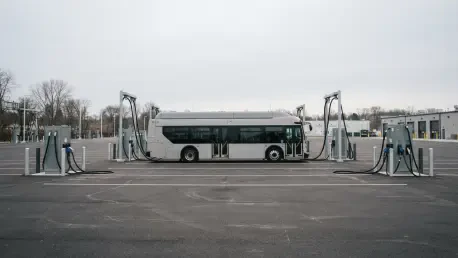

The rapid shift toward zero-emission transit technology in the United States is currently clashing with the rigid domestic requirements of Buy America manufacturing policies. As the country navigates a transformative period in 2026, the intersection of federal industrial goals and environmental urgency has created a complex landscape for transit agencies. This tension was a central theme at the recent APTA Expo in Chicago, where industry leaders gathered to dissect the trajectory of clean transportation and the hurdles facing fleet modernization. At the forefront of this dialogue is Catalyst Mobility, the organization formerly known as CALSTART, which has spent decades accelerating the deployment of low-carbon technologies across the globe. The rebranding of the organization, followed by its merger with the nonprofit Forth, highlights a significant move toward a more integrated, globalized approach to mobility solutions. Instead of treating vehicle technology in isolation, the industry is shifting toward a comprehensive strategy that encompasses policy advocacy, technical fleet support, and long-term infrastructure development. The current market is no longer just about buying cleaner buses; it is about redesigning the entire ecosystem of public transport to be resilient, sustainable, and economically viable within the framework of modern federal mandates.
The Fragile Recovery of Transit Funding
The stability of the U.S. transit market remains deeply tied to the ongoing recovery from the economic shifts observed earlier this decade. While many agencies are currently in a phase of building back, the path to full modernization is hindered by a lack of predictable federal funding. A direct correlation exists between an agency’s ability to fund its daily operations and its capacity for long-term capital investment. When transit providers are forced to prioritize immediate needs like driver salaries and basic maintenance due to budget shortfalls, they find it nearly impossible to commit to the multi-year planning cycles required for zero-emission transitions. This fiscal fragility creates a precarious environment where even the most ambitious sustainability goals can be derailed by temporary economic fluctuations. For the market to mature, there must be a shift from emergency relief funding to consistent, long-term support that allows for the procurement of advanced vehicles and the construction of high-capacity charging networks.
Predictability remains the primary obstacle for many transit agencies attempting to modernize their fleets in an increasingly high-tech environment. Without a clear understanding of future federal support, operators are often unable to plan the five-to-ten-year procurement cycles necessary for implementing advanced battery-electric or hydrogen technologies. This uncertainty creates a wait-and-see atmosphere among municipal leaders, which can stifle innovation and delay the adoption of zero-emission vehicles across the country. Furthermore, the volatility of local tax revenues often complicates the matching of federal grants, leaving agencies in a state of perpetual budget adjustment. To overcome this, the industry requires a standardized funding roadmap that provides clear benchmarks for both capital acquisitions and operational support. Such a framework would allow agencies to move forward with confidence, knowing that their investment in clean technology will not be undermined by sudden shifts in the fiscal landscape.
Strategic Divergence in Bus Manufacturing
Unlike the European market, which shifted aggressively toward battery-electric platforms years ago, the U.S. market continues to exhibit a more cautious and diversified approach to fleet composition. Established domestic manufacturers are prioritizing a mixed-fleet reality, offering Compressed Natural Gas (CNG) and hybrid-electric solutions alongside their battery-electric models. This pragmatism is not necessarily a sign of low ambition but rather a calculated response to the operational realities and infrastructure limitations of U.S. transit agencies. Many operators view CNG and hybrids as reliable bridge technologies that offer immediate carbon reductions without the massive, immediate infrastructure overhaul required for full electrification. This strategy allows agencies to test the waters of clean technology while maintaining the operational reliability of their existing routes, ensuring that service is not interrupted by charging delays or grid limitations.
In contrast, international entrants from Europe and Asia are entering the U.S. market with a primary focus on mature, purpose-built zero-emission technologies. These companies leverage their extensive global experience to offer highly developed products that have already been tested in rigorous urban environments overseas. This creates a fascinating competitive dynamic where domestic players emphasize reliability and fleet diversity, while international firms push the boundaries of what is possible with dedicated electric platforms. This intersection of local pragmatism and international innovation is redefining the choices available to transit operators as they plan their future fleets. As these two philosophies collide, the market is seeing a surge in technological variety, forcing agencies to become more sophisticated in how they evaluate vehicle performance, lifecycle costs, and energy management systems.
Navigating Buy America and Market Entry
A central pillar of U.S. industrial policy is the Buy America requirement, which mandates that a significant portion of a vehicle’s components be manufactured domestically and that final assembly occurs within the United States. While these regulations were designed to protect domestic jobs and ensure economic security, they have also created significant barriers for international manufacturers looking to introduce cutting-edge technologies. The capital investment required for an overseas company to establish a presence in the U.S.—including land acquisition, factory construction, and the intensive training of a new local workforce—is often prohibitively high. This high entry cost limits competition and can slow the overall pace of innovation by keeping advanced international products out of the American market. When domestic suppliers struggle to keep up with demand or technological shifts, the lack of viable international alternatives becomes a bottleneck for transit agencies eager to modernize their fleets.
To address these challenges, industry experts have advocated for a more flexible, gradual path or roadmap for new market entrants. Such a framework would allow international companies to enter the U.S. market by meeting specific localization milestones over a set period, rather than being forced to comply with the full weight of Buy America requirements on day one. In exchange for this phased entry, the federal government could provide structured support to help these companies transition toward full domestic manufacturing. This nuanced approach would foster greater innovation by allowing advanced technologies to enter the fleet immediately while still upholding the long-term goals of American industrial protectionism. By creating a clear pathway for collaboration, the U.S. could benefit from global expertise in battery-electric and fuel cell platforms without sacrificing its commitment to domestic job growth and manufacturing resilience.
Reforming Procurement and Business Models
As the industry moves away from traditional diesel buses, procurement models must also evolve to handle the technical complexity and higher upfront costs of new technologies. The traditional one-size-fits-all purchasing model is increasingly seen as inefficient, often leading to high customization costs and significant delivery delays that frustrate transit agencies. There is a growing trend toward procurement reform, including the use of joint procurements and state contracts that allow smaller agencies to pool their resources. By leveraging collective buying power, these agencies can achieve the economies of scale typically reserved for major metropolitan systems, making zero-emission technology more accessible to rural and mid-sized communities. Furthermore, the use of baseline specifications helps to standardize vehicle components, which reduces the maintenance burden and speeds up the manufacturing process for OEMs.
Beyond the initial purchase, flexible funding arrangements such as leasing and public-private partnerships are gaining traction to help agencies spread out capital costs and share the risks associated with new technology. A particularly promising development is the rise of shared-use infrastructure, where diverse vehicle types from different agencies or even private fleets utilize the same charging hubs. This model reduces the financial burden on individual operators and maximizes the utility of expensive infrastructure investments. For example, a transit hub might serve heavy-duty buses during the day and delivery vans at night, creating a more efficient use of grid capacity and hardware. These innovative business models are essential for overcoming the high capital barriers to entry that have historically slowed the adoption of clean energy in the public transport sector.
Overcoming the Infrastructure and Workforce Gap
The successful deployment of zero-emission buses requires an unprecedented level of coordination between transit agencies, utility providers, and state regulators. Many existing electrification plans are outdated snapshots that do not account for current technological advancements or the specific capacities of the local power grid. Agencies must treat transition planning as a living process, constantly updating their projections to avoid the risk of stranded assets where new electric buses cannot be charged due to insufficient power. This coordination is not just about installing chargers; it involves a fundamental redesign of the energy relationship, where transit agencies become active participants in grid management. Without proactive communication with utilities, the sudden demand for high-voltage charging can overwhelm local substations and lead to costly delays in fleet rollouts.
Furthermore, the transition to high-voltage systems and software-defined vehicles requires a massive upskilling of the transit workforce to ensure long-term operational success. Currently, many agencies rely on isolated, one-off training programs that are insufficient for the industry-wide needs of a modern fleet. Scaling these solutions into national or regional frameworks is essential to ensure that the human capital is available to maintain and operate high-tech, clean-energy fleets safely and efficiently. This involves not only training technicians to work with lithium-ion batteries and fuel cells but also educating operators on the nuances of regenerative braking and energy-efficient driving. Investing in people is just as critical as investing in hardware; without a skilled workforce, even the most advanced zero-emission buses will struggle to achieve their promised performance and longevity.
Future Pathways: Establishing a Sustainable Framework
The analysis of the current market landscape revealed that the transition to zero-emission mobility was not a simple linear progression but a complex journey requiring a delicate balance of policy and technological innovation. It was determined that success in this new era depended on the ability of federal and local authorities to provide the predictability necessary for long-term planning. The reliance on erratic funding cycles was identified as a major deterrent for agencies attempting to commit to ambitious fleet overhauls. Furthermore, the dialogue at the 2026 expo underscored that flexibility in procurement and manufacturing requirements was essential for fostering a competitive environment. By allowing for a more gradual integration of international technologies, the industry was able to bridge the gap between domestic capacity and global innovation. This strategic shift provided transit agencies with the tools they needed to move beyond experimental pilots and into large-scale, sustainable operations that benefited both the environment and the economy.
Actionable next steps identified by industry leaders focused on the immediate need for procurement reform and integrated infrastructure planning. It was concluded that a move away from the traditional one-size-fits-all model was required to reduce costs and delivery delays. Instead, the adoption of joint procurements and state-level contracts offered a viable path for smaller agencies to achieve the economies of scale necessary for electrification. Additionally, the integration of workforce development into the national framework was highlighted as a critical priority to ensure that maintenance staff were prepared for high-voltage systems. The transition to clean mobility was recognized not just as a mechanical shift but as a systemic overhaul that demanded coordination between utilities, regulators, and transit providers. By establishing these shared-use infrastructure models and regional training programs, the industry paved the way for a resilient and equitable public transportation system that could sustain itself for decades to come.