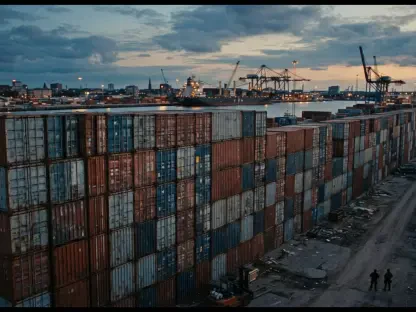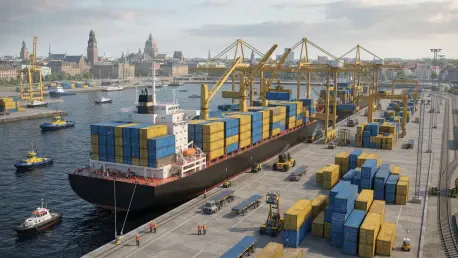

The strategic reduction of hybrid vehicle imports represents just the first phase of a broader European initiative to recalibrate its economic relationship with Beijing. This move comes at a critical juncture where the European Union faces a trade deficit projected to surpass €400 billion this year, a sharp escalation from the €370 billion recorded just a year ago. European policymakers are no longer content with reactive measures that only address specific product categories after significant domestic damage has already occurred. Instead, the focus has shifted toward a more structural and preemptive approach designed to insulate the single market from what many analysts describe as an unprecedented surge of overcapacity. By prioritizing economic sovereignty over traditional free-trade purism, Brussels is signaling a fundamental departure from its previous reliance on market-driven outcomes, seeking a new equilibrium that balances competition with the preservation of its industrial heartland. This evolution reflects a growing consensus that the preservation of the European industrial base requires a more assertive stance in global trade, ensuring that local manufacturers can compete on a level playing field without being undermined by external state-led subsidies.
Calibrating Targeted and Systemic Economic Defense
Recent high-stakes negotiations between EU Trade Commissioner Maros Sefcovic and his counterparts in Beijing have already yielded a landmark agreement that fundamentally alters the flow of automotive commerce. This arrangement successfully secured a commitment to reduce Chinese hybrid vehicle imports by more than half, a move specifically designed to give European manufacturers more breathing room to scale their own internal production lines. In return for this concession, the bloc agreed to lower tariffs on roughly €4 billion worth of high-value exports, including car parts and premium agricultural products such as olive oil. Perhaps more significantly for long-term industrial stability, the deal includes provisions for easing export licensing for rare earth minerals, which are essential for the European green transition. This reciprocal arrangement suggests a new tactical preference for negotiated settlements that offer immediate relief to strained sectors while securing the materials necessary for development. By leveraging access to its massive consumer market, the Union has begun to extract specific trade advantages that were previously unavailable under more passive regulatory regimes.
Expanding Regulatory Frameworks and Import Controls
The strategic evolution toward broader safeguards represents a significant escalation in the European Union’s defensive posture. Unlike traditional anti-dumping measures that require lengthy investigations into specific company pricing, safeguards allow the bloc to establish overarching import quotas that apply to all trading partners simultaneously. This tool is increasingly being considered for critical sectors like PET plastics and chemical composites, where the volume of imports threatens to overwhelm domestic manufacturers. Beyond these immediate measures, the European Commission is refining a “kill switch” mechanism, which allows for the rapid restriction of market access for countries deemed to be harming the bloc’s economic interests. This is complemented by the diversification instrument, which aims to mandate a reduction in reliance on single-source suppliers for critical materials. These tools collectively represent a shift from a reactive trade policy to a proactive, structured system of industrial defense. Such a framework ensures that the European single market remains protected from sudden influxes of subsidized goods that could permanently damage essential domestic value chains and technological capabilities.
Advancing Resilience Through Strategic Supply Coordination
The transition toward a proactive trade defense system was a defining moment for the European industrial landscape, signaling the end of an era defined by passive market observation. This systemic overhaul successfully integrated immediate import reductions with sophisticated legislative frameworks, providing a blueprint for how modern economies protected their core interests without retreating into isolationism. For European firms, the most vital next step involved conducting comprehensive audits of supply chain vulnerabilities to ensure full compliance with the new diversification mandates. Strategic leaders prioritized the formation of alliances with trusted global partners and invested heavily in domestic recycling technologies for critical minerals. By developing circular supply chains and fostering innovation in proprietary high-tech manufacturing, the Union successfully positioned itself to withstand external economic shocks while maintaining industrial health. The overarching focus remained on fostering a fair and balanced trading environment that prioritized long-term industrial health over short-term cost savings, ensuring that the European economy remained both open and resilient in an increasingly fragmented global market.