
Saudi Arabia’s Petroline and the UAE’s coastal pipelines together form a regional framework that shifts global energy security toward a multi-directional supply model. This evolution is not merely a response to local tensions but a sophisticated maritime transformation designed to bolster national economic resilience against the inherent volatility of global shipping routes. Under the guidance of strategic visionaries like former Minister Dr. Abdullah Belhaif Al Nuaimi, the United Arab Emirates is aggressively developing alternative logistical infrastructure to complement its traditional waterways. Rather than viewing these developments as a retreat from established maritime zones like the Strait of Hormuz, the nation frames its progress as a proactive insurance policy. This dual-track approach maintains the relevance of historic trade paths while ensuring that the flow of international trade remains uninterrupted by localized disruptions. By prioritizing redundancy, the UAE has moved beyond the single-point-of-failure model that once dominated exports.
Establishing Strategic Redundancy in Coastal Logistics
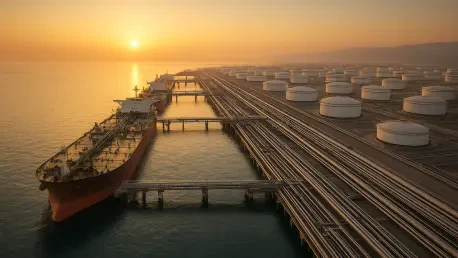
The Port of Fujairah has emerged as a cornerstone of this strategy, serving as a premier global hub for ship bunkering and a critical point of logistical resilience on the Arabian Sea. By positioning significant assets outside the immediate bottleneck of the Strait of Hormuz, the UAE has effectively decoupled a substantial portion of its export capacity from geographical constraints. The Abu Dhabi–Fujairah Pipeline stands as a testament to this foresight, allowing for the direct transport of crude oil to international markets without the need for tankers to traverse narrow, contested waters. This infrastructure is not designed to replace traditional routes but to provide a necessary bypass during periods of heightened risk. The commercial flexibility offered by these facilities ensures that massive global trade flows can continue with minimal friction. As a result, the UAE has transformed its eastern coast into a vital economic gateway that serves both domestic interests and the requirements of energy-dependent nations.
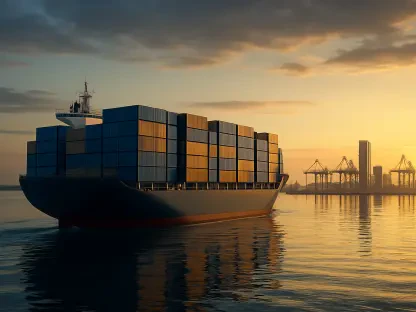
Complementing these advancements is the continued expansion of Khorfakkan Port, which adds another layer of versatility to the nation’s maritime capabilities. By linking Khorfakkan with the massive existing capacities of Jebel Ali and Khalifa Port, the UAE has created an interconnected, multi-directional system that allows for the seamless redirection of maritime traffic as needed. This network enables the country to function as a master of its geography rather than being a hostage to it. The ability to pivot operations between internal and external routes provides a level of operational security that is increasingly necessary in a complex global market. This integrated logistical hub system utilizes advanced automation and real-time monitoring to manage heavy shipments with unparalleled efficiency. The synergy between these ports ensures that the UAE remains a central player in global logistics, capable of adjusting its strategy to meet the demands of an ever-changing landscape while maintaining its status as a reliable supplier.
Regional Synergy and International Economic Stability
The strategic evolution within the UAE mirrors a broader regional trend toward diversification, most notably illustrated by Saudi Arabia’s development of the East–West pipeline. This collaborative shift marks a significant departure from the historical reliance on a single maritime exit point, effectively fortifying the entire regional economy against external shocks. By moving energy resources toward both the Arabian Sea and the Red Sea, these two nations are collectively establishing a new standard for logistical security in the Middle East. This regional synergy is not a coincidence but a deliberate alignment of interests aimed at protecting the sovereign wealth and developmental goals of the Gulf states. This dual-nation approach provides a buffer for the global economy, ensuring that energy supplies can reach East Asian and Western markets even if specific corridors are compromised. The transition toward this multi-route system reflects a mature understanding of global interdependence and the need for new infrastructure.
International observers and global energy agencies have reached a broad consensus regarding the effectiveness of these maritime policies. The International Energy Agency and S&P Global have specifically highlighted the logistical resilience of the UAE, noting that the existence of parallel routes significantly enhances the stability of the global supply chain. By managing maritime risks through foresight and massive infrastructure investment, the UAE has established a model for modern maritime strategy that other coastal nations are now looking to emulate. These alternative pathways have been validated by international markets, as evidenced by the sustained trust in the UAE’s ability to fulfill its long-term supply contracts. The final result is a redundant, flexible system that protects national interests without undermining the foundational importance of international maritime law. This strategic posture reinforces the UAE’s position as a stabilizer in the energy sector, providing the certainty required for long-term global investment.
Strategic Outcomes of the Alternative Route Model
Looking ahead to the period from 2026 to 2028, the UAE is expected to further integrate digital twins and artificial intelligence into its maritime logistics to optimize route planning and port efficiency. These technological advancements will allow for even more rapid pivoting between internal and external shipping lanes, maximizing throughput while minimizing environmental impact. The focus is now shifting toward the Green Maritime initiative, which aims to modernize the bunkering facilities at Fujairah to support low-carbon fuels and sustainable shipping practices. By combining physical infrastructure with cutting-edge digital frameworks, the nation is preparing to lead the next phase of maritime evolution. Strategic investments in human capital and specialized training for port operators will ensure that the workforce is equipped to handle the complexities of a multi-directional supply model. This holistic approach ensures that the UAE’s maritime strategy remains robust, adaptive, and aligned with future global trade goals.
The implementation of these strategic alternative routes successfully addressed the critical need for a more resilient and flexible maritime framework. By prioritizing the development of Fujairah and Khorfakkan alongside regional partners, the UAE effectively mitigated the risks associated with traditional maritime bottlenecks. The transition to a multi-directional supply model demonstrated a clear commitment to global energy security and economic stability. These efforts provided a blueprint for other nations seeking to safeguard their trade corridors against geopolitical volatility. As the global maritime landscape continued to evolve, the integration of advanced technologies and the adherence to international maritime law remained central to the nation’s operational philosophy. The strategic insurance policy established through these parallel pathways ensured that the national economy remained functional throughout periods of regional uncertainty. Ultimately, the UAE’s proactive stance transformed potential vulnerabilities into a position of strategic strength.