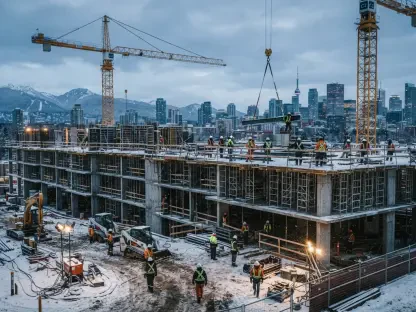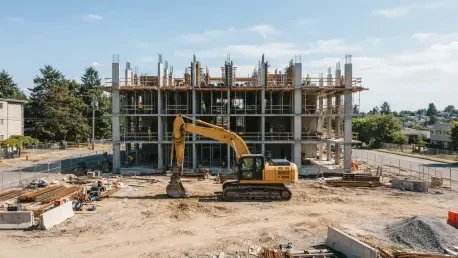

The recent midterm results serve as a critical barometer for public sentiment regarding government intervention in a real estate market currently defined by a crippling supply-demand imbalance. Across various jurisdictions, the electorate faced a stark choice between maintaining the status quo of constrained inventory and embracing bold, taxpayer-funded initiatives to stimulate new construction. This election cycle demonstrated that while voters remain cautious about sweeping deregulation, there is an undeniable appetite for public debt measures that directly address the housing shortage. By focusing on supply-side solutions, communities have signaled a shift away from purely administrative fixes toward substantial financial commitments. This development suggests a growing realization that the private market alone, under current constraints, cannot produce the volume of units necessary to stabilize prices for low-income residents, veterans, and the workforce. The following analysis explores how these fiscal mandates will reshape the multifamily landscape in the coming years, focusing on the strategic shift toward supply-side solutions and the complex interplay between state-level funding and local-level regulatory control.
Strategic Financial Investments and State Bond Measures
Boosting Supply Through Direct Public Funding
The most striking outcome of the recent legislative session and subsequent voter approval was the passage of massive bond measures designed to inject capital directly into the multifamily rental industry. California’s Proposition 1 led this national charge, authorizing a staggering $11.25 billion to revitalize affordability programs that had faced stagnation. A significant portion of this funding, roughly $7.2 billion, is specifically earmarked for multifamily developments, which is projected to support the creation of approximately 40,000 units. This influx of capital represents a major victory for housing providers who have struggled with high borrowing costs and restrictive financing environments. By providing a reliable source of state-backed funding, the measure aims to de-risk projects that would otherwise be non-viable. This strategic use of public debt highlights a preference for tangible construction over theoretical policy changes, focusing on the immediate physical need for housing in a tight market.
Similarly, Rhode Island voters approved a $120 million initiative, signaling a strong mandate for the state to act as a primary facilitator of housing stability. The measure passed with an overwhelming 61% approval rate, demonstrating that the public is willing to take on long-term debt to ensure a diverse range of housing options, from affordable rentals to homeownership programs. This trend is not confined to high-cost coastal states; it reflects a broader national movement where voters are prioritizing the preservation of community stability through direct investment. For developers, this means a shift in focus toward public-private partnerships that leverage these state bonds to bridge the gap between market-rate costs and subsidized rents. While the debt service will fall on future budgets, the immediate priority remains the expansion of the housing stock to prevent further displacement. This consensus across state lines suggests that voters see the housing crisis as a structural failure that necessitates a collective financial response.
Infrastructure as a Catalyst for Growth
In Hawaii, voters opted for a specialized approach to growth by approving Resilient Infrastructure for Shelter and Equity Bonds. This innovative measure allows local governments to bypass traditional debt limits by leveraging future property tax revenue to fund essential infrastructure. Unlike traditional bonds that target the buildings themselves, these funds are dedicated to the foundational elements of development, such as roads, sewers, and utilities. By addressing the back-end costs of construction, municipalities can lower the initial barriers to entry for multifamily developers, making it easier to break ground on previously inaccessible parcels. This approach aligns state goals with ongoing federal efforts to modernize the nation’s housing infrastructure, recognizing that without the proper utility capacity, even the best-funded housing projects cannot proceed. It represents a paradigm shift where infrastructure is viewed not just as a public utility, but as a critical tool for expanding the available housing inventory.
The Hawaiian model offers a template for other regions looking to modernize their development pipelines without relying solely on general fund allocations. By using tax-increment financing concepts through these infrastructure bonds, local authorities can ensure that the growth of the housing sector pays for its own utility needs over time. This method also encourages more dense, urban-infill projects that utilize existing resources more efficiently, rather than contributing to sprawl. Furthermore, by modernizing the grid and water systems concurrently with housing construction, states can ensure that new developments are resilient against environmental challenges and aging systems. The success of this measure indicates a growing sophistication among voters who understand that the housing crisis is inextricably linked to the physical limitations of our urban environments. Moving forward, this model could be adapted to other jurisdictions where traditional debt limits have historically choked development.
Navigating the Trade-offs of Tax Relief and Local Revenue
The Double-Edged Sword of Property Tax Limitations
A secondary but equally important trend emerged in Florida, North Carolina, and Tennessee, where voters pushed for significant property tax limitations to mitigate rising costs. Florida’s Amendment 3 reduced assessment caps for non-homestead properties from 10% to 5%, a move specifically designed to lower the overhead for apartment building owners and commercial properties. In a similar vein, Tennessee took the definitive step of constitutionally prohibiting the General Assembly from ever imposing a state-level property tax. These measures provide immediate and predictable relief to property owners, which is often cited as a prerequisite for keeping rent increases manageable. By capping the tax burden, states are attempting to create a more stable environment for long-term investment in the rental sector. However, this relief for the private sector creates a complex financial environment for the municipalities that rely on property taxes to fund schools, emergency services, and local infrastructure projects.
Industry experts warn that these tax victories may come with hidden costs, as local governments facing revenue shortfalls often turn to alternative and frequently creative funding methods. This frequently results in a sudden spike in local impact fees, permitting costs, and various administrative charges leveled specifically against housing providers during the construction phase. When a city can no longer rely on annual property tax increases to balance its budget, it may front-load those costs onto the development process itself. This shift can inadvertently drive up the soft costs of a project, potentially neutralizing the benefits of the state-level tax caps. Consequently, while the annual operating expenses for a multifamily building might decrease, the initial capital required to get the project approved and built could rise significantly. This dynamic highlights the friction between state-level policy and local-level execution, where the two often work at cross-purposes, complicating the modeling for new developments.
Future Implementation: Actionable Strategies for Developers
Looking forward, the multifamily industry recognizes that the midterm results necessitate a more sophisticated approach to community engagement and project planning. Stakeholders understand that securing bond funding is only the first step in a much longer process of delivery. To truly capitalize on the billions approved by voters, developers and advocacy groups are focused on building stronger coalitions at the local level to overcome zoning hurdles. They have also begun to prioritize projects that integrate high-quality infrastructure and environmental sustainability to satisfy the public’s demand for both growth and protection. This proactive stance allows the industry to demonstrate that housing can be expanded without compromising the integrity of local neighborhoods. By leaning into the transparency of the bond process and the accountability of environmental standards, the sector aims to bridge the gap between public investment and community acceptance, ensuring that the approved funds are deployed efficiently.
The final takeaway for the real estate community involves a strategic shift toward long-term fiscal advocacy that looks beyond simple tax caps. Recognizing the risk of local revenue recoupment, industry leaders are collaborating with municipal governments to establish clear fee structures that do not penalize new construction. This collaborative approach replaces the adversarial relationship often found between developers and city councils, leading to more predictable development timelines. Furthermore, the industry is pushing for the modernization of land-use technology to streamline the permitting process within the existing regulatory frameworks. By addressing the operational inefficiencies that slow down production, the sector will be able to maximize the impact of the newly available public capital. Ultimately, the midterm cycle proved that while the public is ready to invest, the industry must work harder to earn that trust by delivering high-quality, sustainable, and affordable housing options for the market.