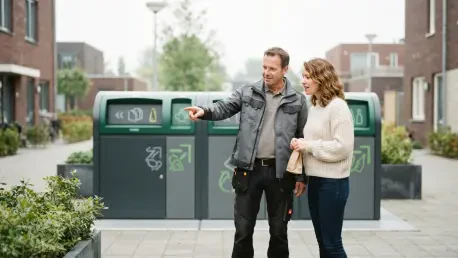

Article 278 of the Civil Code stipulates that repurposing common areas for recycling facilities must involve a democratic decision-making process by all homeowners. This legal foundation has become the cornerstone for a massive shift in urban resource management following a 2026 directive from nine government departments, led by the Ministry of Commerce. This policy formally integrates property service enterprises into the national recycling framework, positioning them as essential intermediaries between residents and industrial supply chains. By elevating property management from simple maintenance to a strategic role in the circular economy, the government seeks to professionalize waste recovery at the community level. This change addresses longstanding inefficiencies by utilizing the existing logistical footprints of property companies to capture materials that previously vanished into the informal waste sector. As urban centers expand, these firms are now tasked with ensuring that green initiatives are practical, daily realities for millions of households rather than just conceptual goals.
Integrating Networks and Improving Logistics
Merging Waste Systems
The central pillar of this new strategy is the “network integration” concept, which aims to fuse domestic waste classification with renewable resource recycling. Historically, these two systems operated in silos, leading to a redundant and confusing landscape of infrastructure where different bins and collection teams competed for the same materials. By merging these networks, property managers can streamline operations, using shared facilities and personnel to transform recycling into a standard utility service comparable to water or electricity. This approach shifts the perception of household waste from a nuisance requiring disposal to a valuable asset requiring professional management. Under this unified supply chain, the flow of materials from the resident’s doorstep to the processing plant becomes seamless, reducing logistical friction and lowering the carbon footprint of the collection process. This integration also allows for better data tracking, helping municipalities understand waste generation patterns more accurately.
Managing Large Waste
Disposing of bulky items like mattresses, old sofas, and large appliances has traditionally been a significant pain point for urban residents due to high removal costs and a lack of reliable services. This friction often led to the abandonment of large waste in public corridors or underground parking garages, creating severe fire hazards and significant aesthetic burdens for property staff. To solve this, property managers are now forging strategic partnerships with specialized recycling firms, allowing professional removal vehicles to enter residential zones on a scheduled basis. This collaboration ensures that large-sized waste is handled through official channels rather than being left to deteriorate in common spaces. By acting as the bridge between homeowners and professional haulers, property service providers have effectively mitigated safety risks while providing a much-needed convenience to the community. This systematic approach ensures that bulky materials are either refurbished or broken down into raw components for industrial reuse.
Optimizing Collection and Legal Compliance
Streamlining Small Recyclables
The “last mile” of recycling for smaller materials such as plastics, glass, and paper often suffers from inconsistent management and the uncoordinated activities of informal waste pickers. While these individuals play a role in material recovery, their unregulated presence often leads to secondary environmental issues, such as trash being left scattered around disposal points. The 2026 guidelines encourage property managers to bring these scattered teams into a standardized, supervised system that maintains community hygiene standards. By establishing dedicated, clean recycling zones within existing waste areas, managers can maximize the recovery of high-value materials without sacrificing the cleanliness of public spaces. This professionalization also includes the implementation of better sorting guidelines that are communicated directly to residents by property staff. The result is a cleaner, more efficient collection process that captures a higher percentage of recyclables at the source, preventing them from being contaminated and sent to incinerators.
Navigating Legal Requirements
Any physical changes to a community, such as the installation of smart bins or permanent storage points, must be handled with strict adherence to the Civil Code of the People’s Republic of China. Since these facilities occupy common parts of the property, managers are legally required to obtain consent from the collective of homeowners through a democratic process. Furthermore, Article 282 explicitly states that any income generated from these recycling activities, after deducting reasonable operating costs, belongs to the property owners rather than the management firm. This legal framework ensures that the transition to a greener community is transparent and financially fair, preventing disputes over the use of public land for commercial purposes. By following these democratic procedures, property managers build trust with residents, making it easier to implement long-term environmental upgrades. This legal clarity has turned potential points of conflict into opportunities for community cooperation, ensuring that the benefits of recycling are shared equitably.
Advancing Technology and Field Operations
Deploying Smart Infrastructure
Modern resource recovery relies heavily on the deployment of advanced logistical technologies, such as 24/7 automated smart bins and mobile recycling vehicles. These systems allow for a data-driven approach to waste management, providing real-time information on fill levels and material quality to property managers. For older neighborhoods where permanent facilities might be difficult to install due to space constraints, mobile units offer a flexible alternative that can service the area at specific intervals. Property managers serve as the frontline operators for this infrastructure, ensuring that high-tech bins are maintained and that residents understand how to use the digital interfaces. This technological shift has reduced the labor intensity of waste collection while increasing the accuracy of sorting. By integrating these tools into the daily routine of the community, property service providers have created a more modern and attractive environment that appeals to tech-savvy residents while significantly boosting the volume of materials recovered.
Standardizing Community Field Operations
The successful integration of property management into the green recycling framework required a fundamental shift in operational priorities and legal transparency. Managers who embraced the 2026 directives observed a notable reduction in maintenance costs and a significant improvement in fire safety compliance within their buildings. They moved beyond passive oversight to become active facilitators of environmental standards, providing the necessary on-site supervision to ensure waste was sorted correctly at the source. Future success in this sector relied on the continued adoption of localized incentive programs and the regular public disclosure of recycling revenues to maintain resident participation. Property firms also began exploring modular facility designs that minimized the physical footprint of collection zones while maximizing material throughput. By establishing these professional standards, the industry demonstrated that the community-level link was indeed the most critical part of the circular economy. These actions solidified the role of property services as a pillar of urban sustainability.