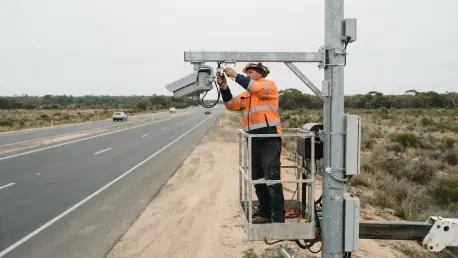

The Northern District of Oklahoma recently determined that police must obtain a warrant before searching historical databases to trace a driver’s movements over several weeks. This specific ruling marks a significant shift in how courts interpret the intersection of surveillance technology and privacy rights. As law enforcement agencies increasingly adopt automatic license plate readers, the capacity to monitor public movement has transitioned from human observation to algorithmic efficiency. These systems utilize high-speed cameras and infrared lighting to capture data including the exact GPS coordinates and time of every vehicle passing a sensor. While police argue that these tools are essential for modern crime prevention, the constant accumulation of such data creates a pervasive monitoring network that operates without public awareness. By requiring a warrant, the court acknowledges that the digital logging of a car’s location is fundamentally different from a police officer observing a vehicle on a public road during a single patrol.
Judicial Impact: United States v. Kyle
The case of Melisa Kyle served as the primary catalyst for this evolving legal discussion when a Tulsa County deputy sheriff utilized an ALPR database to track her movements across multiple states for an entire month. This search was initiated without a warrant and was prompted solely by the observation of an out-of-state license plate, demonstrating how easily such technology can be used for broad surveillance rather than targeted investigations. By granting the motion to suppress the evidence found during this search, the court established a vital federal precedent. The decision clarifies that the government cannot retroactively comb through weeks or months of location history via license plate records without first demonstrating probable cause to a judge. This ruling specifically targets the retrospective nature of modern surveillance, which allows investigators to travel back in time to reconstruct a person’s past life with a few keystrokes, removing the natural barriers that once protected citizens.
Beyond the specific outcome for the defendant, this decision fundamentally challenges the prevailing law enforcement practice of warrantless, retrospective location tracking. For years, police departments have relied on the ease of deployment and low cost of digital readers to build what many civil liberties advocates describe as a digital haystack. Before the implementation of these automated systems, the labor-intensive nature of physical tailing provided a practical limit on government surveillance. Now, the absence of this natural friction allows for the indiscriminate collection of data on millions of ordinary Americans who are not suspected of any crime. The Oklahoma court’s intervention ensures that technological efficiency does not override the constitutional requirements for individual suspicion. As agencies adjust to this new requirement, the focus of policing must shift back toward traditional investigative methods that respect the boundaries of privacy while still pursuing legitimate public safety objectives.
Evolving Standards: Privacy Beyond Traditional Precedent
A central theme of the current legal debate is the inadequacy of older legal precedents, such as the 1983 Supreme Court ruling in U.S. v. Knotts, when applied to 21st-century technology. In that era, the Court held that drivers had no reasonable expectation of privacy on public roads because their movements were visible to anyone. However, the technology used in that case—a primitive radio transmitter used to follow a vehicle on a single trip—is fundamentally different from today’s networked ALPR systems. Modern courts are increasingly recognizing that while a single observation of a car is public, the entirety of one’s physical movements over an extended period constitutes a protected privacy interest. This shift in judicial thinking reflects the standards set in more recent cases like Carpenter v. United States, which acknowledge that cumulative data can reveal intimate details of a person’s life, including medical visits, religious affiliations, and social connections, that no single trip could ever expose.
The Oklahoma ruling established a clear roadmap for other jurisdictions to follow as they confront the challenges of high-tech monitoring. It reinforced the idea that Americans maintain a reasonable expectation of privacy in the totality of their movements, even when those movements occur in public spaces. Legal experts noted that the decision provided a necessary correction to the expanding reach of dragnet surveillance systems. Moving forward, policymakers and police departments recognized the need to implement more robust data retention policies and stricter access controls to ensure compliance with the Fourth Amendment. This judicial boundary effectively prevents technological advancement from resulting in the permanent loss of constitutional freedoms by treating license plate data as a sensitive record of a person’s life rather than just a public observation. Ultimately, the ruling served as a reminder that the Constitution adapts to ensure that the state’s power does not become absolute simply because it possesses superior tools.