
Navigating the Turbulence of Protectionist Aerospace Policy
When a global aviation powerhouse like Bombardier finds itself caught in the crosshairs of a major economic protectionist agenda, the resulting shockwaves ripple through every layer of the multi-billion-dollar aerospace supply chain across the United States. The relationship between international manufacturers and the federal government has reached a volatile crossroads, centered on a high-stakes standoff with the current administration. At the heart of this conflict is a presidential demand: move manufacturing to American soil or face a total ban on domestic sales. By framing the U.S. market as a “piggybank” exploited by foreign entities, the administration has signaled a shift toward aggressive protectionism that threatens to upend established trade norms. This analysis explores the friction generated by “America First” policies and the potential fallout for the broader industry.
From Subsidies to Sovereignty: The Roots of the Conflict
This current dispute is not an isolated incident but rather the latest chapter in a long history of trade friction. During a previous term, an offensive against Bombardier alleged that the company benefited from unfair government subsidies to dump aircraft into the U.S. market at artificially low prices. While the International Trade Commission eventually ruled in the company’s favor, the precedent for using executive pressure to reshape corporate behavior was established. Today, the conflict has evolved from a debate over pricing into a broader battle over industrial sovereignty, fueled by 50 percent tariffs on Canadian goods and a $20 billion retaliatory response from Ottawa. These factors are essential for understanding why the administration views aerospace as a primary battlefield for national economic security.
The Economic Reality of Integrated Supply Chains
The Hidden Domestic Footprint of Foreign Manufacturers
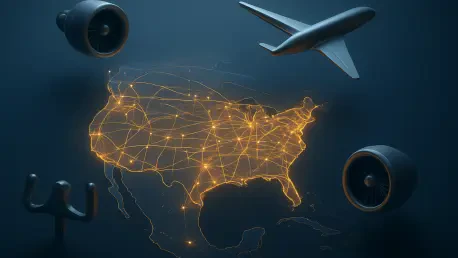
Bombardier’s rebuttal to the protectionist narrative centers on its deep integration within the American economy. Far from being a strictly foreign entity, the company functions as a significant U.S. employer and purchaser. With over 3,500 employees across multiple states and a supply chain touching 47 out of 50 states, it spends approximately $2.5 billion annually with American suppliers. Key structural components—such as wings manufactured in Texas and flight control systems from California—demonstrate that the aircraft “DNA” is heavily American. This level of integration suggests that a sales ban could inadvertently damage the very domestic industries the administration aims to protect.
Political Resistance and the Wichita Factor
The push to ground Bombardier has met unexpected resistance from within the Republican party and organized labor. Senator Jerry Moran of Kansas has publicly defended the company’s presence in Wichita, where it supports over a thousand high-skilled jobs and contributes to national defense projects. Similarly, the International Association of Machinists and Aerospace Workers voiced concerns that aggressive trade bans would jeopardize the livelihoods of thousands of American families. This creates a political paradox where a policy designed to boost domestic jobs is criticized by the representatives of those workers, highlighting the disconnect between protectionist rhetoric and local economic realities.
Market Volatility and the Competitive Vacuum
The immediate financial impact of this trade rhetoric has been stark, illustrating how political threats can rapidly devalue corporate assets. Following recent presidential comments, Bombardier’s stock plummeted over 6.5 percent, while domestic and European competitors saw modest gains. This market reaction underscores a critical concern: if Bombardier is forced out of the U.S. market, it could create a regional monopoly, reducing choice for American airlines and operators. Such a shift often leads to higher procurement costs and slower innovation, as the competitive pressure that drives the aerospace industry is artificially removed through regulatory intervention.
Emerging Trends in Global Trade and Aerospace Manufacturing
The standoff reflects a broader trend toward “near-shoring” and “friend-shoring,” where geopolitical alignment dictates economic partnership. As the U.S. moves to insulate its economy from foreign dependencies, more manufacturing ultimatums are likely to be issued to international firms. Technological shifts, such as the transition toward sustainable aviation fuels and electric propulsion, may also become bargaining chips in trade negotiations. Experts predict that if these protectionist measures persist, the industry may move toward a fragmented model where companies maintain localized production hubs to bypass tariff walls, potentially increasing the overall cost of aircraft production globally.
Strategies for Resilience in a Volatile Trade Environment
For businesses caught in the crossfire, several strategies are essential for navigating the uncertainty. First, companies must prioritize supply chain mapping to clearly demonstrate their domestic economic value to policymakers. Second, diversification of both the supplier base and the customer market is vital to mitigate the risk of sudden regional bans. For industry professionals, staying informed on the nuances of trade law is no longer optional; it is a core business requirement. Finally, regional leaders should continue to advocate for the preservation of integrated manufacturing networks that provide high-value employment, ensuring that national policy does not inadvertently hollow out local economies.
Bridging the Gap Between Policy and Industry
The escalating conflict between the administration and Bombardier served as a cautionary tale of how easily economic integration was threatened by geopolitical friction. While the “America First” agenda sought to repatriate industry, the complex reality of modern manufacturing meant that no nation operated in a vacuum. The significance of this dispute lay in its potential to redefine the terms of international commerce for decades. Finding a balance that protected national interests without dismantling collaborative networks became the primary challenge for the sector. Future stability depended on reconciling protectionist goals with the interconnected nature of the global aviation supply chain.