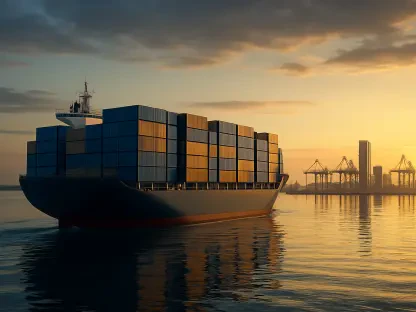

The intricate machinery of global trade relies on the seamless movement of over ninety percent of the world’s goods through a complex web of international shipping lanes. This massive network functions as the backbone of economic stability, connecting distant markets through a constant flow of raw materials and finished products. At the center of this system is the International Maritime Organization, a specialized agency of the United Nations that provides the essential regulatory framework required for maritime commerce. By establishing universal standards, the organization ensures that diverse market players operate on a level playing field, preventing a fragmented landscape where inconsistent rules could jeopardize safety or environmental integrity.
The International Maritime Organization focuses its mandate on three primary pillars: enhancing ship safety, ensuring security, and preventing marine pollution. Its role is fundamental in an era where technological integration and digitalization are rapidly modernizing maritime governance. By creating a unified set of expectations for vessel construction, equipment, and operation, the organization allows the shipping industry to maintain high standards of reliability across international borders. This architectural foundation is what enables the industry to support the global economy without constant friction between different national jurisdictions.
The Architecture of International Shipping and the Role of the IMO
The mandate of the International Maritime Organization extends beyond technical specifications to encompass the broad goal of global maritime harmony. It creates a predictable environment for shipowners and cargo interests by harmonizing laws that would otherwise vary wildly between port states. This consistency is vital for maintaining the economic viability of shipping, as it minimizes the administrative burden on vessels traveling between different regions.
Digitalization plays an increasingly important role in this architecture, as new data-sharing protocols streamline port operations and enhance the transparency of logistics chains. Modernizing maritime governance through these digital tools ensures that the industry remains efficient while adhering to strict environmental and safety regulations. As the sector evolves, the organization remains the central authority for translating complex technological shifts into manageable global standards.
Evolving Dynamics in Global Maritime Governance
Technological Shifts and Environmental Imperatives
The maritime sector is currently navigating a significant transition toward green shipping fuels as the industry seeks to meet ambitious decarbonization targets. This shift requires the International Maritime Organization to constantly update its regulatory frameworks to accommodate new energy sources like ammonia and hydrogen. These environmental imperatives are driven not only by policy but also by evolving consumer demand for sustainable supply chains, which forces market players to adopt cleaner technologies faster than previously anticipated.
Technological advancements such as AI-driven navigation and autonomous vessels are also redefining traditional safety protocols. These innovations offer the potential to reduce human error, which remains a leading cause of maritime accidents, yet they also introduce new legal complexities regarding liability and crew training. The regulatory challenge lies in creating rules that are flexible enough to encourage innovation while maintaining the rigorous safety standards that have historically defined the industry.
Data-Driven Projections for the Shipping Sector
From 2026 to 2030, global fleet capacity is projected to expand steadily to keep pace with the rising volume of seaborne trade. This growth is accompanied by an increase in compliance costs, as vessels must be retrofitted or replaced to meet new environmental conventions. Market forecasts suggest that while these costs are substantial, the economic resilience of major trade corridors remains strong, supported by robust demand in emerging markets.
Industry analysts emphasize that regulatory adherence has become a key indicator of financial stability for shipping companies. Investors are increasingly scrutinizing the ability of fleets to adapt to the International Maritime Organization’s evolving standards. As a result, the cost of non-compliance has risen, making the organization’s technical frameworks a primary driver of investment decisions and long-term fleet management strategies.
Jurisdictional Boundaries and Operational Obstacles
There is a vital distinction between the authority to set rules and the power to enforce them on the high seas. While the International Maritime Organization drafts the conventions that govern the waves, it does not possess a maritime police force or the ability to intervene in territorial disputes. Implementation and enforcement are the responsibilities of individual flag states and port states, leading to a gap between international ideals and local execution.
Regional geopolitical tensions further complicate this jurisdictional landscape, as the organization cannot control the passage of vessels through strategic or contested waterways. Navigating the complex interests of member states during the convention amendment process requires delicate diplomacy. The challenge remains to bridge the gap between global standards and national priorities, ensuring that the rules of the road are followed even in areas where international oversight is limited.
The Regulatory Framework: Compliance, Safety, and Security
The legal foundation of international shipping is negotiated within the International Maritime Organization Assembly and Council, where member states debate and adopt new laws. These discussions result in the “Three Pillars” of maritime regulation: the Safety of Life at Sea convention, the MARPOL convention for pollution prevention, and various security protocols. These agreements provide the technical blueprints that define how modern ships are built and operated to minimize risk.
However, security in strategic waterways often extends beyond the organization’s technical scope, requiring the intervention of national governments and military coalitions. When threats arise in critical straits, it is the naval presence of sovereign states that ensures the safe passage of commercial traffic. The ripple effect of these security measures is felt throughout the industry, directly impacting insurance premiums and freight rates as risk profiles shift in response to regional instability.
The Future of Maritime Authority in a Fragmented World
Emerging disruptors like cyber threats to maritime infrastructure are forcing a reevaluation of existing digital standards. As ships and ports become more interconnected, the vulnerability of global supply chains to digital interference increases, requiring the International Maritime Organization to develop new cybersecurity frameworks. The push for global uniformity faces competition from rising regionalism, where some nations may choose to implement stricter local rules that deviate from international norms.
Future maritime trade routes will likely be redefined by shifting energy demands and changes in the global economic climate. To maintain adherence to environmental laws, the industry is looking toward innovations in satellite monitoring and advanced surveillance. These tools will play a crucial role in ensuring that all vessels, regardless of their location, comply with the stringent requirements designed to protect the marine environment and maintain order on the seas.
Synthesis of Global Maritime Stability and Future Outlook
The analysis demonstrated that the International Maritime Organization remained the essential architect of technical standards, though its power was strictly circumscribed by national sovereignty. Industry leaders recognized that while the organization provided the necessary safety and environmental blueprints, the actual security of trade routes depended on the active participation of national navies. The report established that the economic stability of the shipping sector was inextricably linked to the consistent application of these international rules across all jurisdictions.
Stakeholders determined that navigating future geopolitical risks required a multifaceted approach that combined regulatory compliance with strategic maritime diplomacy. The study suggested that the transition toward greener fuels and digitalized operations served as the primary catalyst for modernizing the industry’s governance structure. Ultimately, the future of global maritime stability was found to rest on the ability of international bodies and sovereign states to collaborate effectively in the face of evolving security and environmental challenges.