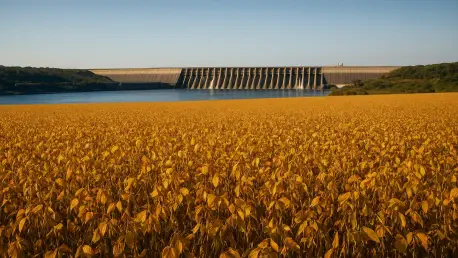

While its larger neighbors grapple with sluggish recoveries and fiscal uncertainty, Paraguay has quietly transformed into the continent’s most vibrant economic laboratory during the first half of this year. The nation has emerged as a standout performer in South America, outclassing regional heavyweights like Brazil and Argentina with a robust 5.7% GDP expansion recorded in the first two quarters. This growth is anchored by a diverse industrial base ranging from record-breaking agricultural yields to a rapidly accelerating energy sector powered by binational hydroelectric dams.
As the nation transitions from a high-growth surge to a more stabilized expansion, its economic significance is bolstered by favorable regulations and a strategic position within global supply chains. The momentum seen in the current cycle suggests that Paraguay is not merely experiencing a temporary boom but is instead building a foundation for long-term regional influence. For observers and market participants, the current landscape represents a pivotal moment where the country moves toward a more mature and diversified economic identity.
The Current Landscape: The Paraguayan Economic Engine
The initial half of the year showcased an economy operating at high velocity, reaching a growth peak that left many larger economies in the shade. While peers like Peru and Colombia posted more modest gains, Paraguay benefited from a confluence of high productivity and favorable climatic conditions that maximized its natural resource advantages. This period of expansion allowed the treasury to strengthen its position, providing a cushion against potential global headwinds that often affect developing markets.
A closer look at the quarterly data reveals a fascinating transition from the exceptional 7.3% surge in the first quarter to a more moderated 4% in the second. This cooling is interpreted by many analysts as a healthy normalization rather than a signs of distress, as it reflects the economy absorbing the massive influx of agricultural wealth. The underlying core economy, which excludes the most volatile sectors like hydroelectricity and agriculture, maintains a steady 5.2% growth rate, indicating that domestic demand and local businesses are thriving independently of seasonal cycles.
Tracking the Momentum: A Regional Powerhouse
Dominant Market Drivers: Shifting Sectoral Trends
The primary engine of this economic trajectory is currently a record-breaking soybean harvest that has propelled the agricultural sector to a 12.3% surge. This agricultural dominance is supplemented by significant gains in the production of rice, beans, and tobacco, which have collectively offset lower yields in other traditional crops. Such performance underscores the technological advancements in Paraguayan farming, which have allowed for higher efficiency and better resilience against price fluctuations in the global commodities market.
Simultaneously, the energy sector has witnessed an 8.5% expansion, largely driven by the massive binational dams that continue to supply both domestic and international markets. This surge is particularly notable as it responds to an increasing demand from energy-intensive industries and a growing manufacturing base within the country. While the livestock sector has seen a temporary 4.1% contraction, this shift is attributed to ranchers focusing on herd rebuilding, a strategic move that points toward increased capacity for meat exports in the coming years.
Economic Projections: Performance Indicators through 2026
Forecasts from the Central Bank of Paraguay and the International Monetary Fund suggest a year-end growth target between 4.4% and 4.5%. Although this marks a slight deceleration from the higher figures seen in the previous year, it remains significantly above the projected averages for the rest of South America. These indicators are supported by a controlled inflation rate of 3.3%, which provides a stable environment for both consumers and businesses to plan for long-term expenditures without the fear of eroding purchasing power.
Export performance remains another critical pillar, with an 11.5% increase in the outflow of goods and services during the middle of the year. This expansion in trade is not limited to raw materials but increasingly includes processed goods and energy services, reflecting a successful integration into the regional value chain. With the medium-term growth potential hovering near 4% annually, the nation is successfully distancing itself from the boom-and-bust cycles that have historically characterized the region.
Navigating Structural Obstacles: Investment Volatility
Despite the positive overarching narrative, the economy faces a notable contraction in fixed investment, highlighted by an 18.2% drop in gross capital formation. Much of this decline is tied to a reduction in the import of specialized machinery, particularly equipment used in cryptocurrency mining and the aviation sector. This volatility in capital goods suggests that while the operational side of the economy is booming, the acquisition of new high-tech infrastructure has slowed down as the market seeks a new equilibrium.
To maintain its leadership position, the nation must address these fluctuations in capital investment by diversifying the types of machinery and technology it attracts. The temporary downturn in the livestock sector also requires careful management, as the transition from slaughter to herd rebuilding creates a short-term gap in export volumes. Addressing these bottlenecks will be essential for ensuring that the dip in investment does not transform into a long-term drag on the productivity gains seen in other sectors.
Regulatory Framework: Fiscal Governance
Paraguay’s current growth is heavily supported by a stable regulatory landscape that prioritizes fiscal consolidation and international compliance. The government’s commitment to a disciplined fiscal policy has been instrumental in maintaining market confidence and attracting foreign direct investment. By adhering to international standards and managing the legal complexities of its hydroelectric agreements, the administration has created a predictable environment that encourages long-term commitments from global partners.
This governance model is designed to buffer the economy from the political volatility that often affects neighboring countries. The focus on transparency and the simplification of tax structures has made the nation an attractive hub for service-sector innovation. As the regulatory framework continues to evolve, the emphasis remains on creating a secure legal environment that protects property rights and encourages the formalization of the labor market, further strengthening the economic foundation.
Future Horizons: Innovation and Sustainable Expansion
The next phase of economic evolution lies in the ability to move beyond traditional agriculture and into high-tech manufacturing and digital infrastructure. There is an increasing focus on maximizing the value of the hydroelectric surplus by attracting data centers and green hydrogen projects. Such initiatives are expected to redefine the industrial landscape, shifting the focus from raw resource extraction to high-value-added services that can weather the fluctuations of global commodity prices.
Looking toward 2027, the integration into global value chains will likely depend on the country’s ability to innovate within the transport and logistics sectors. Potential disruptors, such as rising fuel costs and shifting trade routes, demand a modernization of the domestic transit infrastructure. By leveraging its strategic location in the heart of South America, Paraguay can transform its transport challenges into opportunities, becoming a central hub for regional trade and digital services.
Final Assessment: Paraguay’s Path to Sustained Prosperity
The economic landscape of the year demonstrated that Paraguay was well-positioned to lead the region, having successfully transitioned into a mature phase of expansion. The surge in agricultural output and energy production provided a robust cushion that allowed the nation to withstand a significant dip in capital investment. This resilience was further bolstered by a disciplined fiscal approach that kept inflation under control while peers struggled with rising costs and currency instability.
Stakeholders ultimately recognized that the contraction in machinery imports and livestock slaughter represented a period of recalibration rather than a systemic failure. Policymakers utilized this time to focus on industrial diversification and the enhancement of digital infrastructure, which ensured that the growth was not solely dependent on weather-sensitive sectors. By prioritizing long-term stability over short-term gains, the nation managed to establish a new benchmark for prosperity in South America.