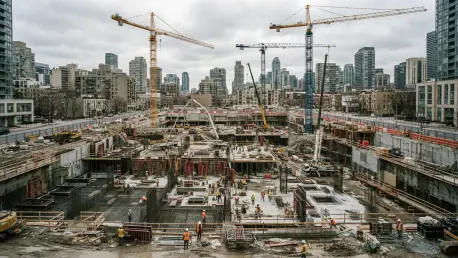

The validity period for density incentives will be capped at 10 years from the notification of a final Town Planning Scheme, with strict rules against the reuse of FAR. This landmark move by the Bhubaneswar Development Authority, detailed in the draft Planning and Building Standards Second Amendment Regulations 2026, marks a pivotal shift toward high-efficiency urban governance in Odisha’s capital. By integrating modern land-use strategies with robust fiscal policies, the authority seeks to transform the city’s physical footprint while ensuring that growth remains fiscally sustainable. The introduction of these regulations addresses a long-standing challenge in rapidly expanding urban centers: the fragmentation of private land, which often prevents the development of cohesive, high-quality infrastructure. Through this strategic framework, the BDA is not merely regulating construction but is actively steering the economic and spatial evolution of the region to meet contemporary demands.
Incentivizing Consolidation Through Increased Floor Area
To tackle the issue of fragmented urban plots, the new regulations introduce a tiered incentive system that rewards landowners for merging smaller parcels into larger, unified development blocks. For consolidated sites measuring between 500 and 1,000 square meters, the BDA offers an additional 0.5 Floor Area Ratio, providing a significant boost to the vertical potential of these properties. This incentive scales upward for even larger projects, as parcels exceeding 1,000 square meters qualify for a 1.0 FAR bonus. However, these benefits are contingent upon a mandatory 40% land deduction, which is repurposed for public amenities, wider roads, and green spaces. This trade-off ensures that while private developers gain the capacity for higher density, the surrounding community benefits from improved local services and better urban planning. This approach reflects a growing trend in global urbanism where density is used as a tool to unlock land value for public and private gain.
Beyond the direct FAR increases, the 2026 guidelines introduce substantial built-up area bonuses that could effectively double the development scale for specific projects. For instance, a consolidated plot larger than 1,000 square meters might receive a bonus equal to the total area of the merged parcel, allowing for a dramatic expansion of the usable space within a single architectural footprint. This mechanism is specifically designed to encourage the creation of integrated commercial hubs and large-scale residential complexes that would otherwise be impossible on smaller, disconnected lots. By offering such lucrative incentives, the BDA aims to reduce the prevalence of narrow, inaccessible buildings that often clutter urban corridors, replacing them with modern structures that adhere to higher safety and aesthetic standards. The primary goal is to foster a more organized skyline where infrastructure capacity matches the density of the inhabitants, creating a more livable environment for everyone.
Administrative Oversight Using FAR Incentive Certificates
To manage these newly created development rights with precision, the authority is implementing the FAR Incentive Certificate (FIC), an official digital and physical ledger system. The certificate serves as the definitive record for each project, meticulously tracking the total additional Floor Area Ratio awarded, the specific portions utilized in current building permits, and the remaining entitlement balance. This level of administrative oversight is crucial for maintaining transparency between the regulator and the real estate industry, as it prevents the double-counting of density rights and provides clear documentation for future buyers or developers. The FIC is issued concurrently with the possession order for an amalgamated plot, ensuring that the legal right to build more densely is directly tied to the successful consolidation of the land. By digitizing this process, the BDA reduces the potential for bureaucratic delays and provides a clear, verifiable audit trail for all stakeholders involved in the city’s expansion.
The draft regulations also establish rigorous temporal constraints and revocation protocols to ensure that these incentives lead to immediate and meaningful urban improvements. If a consolidated plot is subsequently subdivided or if the amalgamation effort is abandoned, the BDA reserves the right to revoke all associated incentives immediately to prevent the misuse of density bonuses. Furthermore, once an additional FAR entitlement has been utilized in a construction project, it is permanently consumed; should a building be demolished or altered, the previously used incentive will not be returned to the pool of available rights. These strict usage rules are balanced by a 10-year validity window, which provides developers with a reasonable timeframe to plan and execute their projects while preventing the indefinite hoarding of development rights. This ensures that the city’s growth remains dynamic and that the urban landscape evolves in alignment with current planning priorities.
Funding Infrastructure via Impact Fee Structures
Parallel to the density incentives, the BDA is introducing the City Infrastructure Impact Fee to ensure that the financial burden of urban development is shared more equitably across the city. This fee specifically targets projects located outside the boundaries of notified Town Planning Schemes that nonetheless benefit from the roads, sewage systems, and utility networks constructed under those schemes. Historically, such developments have capitalized on public investments to increase their market value without contributing to the initial or ongoing costs of the infrastructure they utilize. By implementing the impact fee, the authority can recapture a portion of this value and reinvest it into future expansion projects and maintenance. This creates a sustainable funding loop where existing infrastructure pays for its own upkeep and contributes to the growth of new sectors, reducing the city’s reliance on external grants and ensuring that public services keep pace with private construction activity.
The implementation of these diverse fee structures and density rules reflects a strategic consensus that Bhubaneswar’s future requires more than passive oversight. By categorizing the impact fees based on project type—ranging from ₹50 per square meter for residential plots to ₹75 for commercial developments—the authority established a clear, predictable fiscal environment for the real estate sector. Moving forward, urban planners should consider similar tiered systems to balance growth with the preservation of public spaces. For stakeholders, the actionable takeaway is the necessity of prioritizing land consolidation early in the design phase to maximize both economic returns and infrastructure efficiency. These measures successfully shifted the focus from isolated development to a more integrated city-building approach that values long-term sustainability over short-term gains. Ultimately, the 2026 regulations serve as a blueprint for modernizing the regional construction landscape while safeguarding the public interest through smart policy.