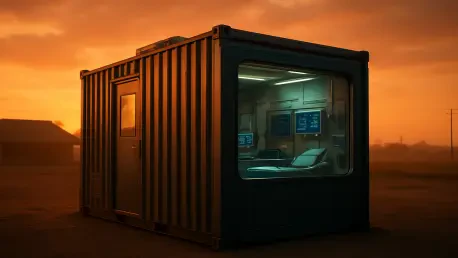

Deep within the high desert of the Trans-Pecos region, a converted steel shipping container is quietly dismantling the barriers of distance and poverty that have long isolated rural Texans from modern medical care. The landscape of healthcare in the more remote regions of the state is undergoing a profound transformation, driven by the dual pressures of diminishing resources and the urgent need for innovative service delivery. At the heart of this evolution is a specialized clinic in Fort Davis, a community of fewer than 900 residents. This facility serves as a primary example of how healthcare providers are bypassing traditional brick-and-mortar limitations to reach underserved populations. Managed by a veteran local nurse, the clinic operates out of a renovated shipping container—a choice that reflects a broader trend toward utilizing unconventional architecture to solve logistical challenges. By eliminating the need for long-distance travel, often 30 miles or more to the nearest traditional facility, the clinic encourages residents to seek timely care rather than delaying treatment due to the costs associated with transportation and vehicle maintenance. This analysis explores how these modular units are bridging the gap between high-tech medicine and the remote frontier in 2026.
Reimagining Medical Access in the Lone Star State
The integration of modular units into the medical infrastructure represents a paradigm shift in how the industry views the “clinic” as a concept. In the past, the lack of a permanent, multi-million dollar building often meant a complete absence of care, but today, these mobile and semi-permanent structures are proving that the quality of intervention is not dictated by the thickness of the walls. These facilities are specifically designed to address the unique needs of populations that have historically been overlooked by large metropolitan hospital systems. By situating these access points in the centers of small towns, providers are seeing a marked increase in patient compliance and preventive screenings.
Moreover, the psychological impact of having a physical, reliable medical presence in a town that has lost its local hospital cannot be overstated. When a community sees a new structure dedicated to their well-being, it fosters a sense of security and investment. The modular approach allows for rapid deployment, meaning that a town facing a sudden medical vacuum can have a functioning clinic up and running in a fraction of the time required for traditional construction. This agility is becoming a cornerstone of the rural strategy as providers look to expand their reach across the vast geography of the state without incurring the massive debt loads associated with traditional real estate.
The Roots of the Rural Medical Crisis
The necessity for such creative solutions is rooted in a systemic crisis that has left many Texans vulnerable. Texas has historically led the United States in rural hospital closures, a phenomenon triggered by high operating costs and patient volumes that are often insufficient to sustain traditional business models. This vacuum in care is compounded by significant gaps in specialized services, particularly pediatrics and mental health. Statistics from recent years reveal a staggering reality: as of 2026, over half of the counties in the state still lack a practicing pediatrician, with the situation being most dire in the western reaches where direct patient care is nearly non-existent.
Understanding these foundational challenges is essential to grasping why the shift toward modular, telehealth-integrated clinics is a necessity for survival rather than a mere novelty. The decline of the rural hospital has created a “medical desert” effect, where the nearest emergency room could be a multi-hour drive away. This distance does not just affect emergency care; it erodes the foundation of primary health, leading to higher rates of unmanaged chronic conditions. As the healthcare industry moves from 2026 to 2030, the focus is increasingly on decentralizing services to prevent the total collapse of health outcomes in these sparsely populated areas.
Modular Solutions: A Modern Era of Innovation
A Strategic Conduit: Specialized Care and Institutional Synergy
The shipping container model is more than a temporary fix; it is a meticulously planned healthcare conduit that leverages institutional partnerships to provide depth to local care. These clinics are often strategically partitioned to facilitate different types of virtual care, with one section dedicated to connecting patients to university-based physicians and another providing a portal to specialized counseling services. This setup is particularly vital for residents who lack personal internet access at home, as it centralizes high-end technology in a local hub. By housing these services in a single, mobile-ready unit, the clinic proves that collaborative efforts between academic institutions can overcome historical rivalries to serve the public good.
Rethinking the Economic Viability: Breaking the Commercial Mold
The economic viability of the shipping container clinic is maintained through community and inter-institutional support that bypasses traditional financial hurdles. By occupying county-owned land, these clinics often avoid rent and utility expenses, allowing them to focus limited budgets on internet connectivity and medical supplies. To ensure accessibility, many operate on a low-cost, flat-fee model and do not accept insurance, which simplifies the billing process for both the provider and the patient. This approach contrasts with the commercial enterprise model of urban hospitals, prioritizing community health outcomes over profit margins and ensuring that financial status does not prevent a patient from receiving basic medical attention.
Navigating the Complexities: The Reality of the Digital Divide
Despite the promise of virtual care, practitioners must navigate the “broadband paradox,” where high-speed internet availability is often overestimated in rural regions. While official maps might indicate broad coverage, these figures often obscure “dark spots” where connectivity is non-existent or prohibitively expensive. In some panhandle regions, thousands of residents remain entirely offline, creating a secondary tier of medical disenfranchisement. Industry experts emphasize that the digital divide is as much about socio-economics as it is about infrastructure. Low-income patients may rely on limited data plans that cannot support a full video consultation, making the establishment of physical access points like these containers essential as reliable Wi-Fi hubs.
Policy Shifts: The Next Generation of Telemedicine Funding
The state government has recognized these challenges, signaling a shift in how rural medicine is funded and regulated. Recent announcements have highlighted millions in grant funding specifically for rural pediatric telehealth, while significant allocations have been made for programs that explore the integration of telehealth into emergency response. These initiatives allow paramedics to consult with physicians from the back of an ambulance, potentially providing life-saving interventions while en route to a distant facility. Such technological and regulatory changes are promising, but the long-term sustainability of the sector remains a topic of intense discussion among policymakers.
Some industry analysts argue that the reliance on use-case grants may not be a permanent solution. The consensus among many practitioners is that while one-off grants are helpful, the future of the industry depends on long-term structural adjustments to healthcare financing. Prioritizing established programs that connect students with mental health services directly through school districts is seen as a more sustainable path. For the market to truly stabilize, there must be a shift toward reimbursement models that recognize the value of virtual and modular care as equal to traditional in-person visits, ensuring that the providers operating these containers can maintain their equipment and staff without constant fear of budget cuts.
Strategic Lessons: Actionable Frameworks for Rural Healthcare
The success of modular clinics offers actionable strategies for healthcare professionals and policymakers looking to scale these solutions. First, the use of cost-effective infrastructure like shipping containers drastically lowers the barrier to entry for providing care in low-population zones. Second, fostering partnerships between universities and local governments can create a sustainable ecosystem that shares the burden of overhead costs. For professionals, the transition to this model requires a hybrid mindset: utilizing technology to expand reach while maintaining a physical presence to handle tasks that virtual care cannot, such as wound care or certain physical exams.
Furthermore, these clinics serve as vital training grounds for the next generation of the medical workforce. By integrating medical students into rural rotations within these modular units, the industry is building a future workforce that is comfortable with both the stethoscope and the digital screen. This hands-on experience in a resource-limited environment teaches adaptability and creative problem-solving, skills that are becoming increasingly valuable in the modern medical landscape. The lesson for the broader market is clear: innovation in rural health is not just about the newest gadget, but about the intelligent application of existing technology within a framework that respects local constraints and community dynamics.
Balancing Technology: The Enduring Importance of Human Connection
The rise of telehealth in rural Texas represented a critical pivot in how the healthcare industry addressed the geographic and economic disparities of the frontier. By leveraging cost-effective shipping containers and navigating the complexities of the digital divide, healthcare providers established a new, scalable framework for rural medicine. While broadband gaps and funding inconsistencies remained significant hurdles, the shift toward virtual care provided a critical lifeline for communities that had long been at risk of being left behind. Ultimately, these high-tech containers symbolized a revitalization of the frontier medicine spirit, proving that technology could expand the reach of medicine while maintaining a focus on local community needs.
Medical professionals and administrators observed that the most successful implementations were those that did not attempt to replace the human element entirely. Instead, the container clinics functioned as a hybrid bridge, allowing for high-level consultations while still providing a physical space for a nurse or technician to offer the “human touch.” This balanced approach ensured that the transition to digital health was met with community trust rather than skepticism. Future considerations for rural health must continue to prioritize this hybrid model, ensuring that as the infrastructure evolves, the fundamental relationship between a patient and their provider remains the primary focus of every technological advancement. By following this blueprint, other states with large rural populations found a viable path toward medical equity and long-term sustainability.