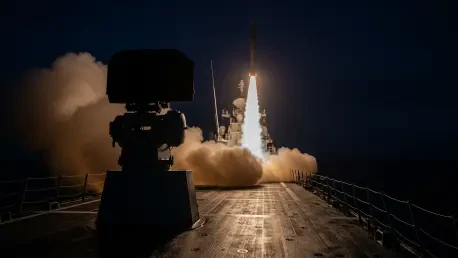

The relentless pace of naval engagements in the Middle East has brought the logistical depth of the United States military into sharp focus as interceptor stocks face unprecedented demand. For months, Aegis-equipped destroyers have patrolled the Red Sea, neutralizing a barrage of drones and anti-ship missiles aimed at international shipping lanes. While these operations have demonstrated the tactical superiority of American defense systems, the sheer volume of munitions expended has triggered concern within the Pentagon. It is not just the immediate availability of these weapons that is under scrutiny, but the long-term sustainability of maintaining such a defensive posture across multiple theaters simultaneously. As geopolitical tensions remain elevated, the disparity between the rate of consumption and the current pace of domestic industrial production has become a critical strategic vulnerability that necessitates a reevaluation of how the nation prepares for protracted conflict.
Resource Exhaustion And Production Realities
The Constraint On Advanced Interceptor Inventories
The depletion of Standard Missile-3 and Standard Missile-6 variants is particularly alarming because these assets are the primary shield against sophisticated ballistic and cruise missile threats. These interceptors are not commodity items; they are high-precision instruments that require complex electronics and specialized rocket motors. Currently, the production lines for these missiles are operating at maximum capacity, yet the lead times for critical components remain measured in years rather than months. This delay means that every missile fired today was likely ordered several years ago, creating a significant lag in the ability to replenish stockpiles during active combat. Consequently, the Navy is forced to manage its remaining inventory with caution, prioritizing the most immediate threats while potentially leaving other regions with a thinner margin of safety. This logistical strain is exacerbated by the fact that many components are sourced from a few specialized sub-tier suppliers.
Industrial Scaling And Supply Chain Fragility
Efforts to expand the industrial base have encountered structural hurdles that extend beyond mere budget allocations or legislative mandates for increased procurement. Building additional manufacturing facilities for advanced munitions requires significant capital investment and a specialized workforce. While the Department of Defense has attempted to accelerate these processes through multi-year procurement contracts, the reality of physical construction cannot be bypassed. Furthermore, the reliance on a few dominant defense contractors creates a single point of failure that limits competitive innovation and surge capacity. The military is exploring ways to diversify its supplier network and incorporate advanced manufacturing techniques to produce non-critical components more rapidly. However, the certification of these new methods for use in high-stakes missile systems is a rigorous process that cannot be rushed. As a result, the transition to a more resilient production model is a slow evolution.
Strategic Repercussions For Global Readiness
Impact On Indo-Pacific Strategic Deterrence
The high expenditure of interceptors in the Middle East creates a direct tension with the strategic goal of maintaining a credible deterrent in the Indo-Pacific. Military planners have warned that a conflict in the Pacific would require an immense volume of air defense assets, many of which are currently being utilized to counter low-cost threats in the Red Sea. This situation creates a strategic dilemmthe U.S. must defend its allies and shipping in one region without compromising its ability to respond to a near-peer competitor in another. Every SM-6 variant diverted to an Aegis destroyer in the Mediterranean is one fewer available for the Seventh Fleet, potentially shifting the regional balance of power. Analysts are increasingly calling for a more selective engagement strategy that emphasizes cost-effective alternatives for low-end threats. By preserving high-end interceptors for high-end threats, the military could better sustain its readiness across diverse geographic areas.
Adaptive Strategies For Future Munitions Management
To mitigate the risks associated with dwindling stockpiles, the defense establishment observed a shift toward more integrated and modular defense architectures. This transition involved the adoption of open-system designs that allowed for the rapid integration of new technologies and diverse munition types into existing platforms. Policymakers and military leaders concluded that the future of missile defense lay in a layered approach that utilized a mix of expensive interceptors and cheaper kinetic solutions. Investments were redirected toward accelerating the deployment of laser-based systems and high-powered microwave weapons, which offered a virtually limitless magazine at a fraction of the cost per engagement. Additionally, international cooperation was prioritized to establish co-production facilities with key allies, thereby increasing the global inventory of compatible defensive assets. These measures transformed the logistical landscape, ensuring that the armed forces maintained the necessary depth.