
The American defense apparatus is currently undergoing its most significant structural realignment in decades, moving away from the expensive footprint of global policing toward a hardened, technology-driven continental fortress. This transition represents a shift from traditional theater dominance to a strategy that prioritizes the defense of the homeland and its immediate interests through advanced technological means.
Assessing the 2026 National Defense Landscape and Strategic Shifts
The Pentagon has begun a comprehensive transition toward a continental-first security strategy, emphasizing high-tech solutions over massive ground troop presence. This pivot necessitates a refocusing of the U.S. defense industrial base, which is now geared toward enhancing long-range strike capabilities and undersea warfare to ensure deterrence without constant physical occupation.
Integrated satellite networks and the implementation of the Golden Dome for America represent the core of this contemporary national security framework. These technologies allow for a synchronized defensive umbrella that monitors and neutralizes threats from orbit. Moreover, the push for NATO 3.0 encourages European allies to achieve self-sufficiency, reducing the traditional burden on American taxpayers while maintaining a multipolar balance of power.
Breakthroughs in High-Tech Warfare and Defense Procurement
Emerging Technologies and the Golden Dome Initiative
Recent live-fire demonstrations have successfully integrated advanced missile defense systems with counter-drone technology, marking a milestone in domestic protection. This success stems from deep inter-agency synergy, with the Department of Defense, the FAA, and the FCC collaborating to manage the National Airspace System efficiently and safely.
The strategic prioritization of long-range air and ground fires ensures that the military can execute global strikes without placing large numbers of personnel in harm’s way. This modernization of the arsenal reflects a commitment to maintaining technical superiority over adversaries who are rapidly developing their own standoff capabilities.
Market Data and Defense Expenditure Projections
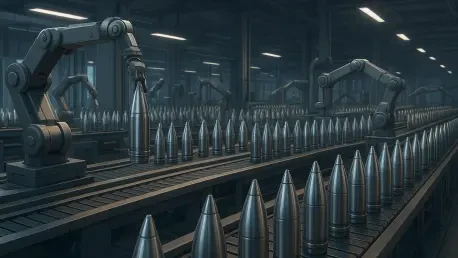
Capital allocation is reaching historic levels as the government revitalizes the American military-industrial complex through massive budget requests. A key highlight is the $53 billion munitions surge, which aims to drastically increase the production of essential ammunition from 2026 to 2030 to meet current and future needs.
Workforce and infrastructure performance indicators show that domestic manufacturing facilities are scaling their operations to meet these ambitious targets. This industrial revitalization is crucial for maintaining a resilient supply chain that can support the rapid escalation of military power when necessary, ensuring that the domestic economy benefits from these long-term investments.
Navigating Strategic Contradictions and Resource Depletion
The stockpile paradox remains a critical issue, as the gap between high budgetary investment and the physical depletion of munitions persists due to active conflicts. While funding is at an all-time high, the actual number of ready-to-use missiles and shells has been strained by continuous operational demands across various international theaters.
Managing the logistics of Operation Epic Fury presents a significant challenge to the stated goals of ending endless wars. Despite anti-interventionist intentions, the kinetic reality of the conflict with Iran forces a heavy reliance on the very financial and operational resources that the new strategy originally sought to conserve for homeland defense.
Ensuring that high-tech prototypes can survive the attrition-based reality of modern kinetic warfare is the next major hurdle for procurement officers. While digital models and simulations provide valuable data, the physical demands of prolonged conflict often reveal vulnerabilities that only real-world application can expose.
The Regulatory Framework and Shift in Allied Compliance
New standards under NATO 3.0 require European nations to take the lead in their own defense spending and regulatory self-reliance. This shift is accompanied by a reduction in manned brigade combat teams in Europe, which have been scaled back from five to three to reflect a leaner and more mobile American force posture.
Compliance with domestic security protocols is also evolving, as the government navigates the legal framework required to deploy integrated drone defense systems within the homeland. These protocols must balance national security needs with the rights and regulations governing civilian airspace, requiring constant coordination between legal experts and military commanders.
Future Projections for Global Stability and Military Innovation
Future threats are increasingly defined by the Russian-Iranian axis, where deepening military ties and hybrid warfare tactics create new layers of complexity. This partnership necessitates a constant evolution of the Golden Dome to adapt to emerging hypersonic and autonomous threats from state and non-state actors alike.
Potential market disruptors, such as sudden escalations in the Middle East or Eastern Europe, could force a pivot away from the current high-tech strategy. If conventional stability collapses, the military might be required to return to traditional troop deployments, challenging the long-term viability of the current strategic roadmap.
Summary of Defense Progress and Strategic Vulnerabilities
The Pentagon’s success in procurement and inter-agency modernization provided a strong foundation for the transition, yet the report left critical gaps regarding the long-term sustainability of ammunition reserves. Addressing the silence on Russian hybrid tactics was necessary for a realistic assessment of global stability. Ultimately, the roadmap offered a clear path for domestic innovation while requiring further refinement to address the attrition-based realities of the international landscape.
The path ahead necessitated a more honest accounting of the strategic strain caused by active conflicts and resource shortages. While the transition toward high-tech warfare offered promising avenues for security, the omission of critical geopolitical threats suggested a disconnect between administrative goals and kinetic reality. This assessment served as an important marker of progress, but the true test of this strategy depended on its ability to withstand the heavy demands of modern warfare.